









Beyond Outsourcing as We Know It
The traditional IT outsourcing model, pioneered and perfected by Indian giants like TCS, was built on a simple premise: providing skilled human capital to build and maintain software, manage infrastructure, and handle business processes for global clients.
It was a model based on labour arbitrage and execution. But the rise of generative AI is fundamentally changing client expectations. Businesses no longer just want to outsource tasks; they want to integrate intelligent, automated systems that drive tangible outcomes. This has prompted a strategic rethink within India's $315 billion IT services industry.
What Is an AI Stack Orchestrator?
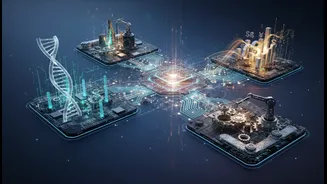
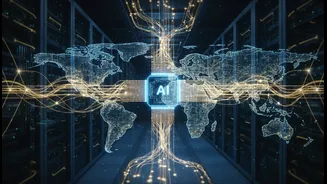
Think of an AI orchestrator as the conductor of a symphony. A modern business might use dozens of different AI tools and models—some from Google, others from OpenAI or Anthropic, plus their own custom-built systems. Each 'instrument' is powerful, but they need a conductor to make them play together harmoniously. An AI orchestrator connects these disparate AI models, data pipelines, and business applications into a single, cohesive system. Instead of just providing one piece of the puzzle, the orchestrator manages the entire AI 'stack', ensuring all parts work together securely and efficiently to achieve a business goal.
TCS's Strategic Pivot to AI Orchestration
TCS has explicitly stated its ambition to be a central orchestrator within the AI ecosystem. This is not just a semantic change; it's a fundamental business model evolution. The company is investing heavily in this transition, recently announcing plans to train and deploy up to 8,900 'forward-deployed engineers' who will work embedded with clients to implement complex AI solutions. Furthermore, TCS is actively seeking acquisitions in AI and data security to bolster these capabilities. This strategy moves TCS from selling hours to selling outcomes, with new contract models based on delivering specific business results through AI. The company is also forming strategic partnerships, such as with Mistral AI, to integrate diverse AI platforms and give clients more options.
The Conductor's Challenges and Opportunities
This shift presents a massive opportunity. By moving up the value chain from service provider to strategic partner, TCS can command higher-value contracts and embed itself more deeply into its clients' core operations. Enterprises are actively seeking partners who can manage the complexity of multi-vendor AI environments and reduce the risk of being locked into a single platform. However, the role of orchestrator is not without its challenges. It requires a new echelon of talent skilled in systems integration, AI governance, and strategic consulting. It also puts TCS in direct competition not just with traditional rivals like Infosys, but also with the very creators of the AI models, such as Microsoft and Google, who are also deploying their own engineers to help clients.
A New Blueprint for India's IT Sector
TCS's move is a bellwether for the entire Indian IT industry. For years, the sector has faced questions about its future in an increasingly automated world. The pivot to orchestration offers a potential answer: evolve from providing the workforce to providing the wisdom. This means a focus on high-skill jobs centred on integration, strategy, and governance. Recent leadership and business unit reorganizations within TCS, designed to sharpen its focus on AI-led deals, underscore the seriousness of this transformation. If successful, TCS's gambit could provide a new blueprint for growth, proving that instead of being disrupted by AI, India's tech giants can become the essential conductors of the AI revolution.