




Putting Your Brain on High Alert
When you walk forward, your brain is on autopilot. When you switch to reverse, it's like waking a sleeping pilot. You can't see where you're going, so your brain has to work harder to build a mental map of the space behind you. This process engages the prefrontal
cortex, the part of your brain responsible for decision-making and problem-solving. It also heightens your proprioception, which is your body's non-visual awareness of its position in space, signaled by muscles and joints. This increased cognitive demand sharpens your thinking skills and enhances your overall body awareness because you're no longer relying solely on vision to stay balanced.
A New Way to Move, A Different Way to Build
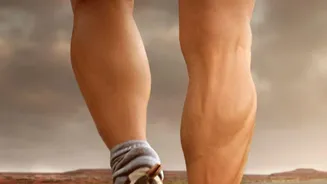
Backward walking, or retro-walking, completely changes your gait. Instead of the typical heel-to-toe pattern, you land on your toes and roll to your heel. This shift alters muscle engagement significantly. While many of the same leg muscles are used, they work in different ways and with different levels of effort. Muscles like the quadriceps, glutes, and calves have to work harder to propel and stabilize you. Studies have shown considerably higher activity in the quadriceps muscles during backward walking compared to forward walking. This makes it an excellent cross-training exercise that targets underused muscles, helping to create better overall muscular balance.
The Surprising Health Benefits
The extra concentration and altered mechanics of walking backward deliver a host of benefits. For one, it's gentler on the knees. The movement reduces compressive forces on the knee joint, making it a valuable tool in physical therapy for knee pain and rehabilitation. This is because the quadriceps muscles are forced to work eccentrically, or while lengthening, which builds strength without as much joint irritation. The practice also improves balance and stability by forcing your inner ear's vestibular system and your proprioceptive senses to work harder. Furthermore, because the body has to work harder, backward walking can burn more calories than walking forward at the same speed.
How to Get Started Safely
Ready to take a step back? Safety is paramount. Start in a controlled, obstacle-free environment like an empty hallway, a park with a clear path, or on a treadmill. Using a treadmill can feel safer for beginners because the handrails provide support and you don't have to constantly look over your shoulder. Begin with short intervals, perhaps just five to ten minutes, a few times a week. Focus on your form: try to keep your back straight and look forward, resisting the urge to twist your head excessively. Your steps will naturally be shorter and slower at first. As you become more comfortable, you can gradually increase your speed and duration.