









The Unseen Engine of AI
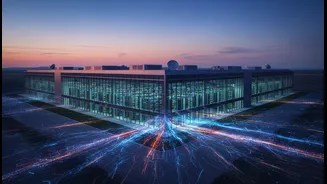
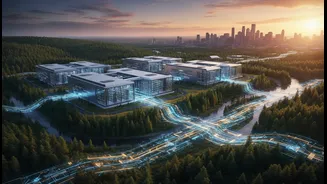
Artificial intelligence, especially the large language models (LLMs) that power generative AI, requires an immense amount of computational power. This computation happens in sprawling, factory-sized buildings called data centres, packed with thousands
of specialised servers. These servers, and the systems needed to cool them, consume staggering amounts of electricity. A single query on a service like ChatGPT, for example, can use nearly ten times the energy of a conventional Google search. The process of training a new, frontier AI model can consume gigawatt-hours of electricity, enough to power thousands of homes for a year. According to Gartner, global data centre electricity consumption is projected to grow 26% in 2026 alone, with AI-optimised servers being the primary driver of this surge. By 2030, data centres could account for a significant portion of global electricity demand, shifting the bottleneck for AI's growth from silicon chips to the power grid itself.
A New Global Power Play
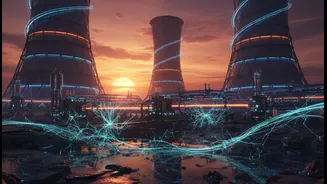
For decades, tech dominance was about designing the fastest chips and the smartest algorithms. Now, a new factor has entered the equation: energy availability. The race to lead in AI is becoming a race to build new power infrastructure. Regions with strained or slow-to-expand power grids are already facing delays in connecting new data centres, creating a direct obstacle to technological expansion. Consequently, a global scramble is underway. Tech giants are no longer just passive consumers of electricity; they are actively investing in power generation. This includes everything from massive power purchase agreements with renewable energy providers to direct investment in new nuclear plants. Countries with proactive energy strategies are positioning themselves as the future hubs of AI. The United States, China, and nations in Europe are all in a race to expand their power generation, with nuclear energy, including next-generation Small Modular Reactors (SMRs), increasingly seen as a crucial source for the constant, reliable power that data centres demand. South Korea recently announced it is considering building new nuclear plants specifically to power its semiconductor and AI sectors.
India's Critical Crossroads
For India, with its soaring digital ambitions, this global shift presents both a monumental challenge and a unique opportunity. The country's data centre capacity is expanding rapidly, projected to grow from 1.5 gigawatts (GW) in 2025 to around 7 GW by 2030. The Indian government has formally recognized this trend, with the Ministry of Power incorporating a projected demand of over 13.5 GW from data centres into its national transmission plans by 2032. The strategic challenge is clear: India's success in the AI race will depend not just on its software talent, but on its ability to build sustainable energy systems. Major domestic conglomerates are stepping up, with Reliance and Adani Group collectively committing hundreds of billions of dollars toward AI infrastructure and the renewable energy needed to power it. These plans involve creating massive green energy ecosystems to support new data centre hubs, aligning with India's goal of installing 500 GW of non-fossil fuel capacity by 2030.
The Path Forward: Energy as Infrastructure
The challenge is not merely about generating more electricity, but delivering it reliably where it's needed. While India has a large installed power capacity, last-mile connectivity and grid stability for high-density AI clusters remain critical hurdles. Industry leaders are pursuing strategies that include improving energy efficiency, deploying battery storage, and sourcing clean energy through open-access agreements. Nuclear power is also part of the long-term conversation in India, valued for its ability to provide dense, reliable baseload power. As the country pushes forward with its 'Make in India' and 'Digital India' initiatives, ensuring a robust power backbone for its burgeoning AI industry will be paramount. The regions that successfully integrate their energy and digital infrastructure strategies will not only attract investment but also secure a strategic advantage in the AI-driven economy of the 21st century.