



The Mountain That Broke
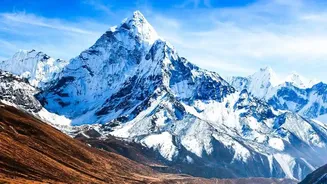
On August 26, 2026, a section of a glacier and the bedrock beneath it collapsed in Nepal's Langtang National Park, near the border with Tibet. This was not a slow melt, but a sudden, catastrophic failure that generated seismic energy equivalent to a magnitude
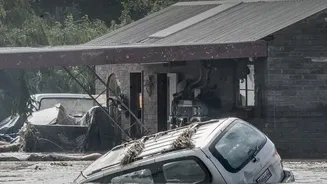
5.2 earthquake. The resulting torrent of ice, rock, mud, and water surged down the Bhote Koshi and Trishuli river valleys at incredible speeds, with water levels rising by as much as nine metres in just 30 minutes in some areas. The disaster swept away entire villages, destroyed bridges, and crippled hydropower plants, leaving a devastating trail of destruction and loss of life that spanned across both Nepal and Tibet. This event serves as a terrifying, real-world example of the risks brewing high in the mountains.
Understanding the Ticking Time Bombs
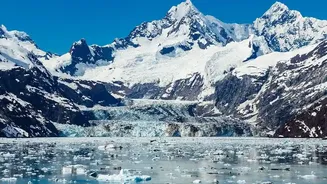
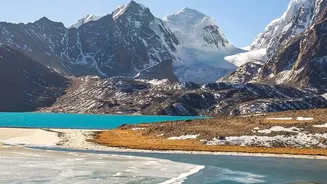
The primary threat is what scientists call Glacial Lake Outburst Floods, or GLOFs. As glaciers retreat due to warming, they leave behind vast lakes, often held in place only by unstable natural dams of rock and debris known as moraines. These moraine dams can fail without warning due to pressure from rising water levels, or they can be breached by triggers like earthquakes or massive avalanches crashing into the lake. The result is the sudden release of millions of cubic metres of water, creating a flash flood of immense destructive power. Recent scientific reports have confirmed that the rate of glacier melt in the Himalayas has doubled since the year 2000, rapidly increasing both the size and number of these precarious glacial lakes.
Why This Is an Urgent 'Now' Problem
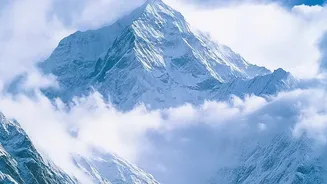
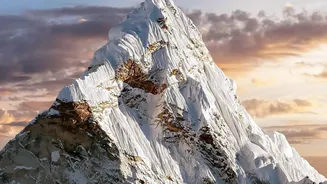
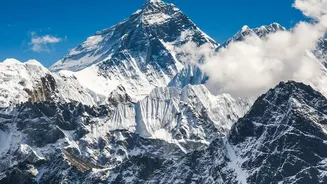
The Himalayas are warming at nearly twice the global average, a rate that is rapidly destabilising the entire mountain ecosystem. The August 2026 disaster highlights that the threat is no longer theoretical. A 2026 report from the International Centre for Integrated Mountain Development (ICIMOD) identified 47 potentially dangerous glacial lakes across the Koshi, Gandaki, and Karnali river basins, which are shared by Nepal, India, and China. Of those, 21 are in Nepal alone. The increasing frequency of extreme weather, from heatwaves to erratic monsoons, adds another layer of risk, potentially accelerating the melt or triggering landslides that could cause a GLOF. The danger isn't just from pre-existing lakes; as the recent catastrophe showed, the collapse of an entire glacier can itself create a disaster, a phenomenon scientists call a 'cascading hazard'.
The Ripple Effect Downstream to India
What happens in the high Himalayas of Nepal does not stay in Nepal. The rivers that were engorged by the August flood, like the Trishuli, are major tributaries of the Gandak River, which flows into the Ganga in India. A GLOF or a similar disaster upstream in Nepal can translate into devastating floods in downstream Indian states like Bihar and Uttar Pradesh, with little warning. These rivers are the lifeline for nearly two billion people across the subcontinent, supporting agriculture, drinking water, and industry. The recent tragedy, in which many Indian citizens on pilgrimage or working in Nepal were among the missing, underscored this shared vulnerability. In response to the Nepal disaster, the Indian government has reportedly begun reviewing its own GLOF preparedness in Himalayan states, recognising that a threat to its neighbour is also a direct threat to its own people and infrastructure.