






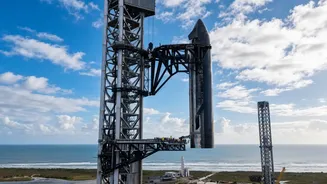
SpaceX's fifteenth Starship test flight was a spectacle of immense achievement and tantalising near-miss. For the first time, the company caught the orbital upper stage, but the mission's other half ended in a fiery splashdown.
A Tale of Two Stages
On November 13, the colossal
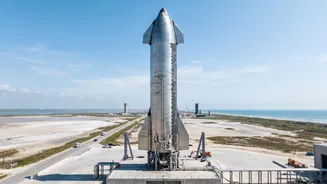
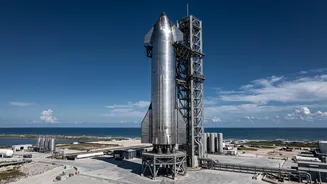
Starship rocket, comprising the Super Heavy booster and the Starship upper stage, roared to life from Starbase, Texas. The initial ascent went according to plan, with the two stages separating as intended. The Starship stage, known as Ship 42, successfully pushed itself into orbit, where it spent over 22 hours circling the Earth and deployed 26 Starlink satellites. However, the mission's goal of recovering both stages hit a snag. The Super Heavy booster, after completing its primary job, initiated its return to the launch site. During its boostback burn, an alarm indicating low fuel mass triggered an automated abort. Instead of attempting the risky tower landing, the booster’s guidance system safely diverted it for a controlled splashdown in the Gulf of Mexico, where its flight termination system was activated.
The 'Holy Grail' Catch
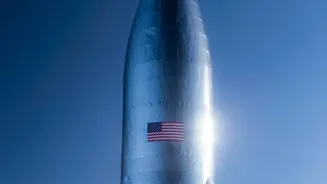
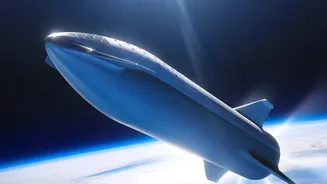
While the booster was lost, the main event was yet to come. On November 14, after nearly a full day in space, Ship 42 performed its deorbit burn and began a fiery plunge back through the atmosphere. Onlookers and the SpaceX team watched as the 50-metre steel spacecraft executed a controlled 'bellyflop' manoeuvre to slow itself down before reorienting for landing. Then, in a scene straight from science fiction, the giant mechanical arms on the launch tower, nicknamed 'Mechazilla', closed in and snagged the descending vehicle, catching it securely in mid-air. It was the first time an orbital spacecraft of this kind has ever been recovered in this manner, a moment one SpaceX commentator called 'the holy grail of spaceflight'. The successful capture proves a critical component of SpaceX's rapid reuse architecture is possible.
Why Full Reusability Matters
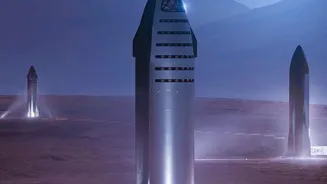
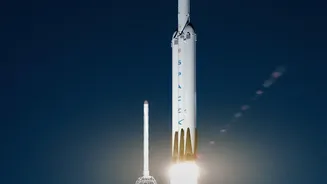
The term 'full reuse' is central to SpaceX's entire philosophy. Traditionally, rockets are disposable; multi-million-dollar hardware is discarded after a single use. SpaceX revolutionised the industry with its partially reusable Falcon 9, which lands and reflies its first stage boosters, dramatically cutting costs. Starship aims to take this a giant leap further by making both the booster and the upper stage fully and rapidly reusable, much like a commercial airliner. Achieving this would slash the cost of launching cargo and people into orbit, potentially reducing it to a fraction of current expenses. This isn't just about saving money on satellite launches; it is the fundamental technology required to make CEO Elon Musk’s ambitious goals of building a city on Mars and a base on the Moon economically feasible.
An Imperfect, Monumental Success
The loss of the Super Heavy booster means Flight 15 did not demonstrate the full, two-stage recovery SpaceX was aiming for. The company had previously caught three boosters on earlier flights, but this was the first attempt to recover both stages from a single orbital mission. The low-fuel alarm on the booster is now under investigation, with engine performance cited as a likely factor. Despite this setback, the mission is being hailed as a monumental success. Recovering the Starship upper stage from orbit was arguably the more challenging and significant hurdle. Proving it can survive re-entry and be caught by the tower is a massive step toward validating the entire system. It closes a major loop in the development process and provides invaluable data for future flights.