






Understanding the Attacker: What is in Polluted Air?
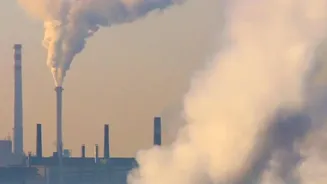
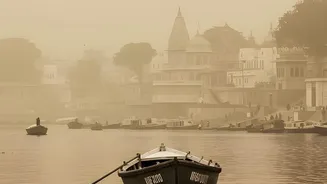
When we talk about pollution and skin, we're not just talking about visible smog or dust. The main culprits are microscopic and far more insidious. The most-studied aggressors include particulate matter (PM), especially PM2.5, which are tiny particles
from traffic and industrial emissions so small they can penetrate the skin. Other key players are polycyclic aromatic hydrocarbons (PAHs), volatile organic compounds (VOCs), and ground-level ozone. These substances are prevalent in urban environments and can act as carriers for other damaging chemicals, creating a cocktail of stressors for your skin. While you can't always see them, your skin feels their effects.
The Science: How Pollution Harms the Skin
The primary way pollutants damage skin is by inducing oxidative stress. Think of it as a cellular-level attack where unstable molecules called free radicals overwhelm your skin's natural antioxidant defences. This triggers a cascade of negative effects, including inflammation, a breakdown of collagen and elastin (the proteins that keep skin firm), and a weakened skin barrier. A compromised barrier loses its ability to retain moisture and keep irritants out, leading to dryness, sensitivity, and redness. Research shows this process can worsen conditions like acne, eczema, and psoriasis and lead to hyperpigmentation, or dark spots, as the skin produces excess melanin in response to the inflammation.
Fact vs. Fiction: Does It Age Everyone?
While there's a strong link between long-term pollution exposure and signs of premature ageing like wrinkles and pigment spots, it's not a universal sentence. The headline claim that pollution 'ages everyone' is an oversimplification. Your genetics, lifestyle choices (like diet and smoking), sun exposure, and existing skin condition play a massive role. The combination of UV radiation and pollution, sometimes called 'photopollution', is particularly damaging, as they work together to accelerate oxidative stress. So, while pollution is a significant environmental stressor that contributes to what is known as extrinsic ageing, it is just one piece of a much larger puzzle. It doesn't affect everyone in the same way or at the same speed.
Your Protective Shield: A 3-Step Defensive Routine
Protecting your skin doesn't require a complex, 10-step routine. A consistent and targeted approach can make all the difference. The first and most critical step is cleansing. Thoroughly washing your face every night removes the pollutant particles that have accumulated during the day before they can cause prolonged damage. The second step is to protect with antioxidants. Applying an antioxidant-rich serum in the morning helps neutralise the free radicals generated by pollution and UV light. Finally, shield your skin with a broad-spectrum sunscreen every single day, even when it's cloudy. Sunscreen not only protects from UV rays but also provides a physical barrier against some particulate matter.
Key Ingredients for Your Skincare Arsenal
When building your anti-pollution routine, look for products containing specific powerhouse ingredients. Vitamin C is a potent antioxidant that neutralises free radicals, supports collagen production, and brightens skin tone. Niacinamide (a form of Vitamin B3) is another hero; it strengthens the skin barrier, reduces inflammation, and can help with pigmentation. To reinforce your skin's barrier, seek out ceramides and hyaluronic acid, which help lock in moisture and keep the skin resilient against external stressors. For your evening routine, retinol (Vitamin A) can help repair damage and accelerate cell turnover. These ingredients work together to defend, repair, and strengthen your skin.