







What Is the MMX Mission?
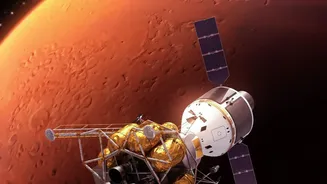
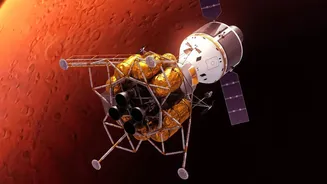
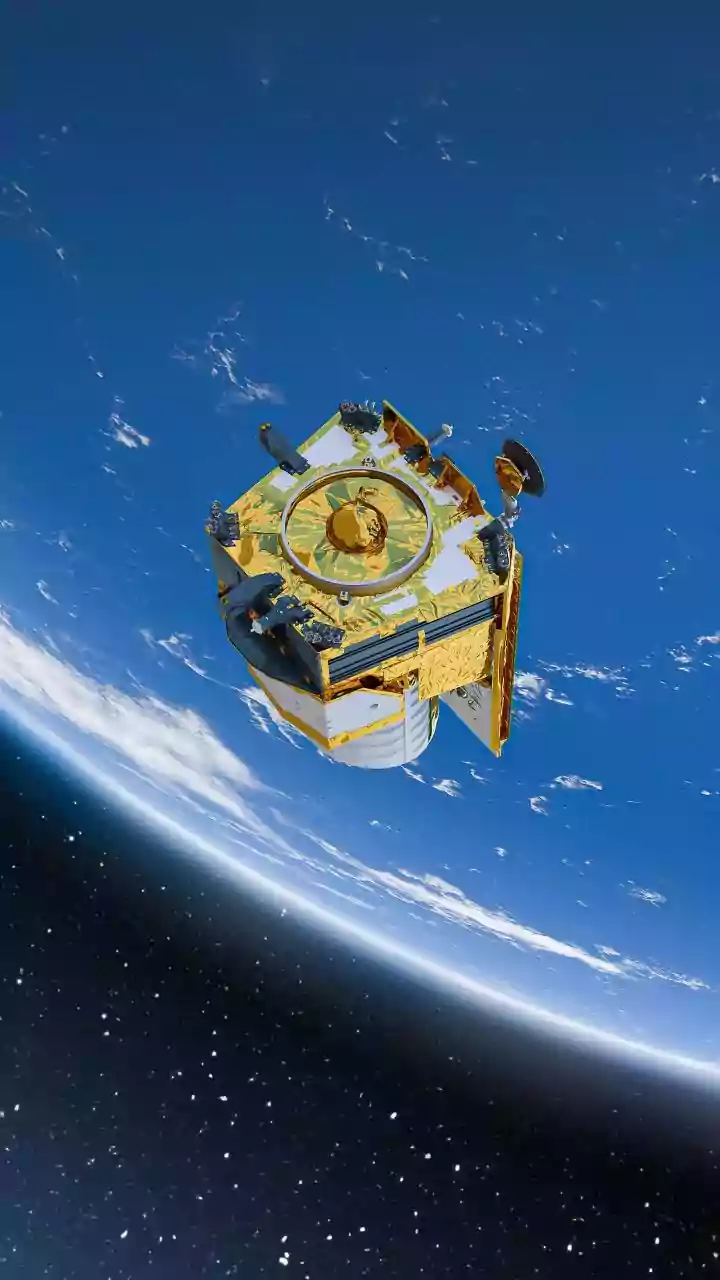
Led by the Japan Aerospace Exploration Agency (JAXA), the Martian Moons eXploration (MMX) mission is a robotic probe sent to study Phobos and Deimos, the two moons orbiting Mars. Having launched successfully aboard an H3 rocket from the Tanegashima Space
Center, its primary goal is historic: to land on the larger moon, Phobos, collect at least 10 grams of surface material, and return it to Earth for analysis. This will be the first-ever attempt to land on Phobos and the world's first sample-return mission from the Martian system. The mission builds on JAXA's previous successes with its Hayabusa missions, which returned samples from asteroids.
The Ambitious Five-Year Plan
The MMX spacecraft has a long road ahead. Its journey to Mars will take approximately one year, with an expected arrival in the planet's orbit around August 2027. After arriving, it will spend about three years conducting extensive observations. The probe will enter a special 'quasi-satellite orbit' to study Phobos, mapping its surface to identify ideal landing spots. Sometime around 2029, it will attempt one or two landings to collect its precious cargo using both a coring tool and a pneumatic device that blasts gas to lift material into a container. Before heading home, the spacecraft will also perform several flybys of Deimos, the smaller and more distant Martian moon, to gather comparative data. The probe is scheduled to depart the Mars system in 2030 for its year-long cruise back to Earth, with the sample capsule planned to land in Australia in 2031.
Why Study the Martian Moons?
Phobos and Deimos are two of the most mysterious objects in our solar system, and scientists are deeply divided on their origins. There are two main theories. The first is that they are captured asteroids from the outer solar system, drawn in by Mars's gravity long ago. The second is that they are the result of a giant impact, formed from debris that was blasted off Mars by a collision with another large body, similar to how Earth's moon may have formed. The samples collected by MMX are expected to solve this debate. If they contain materials similar to asteroids, it will support the capture theory. If they resemble the crust of Mars, it will point to a violent impact. The answer will provide crucial insights into how planetary systems form and evolve.
A Global Scientific Effort
While led by Japan, the MMX mission is a significant international collaboration. NASA has provided a key scientific instrument, a gamma-ray and neutron spectrometer called 'MEGANE' (an acronym that also means 'eyeglasses' in Japanese), designed to map the elemental composition of Phobos. The French (CNES) and German (DLR) space agencies have jointly developed a small, 25-kilogram rover named 'Idefix'. This rover will be dropped onto the surface of Phobos before the main spacecraft lands. Due to the moon's incredibly weak gravity, it's expected to bounce before settling, after which it will explore the surface and help mission control select the best site for sample collection. The European Space Agency (ESA) contributed the spacecraft's deep space communication equipment.
The Promise of a Martian Souvenir
The return of material from Phobos holds transformative potential. Scientists believe the moon's surface is likely covered in dust ejected from Mars over billions of years. This means the samples could contain traces of Mars itself, potentially making MMX the first mission to bring Martian material back to Earth. Analyzing these samples could reveal secrets about the Red Planet's ancient environment, including the history of water and organic materials. This knowledge is not just academically important; it's also seen as a crucial step in paving the way for future human exploration of Mars, potentially using Phobos as a staging base. For now, scientists and space enthusiasts around the world will be watching closely as MMX travels across the solar system on its groundbreaking five-year quest.