




Meet Pandora, a New Kind of Exoplanet Mission
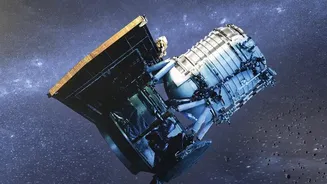
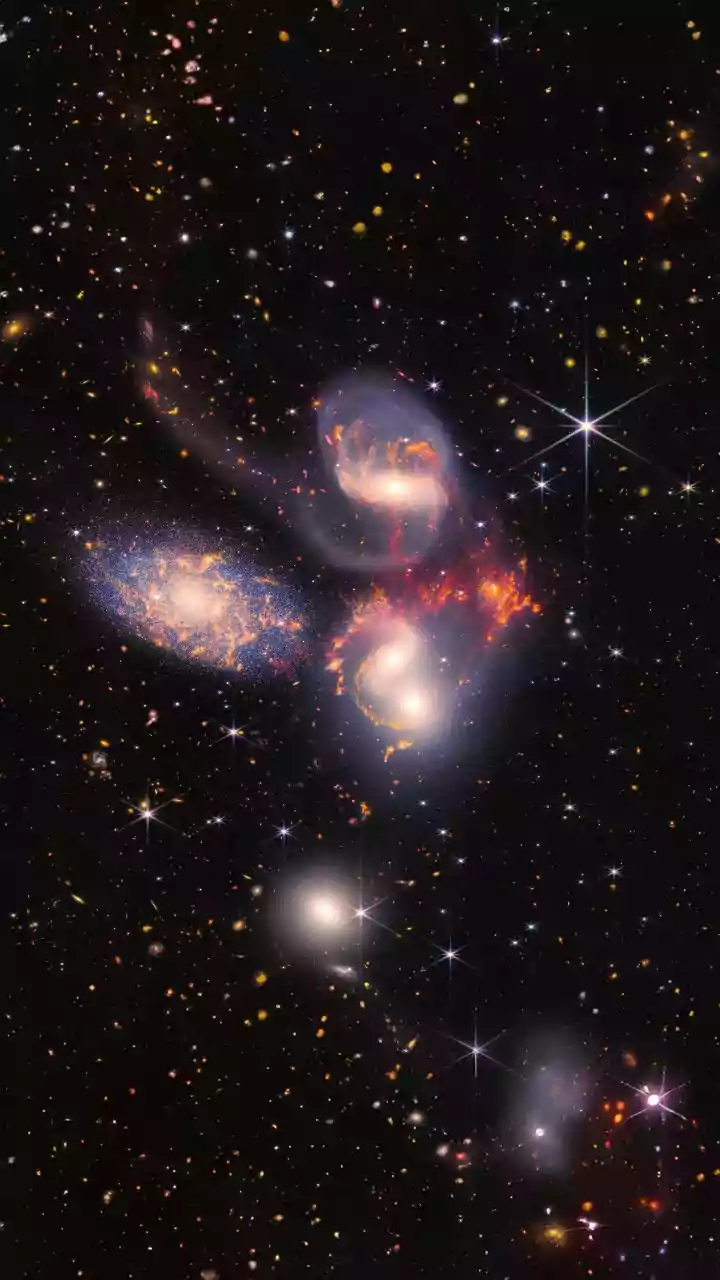
While giant observatories like the James Webb Space Telescope (JWST) capture stunning images from deep space, a new, much smaller player has just begun its work closer to home. Launched into low Earth orbit, NASA's Pandora is a SmallSat—a low-cost, compact
satellite—with a very specific job. As the first mission from NASA's Astrophysics Pioneers program, which champions faster and more focused projects, Pandora isn't designed to discover thousands of new planets. Instead, it aims to scrutinize about 20 known exoplanets and their host stars with unprecedented clarity, providing crucial data that could revolutionize how we search for signs of life.
Solving the 'Starspot' Problem
One of the biggest hurdles in studying exoplanets is the very stars they orbit. Scientists analyze a planet's atmosphere by measuring the starlight that filters through it during a 'transit,' when the planet passes in front of its star. However, stars are not perfect, stable balls of light. They have cooler, darker areas called starspots and brighter, magnetically active regions that constantly change. This stellar 'weather' can trick our instruments, distorting the light and making it difficult to tell what is from the planet's atmosphere and what is simply an artifact of the star itself. This issue, known as stellar contamination, has been a significant barrier, limiting the ability of even powerful telescopes like JWST to accurately analyze the atmospheres of smaller, Earth-sized planets.
A Long, Steady Stare
This is where Pandora’s unique strategy comes in. Armed with a novel 18-inch telescope, it will observe target stars and their planets simultaneously in both visible and infrared light. Unlike massive observatories that have their time scheduled down to the minute, Pandora is designed for patience. It will stare at each of its target stars for extended periods, accumulating over 200 hours of observation on each one over the course of a year. This long-duration monitoring will allow scientists to create a detailed map of the star's surface activity, charting how its starspots and bright regions evolve and rotate. This creates a stable baseline of the star's behavior, something that has been impossible to achieve until now.
Making Big Telescopes Even Better
Pandora isn't a competitor to the James Webb Space Telescope; it's an essential collaborator. The data it gathers on stellar activity will be used to 'clean' the observations made by JWST and future missions like the planned Habitable Worlds Observatory. By providing a precise model of the star, scientists can digitally remove the noise and distortion it causes, isolating the true signal from the exoplanet's atmosphere. This synergy will unlock the full potential of our most powerful observatories, allowing them to probe the skies for biosignatures—such as water, methane, and oxygen—on smaller, rocky worlds that were previously difficult to study. It effectively gives our premier telescopes a sharper set of glasses for their most important work.
The Future is Small and Agile
The Pandora mission also represents a new, agile approach to space exploration. As part of the Astrophysics Pioneers program, it was developed on a faster timeline and with a smaller budget than a traditional flagship mission. This model allows NASA to test innovative, high-risk concepts that can fill critical knowledge gaps without requiring a multi-billion-dollar investment. By focusing on a single, well-defined problem, small satellites like Pandora can deliver an enormous scientific return. They are the specialized tools in the growing astronomical toolkit, working alongside the heavy-duty machinery to push the boundaries of what we know about the cosmos.