





What is the Bharatiya Antariksha Station?
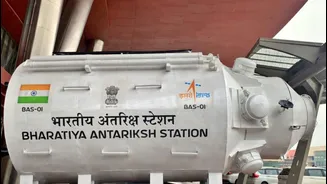
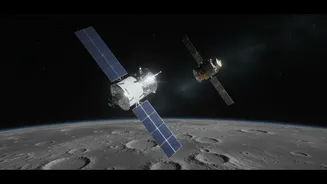
The Bharatiya Antariksha Station (BAS) is India's answer to the International Space Station (ISS) and China's Tiangong. It is a planned modular space station that will orbit the Earth at an altitude of about 400-450 kilometres. Envisioned as a premier
platform for scientific research, the station will allow Indian astronauts, known as Vyomanauts, to live and work in space for extended periods of three to six months. The project is a monumental leap for the Indian Space Research Organisation (ISRO), building on the foundations of its human spaceflight program, Gaganyaan. While smaller than the ISS, the 52-tonne station will be a powerful symbol of India's technological prowess and scientific ambition. The government has set a target to have the first module in orbit by 2028 and the complete, five-module station fully operational by 2035.
From Blueprint to Reality
The headline-making news is that the project has now entered a more detailed design phase. This is a critical milestone. While initial concepts and feasibility studies are complete, this new phase involves the nitty-gritty of engineering. According to government statements, ISRO has released numerous baseline design documents and expert committees have completed their reviews. This means engineers are now working on the specific subsystem designs—the complex networks of life support, power, propulsion, and communication that will make the station function. This stage moves the BAS from a paper-based dream to tangible hardware development, with prototypes of key components already being built. It's the phase where theoretical plans are tested against the harsh realities of physics and engineering, ensuring the final structure is safe, reliable, and capable of achieving its ambitious goals.
The Gaganyaan Connection
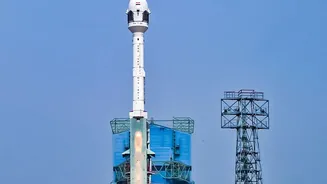
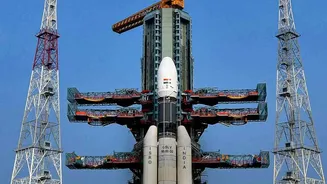
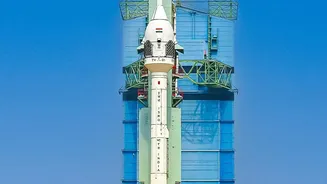
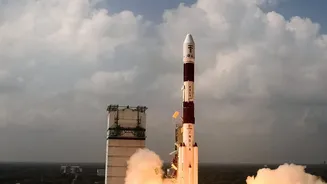
The Bharatiya Antariksha Station is not being developed in a vacuum. It is the logical next step following the Gaganyaan mission, India's inaugural crewed spaceflight program. Gaganyaan is developing the core technologies essential for putting humans in space and bringing them back safely. These include advanced life support systems, crew escape mechanisms, and the orbital module itself. These same technologies form the foundational building blocks for the space station. Furthermore, India has been methodically testing other vital capabilities, such as the Space Docking Experiment (SPADEX), which demonstrated autonomous docking—a procedure crucial for assembling a modular station in orbit. Every successful Gaganyaan test flight and technology demonstration paves the way for the larger, more complex challenge of building and sustaining the BAS.
Why India Needs its Own Space Station
Having a permanent address in low-Earth orbit offers immense strategic and scientific advantages. The station will serve as a microgravity laboratory, allowing Indian scientists to conduct cutting-edge research in fields like materials science, biotechnology, and medicine that is impossible on Earth. For instance, studying the effects of long-duration spaceflight on the human body—like bone density loss and muscle atrophy—provides invaluable data for future deep-space missions, including India's stated goal of a crewed lunar mission by 2040. Economically, the project is expected to drive innovation and create a robust ecosystem for the domestic aerospace industry. Strategically, it elevates India into an elite club of nations with the capability to sustain human presence in space, enhancing its stature in global space governance.