


From Blueprint to Building Blocks
The Indian Space Research Organisation (ISRO) has transitioned from the drawing board to the factory floor, metaphorically speaking. The agency has officially begun designing the critical subsystems for the nation's first indigenous space station. This
move was confirmed in Parliament, indicating a significant acceleration of the project. The initial phase focuses on the first of five planned modules, known as BAS-01. With the Baseline Design Review and System Engineering complete, ISRO has released 31 baseline design documents, allowing the intricate work of designing individual components to commence. This means engineers are now working on the specifics of hardware, electronics, and the life support systems that will form the backbone of India's orbital outpost.
What is the Bharatiya Antariksh Station?
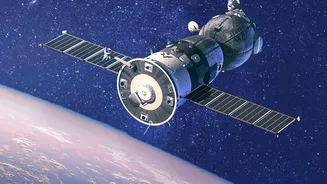
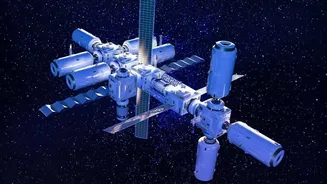
Envisioned as a modular orbital laboratory, the Bharatiya Antariksh Station (BAS) is India’s answer to the International Space Station (ISS) and China’s Tiangong. Planned to be fully established by 2035, the station will orbit at an altitude of around 400-450 kilometres. It is designed to be a 52-tonne, five-module facility capable of hosting two to four astronauts for missions lasting several months. The primary purpose of the BAS is to conduct scientific research in a microgravity environment, with experiments planned in fields like biotechnology, materials science, and pharmaceuticals. It will give Indian scientists a permanent platform for research and technology demonstration, without relying on international partners.
The Stepping Stone: Gaganyaan
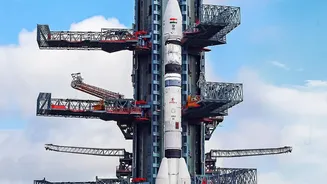
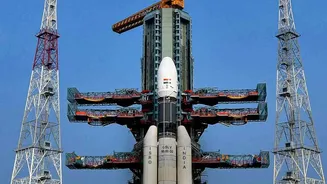
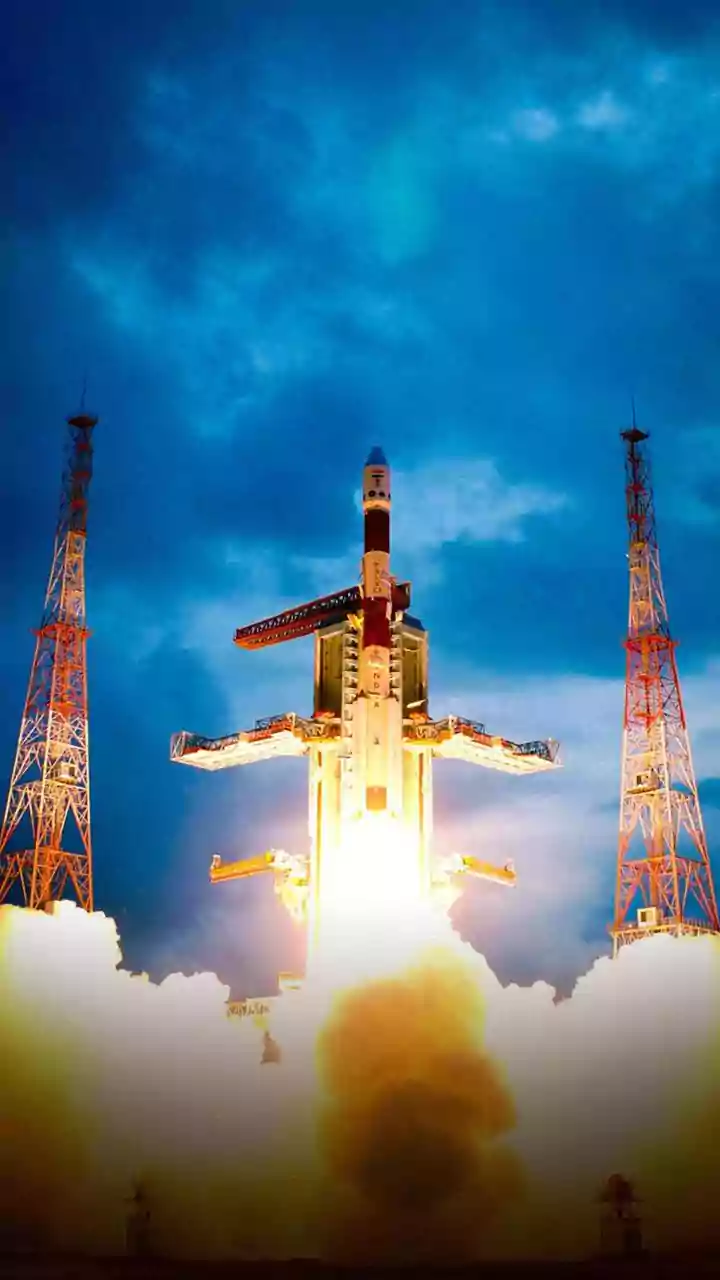
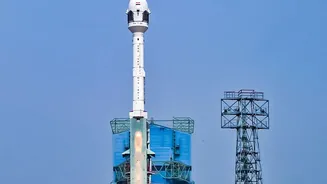
Before India can build its home in space, it must first master the art of travelling there and back safely. This is the crucial role of the Gaganyaan programme, India's first human spaceflight mission. The technologies developed for Gaganyaan—including the human-rated LVM3 rocket, life support systems, and crew escape protocols—are the foundational building blocks for the space station. The Gaganyaan project, which aims to send a crew into orbit for a three-day mission, serves as the essential testbed for every system that will be scaled up for the long-duration stays on the BAS. The successful completion of precursor missions and advanced preparations for the first uncrewed Gaganyaan flight, G1, are critical steps on this journey.
Timeline and Future Ambitions
The roadmap for the BAS is ambitious but phased. The first module, BAS-01, is targeted for launch in 2028 aboard an LVM3 rocket. This initial robotic module will act as a testbed for key technologies. Following its deployment, ISRO will launch the remaining four modules incrementally, aiming for a fully operational, five-module station by 2035. This includes a core-docking module, a science research module, a laboratory, and a common berthing module. This entire effort is part of India’s broader “Space Vision 2047,” which also includes a crewed lunar mission by 2040. To achieve this, India is also focusing on developing critical technologies like in-space docking and refuelling, with successful demonstrations already completed.
Joining an Elite Global Club
The development of the Bharatiya Antariksh Station will place India in an exclusive group of nations with the capability to build and operate their own space stations, alongside the United States, Russia, and China. This is not just a scientific achievement but a significant geopolitical statement. It signals India's self-reliance in a critical high-technology sector and positions the nation as a major player in the future of space exploration. While many key technologies are being developed indigenously, ISRO is also open to international collaboration, with agencies like NASA and the European Space Agency (ESA) expressing interest in potential partnerships for future research and astronaut visits.