




Earth's Thermostats Under a New Lens
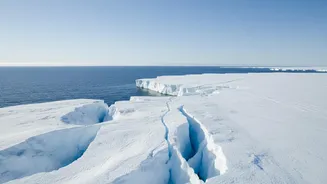
Think of the Arctic and Antarctic as Earth's crucial cooling vents. The planet absorbs most of the sun’s energy in the tropics, and that heat is transported towards the poles through ocean currents and weather systems. At the poles, this energy radiates
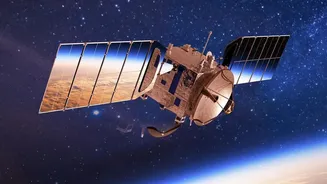
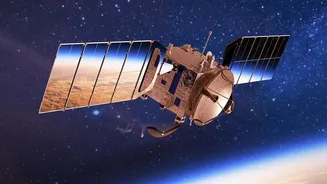
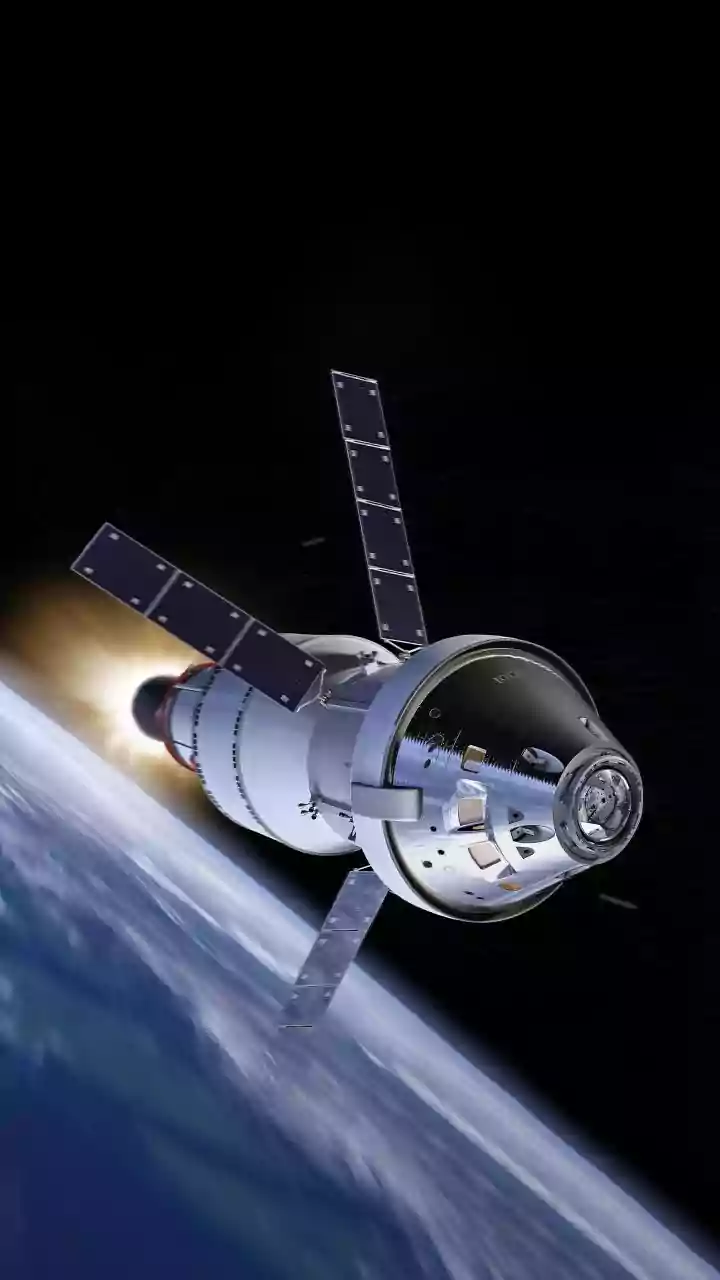
back into space, helping to maintain a stable global temperature. For decades, scientists understood this basic process, known as the planet's energy budget, but there was a significant blind spot. A huge chunk of this escaping energy—nearly 60 percent—is released as far-infrared radiation, a type of light that is invisible to our eyes and has never been systematically measured until now. NASA's PREFIRE mission, which stands for Polar Radiant Energy in the Far-InfraRed Experiment, was designed to fill this gap. By sending two shoebox-sized satellites, or CubeSats, into orbit, NASA has finally opened a window into this hidden world of polar heat.
What the Two-Year Record Reveals
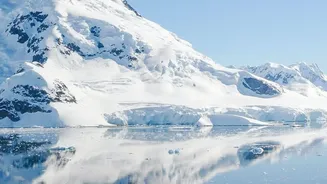
After beginning their scientific work in July 2024, the PREFIRE CubeSats have now captured two full seasonal cycles at both poles. The data provides a continuous record of how temperatures swing and, more importantly, how much far-infrared energy is escaping. The findings confirm that the two poles behave very differently. The Arctic experiences relatively mild summers that can thaw tundra and melt sea ice. In contrast, Antarctica, the coldest continent on Earth, largely remains below freezing even during its summer months. This new, precise data allows scientists to distinguish how different surfaces—like snow, sea ice of varying thickness, and open water—radiate heat differently. This level of detail was previously missing from climate models, which often had to make broad assumptions about far-infrared energy. The PREFIRE data helps anchor these models in reality, providing a much clearer picture of the energy dynamics at play.
Why This Energy Balance Matters for India
Changes at the poles might seem distant, but they have profound ripple effects that reach India. The phenomenon known as 'Arctic amplification' means the Arctic is warming at least twice as fast as the rest of the planet. When less heat escapes the poles, ice melts faster, contributing to global sea-level rise which threatens India's long coastline and major cities like Mumbai and Kolkata. Furthermore, a warmer Arctic can disrupt large-scale weather patterns. Recent research from the Indian Institute of Tropical Meteorology has already linked declining Arctic sea ice in the early summer to a westward shift and intensification of India's late-season monsoon rains. This shift affects everything from agriculture and water management to flood risk across the subcontinent. Understanding the polar energy budget is therefore not just an academic exercise; it is crucial for predicting changes in the monsoon, the lifeline for millions in India.
A Sharper Climate Crystal Ball
The ultimate goal of the PREFIRE mission is to improve the accuracy of weather and climate models. Climate models are complex simulations that scientists use to predict future warming, sea-level rise, and changes in weather patterns. By feeding them more accurate data on how much heat is being trapped versus how much is escaping, these models become far more reliable. Before PREFIRE, the lack of far-infrared data was a major source of uncertainty in predictions about the rate of Arctic warming and sea ice loss. With this two-year dataset, researchers can now fine-tune their models to better reflect the real-world processes happening at the poles. This leads to better forecasts, not just for the polar regions but for the entire globe, helping communities and governments better prepare for the impacts of a changing climate. The mission has been so successful that it has been extended through September 2026 to gather even more crucial data.