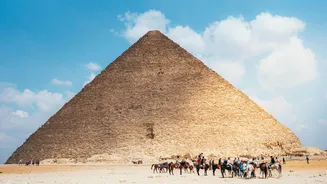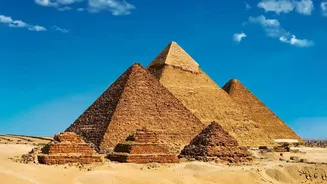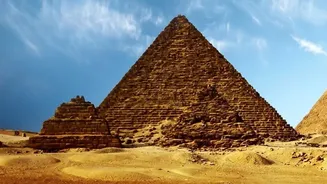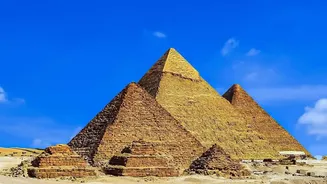






Instead of Giza, Try Dahshur
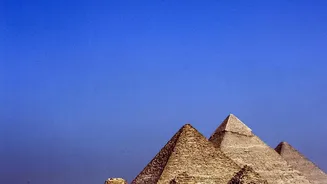
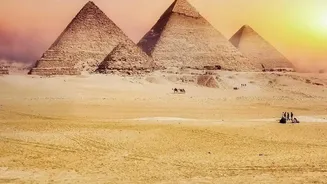
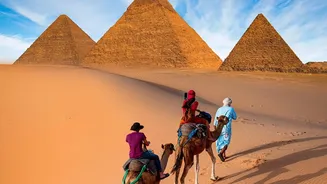
The Pyramids of Giza are a bucket-list essential, but the experience can be overwhelming with crowds and persistent vendors. For a more serene and personal encounter with these ancient structures, head 40 kilometres south of Cairo to Dahshur. This royal
necropolis is home to the Bent Pyramid and the Red Pyramid, both predating the famous Giza trio. The Red Pyramid, Egypt's third-largest, is particularly noteworthy as visitors can often explore its interior passages with far fewer people around, offering a sense of genuine discovery that is harder to find at Giza. The absence of large tour buses and crowds allows you to appreciate the architectural evolution and sheer scale of these monuments in relative peace.
Beyond the Valley of the Kings, Visit Medinet Habu
The Valley of the Kings is a cornerstone of any Luxor itinerary, but its popularity means you'll be sharing the narrow tombs with many other visitors. For a less crowded yet equally stunning alternative, visit Medinet Habu. This is the mortuary temple of Ramesses III and is considered one of the best-preserved temples on the West Bank. Its massive pylons are covered in detailed reliefs depicting epic battle scenes, including a famous victory over the mysterious Sea Peoples. Many of the carvings and hieroglyphs inside retain their vibrant, original colours, giving you a clearer glimpse of how these temples once looked. It offers a more intimate and less rushed experience, allowing you to absorb the history inscribed on its walls.
Swap Crowded Karnak for Dendera and Abydos
Karnak Temple is a colossal complex that can take hours to explore, often amidst a sea of fellow tourists. For a different kind of temple experience, take a day trip north of Luxor to the temples of Dendera and Abydos. These sites are often missed on standard tours, meaning you can explore them without the throngs. The Temple of Hathor at Dendera is remarkably well-preserved, famous for its stunning astronomical ceiling and colourful reliefs from the Ptolemaic period. Abydos was a sacred cult centre for the god Osiris and features the beautiful Temple of Seti I, which contains the famous Abydos King List, a chronological record of Egyptian pharaohs. Visiting both provides a deep dive into ancient Egyptian religion and artistry with a sense of tranquility.
Choose a Dahabiya Over a Large Nile Cruise
A cruise on the Nile is a classic Egyptian experience, but the river can get congested with large, multi-deck vessels operating on fixed schedules. For a more flexible and intimate journey, consider booking a dahabiya. These are traditional, two-masted sailing boats that carry a much smaller number of passengers, typically between 10 and 20. The smaller size allows dahabiyas to moor at smaller islands and visit riverside villages and lesser-known ancient sites that are inaccessible to the larger ships. This mode of travel harks back to the golden age of Egyptian travel, offering a slower, quieter, and more personalised way to see the timeless landscapes of the Nile Valley unfold.
Explore the Tombs of the Nobles
While the royal tombs in the Valley of the Kings and Queens are magnificent, the nearby Tombs of the Nobles offer a different and fascinating perspective. These tombs belonged to powerful governors, scribes, and other high-ranking officials of ancient Thebes. Unlike the royal tombs, which focus on religious and mythological scenes, the decorations here often depict vivid and lively scenes of daily life—from farming and hunting to feasting and celebrating. The artwork is often beautifully preserved and provides a unique insight into the lives of the Egyptian elite. Because they receive fewer visitors than their royal counterparts, you can often admire these detailed and colourful paintings in peace.