



A Promising Ocean World
For years, Enceladus has been a top candidate in the search for extraterrestrial life. Though it is only about 500 kilometres across, scientists are confident it hides a global ocean of liquid saltwater beneath its frozen shell. What makes Enceladus truly
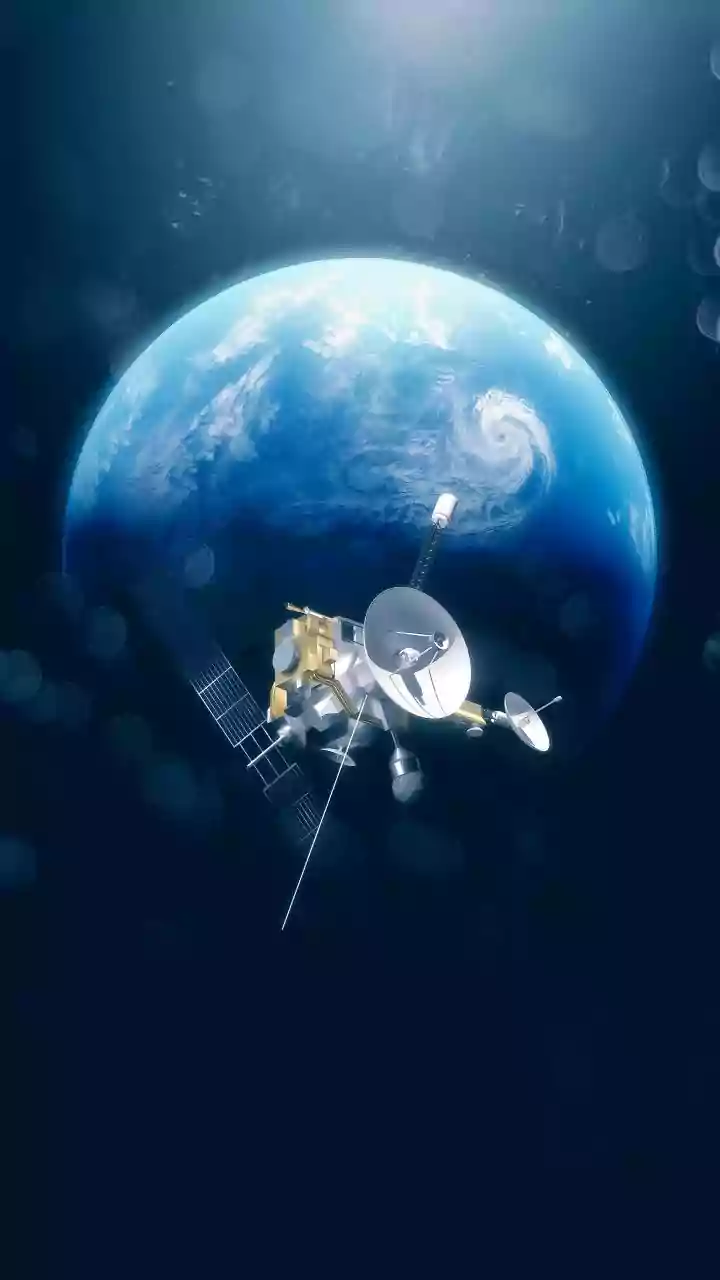
special are the massive geysers erupting from 'tiger stripe' cracks near its south pole. These plumes eject water vapor and ice grains from the subsurface ocean hundreds of kilometres into space, offering a direct sample of an alien sea without needing to drill through miles of ice. Data from NASA's Cassini spacecraft, which flew through these plumes, confirmed the water contains salts and organic compounds—key ingredients for life as we know it.
The Hunt for Biosignatures
A 'biosignature' is a substance—like a particular molecule or chemical pattern—that provides evidence of past or present life. Finding them is a central goal of astrobiology. On Enceladus, this means looking for complex organic molecules, like amino acids, within the ejected ice grains. However, a major question has been whether these delicate molecules could survive the violent journey into space and detection by a fast-moving spacecraft. Furthermore, any biological material would likely be extremely diluted in the vast ocean. If these signs of life are too faint or get destroyed upon collection, a mission could fly right through the plumes and find nothing, even if life were present.
Recreating Enceladus in the Lab
To tackle this problem, recent research published in Science Advances took a creative approach. Scientists didn't go to Enceladus; they brought Enceladus to the lab. One study, led by researchers from Freie Universität Berlin, simulated how ocean water droplets would freeze as they travel through the icy cracks toward the surface. They found something surprising: the slow freezing process naturally separates and concentrates different compounds. Instead of each ice grain being a tiny, uniform sample of the ocean, the moon's own geology effectively sorts the chemicals. Salts, minerals, and importantly, organic molecules could become highly concentrated in individual ice grains.
A Boost for Future Missions
This finding is a game-changer for future missions. It suggests that Enceladus does some of the hard work for us. Instead of needing to detect incredibly faint traces of life averaged out across countless particles, a spacecraft could get lucky and hit a single ice grain packed with concentrated biosignatures. According to the researchers, even a tiny fraction of cellular material within one of these grains could be identifiable with instruments available today. In a separate but related study, scientists also showed that microbes from Earth's own deep-sea vents could survive and grow in lab conditions mimicking Enceladus's ocean, further bolstering its potential habitability.
What Comes Next?
It is crucial to remember that these studies do not prove life exists on Enceladus. What they do is provide powerful evidence that the moon is habitable and, significantly, that signs of life might be detectable if they are there. The research removes a major barrier to discovery and provides a clear roadmap for how to search. This work will be vital for planning future missions, like a potential European Space Agency probe aimed at launching in the 2040s, designed specifically to hunt for biosignatures in the plumes. By knowing that life's clues might be concentrated in specific grains, mission planners can design instruments and strategies with a much higher chance of success.