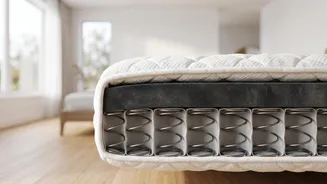








For decades, mattress shoppers have been told a simple rule: more coils mean a better mattress. But this is an oversimplification. While a certain number of springs is necessary, focusing only on coil count can be a costly mistake.
The Great Coil Count Myth
It’s one of the most
persistent myths in the bedroom: the higher the coil count, the higher the quality. While it's true that a mattress needs a sufficient number of coils to provide adequate support (a queen size should generally have at least 400), an extremely high number isn't a guarantee of superior quality. In fact, some manufacturers may pack in thinner, lower-quality springs just to inflate the count for marketing purposes. A mattress with 800 well-made coils will almost always outperform one with 1,500 flimsy ones. Think of it as a system; the number of parts is less important than how well those parts are made and how they work together. Focusing on count alone means you might be ignoring more critical factors that determine how a mattress actually feels and how long it will last.
Coil Gauge: The Real Strength Factor
A far more important number to consider is the coil gauge. This refers to the thickness of the steel wire used to make the springs. The scale works in reverse: a lower gauge number means a thicker, stronger wire, while a higher gauge number means a thinner, more flexible wire. A mattress with a lower gauge (typically 12 to 14) will be firmer and more durable, making it a good choice for heavier individuals or those who prefer robust support. A higher gauge (15 or above) will result in a softer, more contouring feel. So, when you're comparing two mattresses, don't just ask about the number of coils—ask about their gauge. The thickness of the wire is a better predictor of long-term durability and resistance to sagging.
Not All Coils Are Created Equal
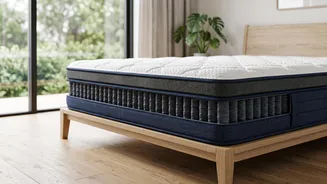
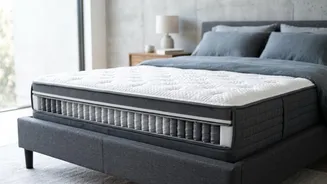
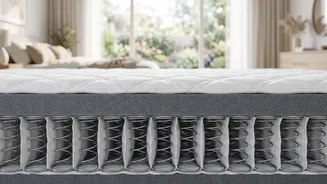
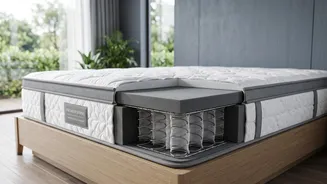
Beyond count and gauge, the type of coil system used dramatically affects a mattress's performance. The four main types are Bonnell, offset, continuous, and pocketed coils. Bonnell coils are the oldest and most common, shaped like an hourglass and wired together, offering a traditional bouncy feel but high motion transfer. Continuous wire coils use a single, long wire to form the entire support system, making them durable but also prone to transferring movement. Offset coils are an improvement on Bonnell, with a hinging action that conforms better to the body. The most advanced are pocketed coils, where each spring is individually wrapped in fabric. This allows them to move independently, providing superior motion isolation (so you won't feel your partner tossing and turning) and more targeted support.
It’s What’s On Top That Counts
A mattress is more than just its springs. The comfort layers—the materials that sit on top of the coil system—are what you actually feel and are primarily responsible for pressure relief. These layers can be made from various materials, including memory foam, latex, polyurethane foam, or natural fibres like wool and cotton. The thickness and quality of these layers determine the mattress's overall feel, from soft and plush to firm and responsive. A bed with a state-of-the-art coil system can still be uncomfortable if the comfort layers are thin or made from low-density foam that breaks down quickly. A high-quality mattress balances a supportive coil core with comfortable, durable top layers to create the perfect sleep surface.
How to Choose Your Perfect Mattress
When you're ready to buy, remember to look beyond the numbers on the spec sheet. Your sleeping position is a crucial factor: side sleepers often need a softer surface to cushion shoulders and hips, while back and stomach sleepers generally require firmer support to maintain spinal alignment. Body weight also plays a role, as heavier individuals may need a firmer mattress with a lower coil gauge for adequate support. Ultimately, the best way to know if a mattress is right for you is to test it. If you're in a store, lie down in your typical sleeping position for at least 10-15 minutes. Don't be shy—this is a major investment in your health and well-being. Pay attention to how your spine feels and whether there are any pressure points.