






An Audacious Bet on Indian Space
Founded in 2018 by former ISRO scientists Pawan Kumar Chandana and Naga Bharath Daka, Skyroot Aerospace had a bold mission: to build rockets that could make spaceflight regular, reliable, and affordable. Their vision was to become the 'cab to orbit,'
offering dedicated launches for the booming small satellite market. This was a high-risk, high-reward proposition in a sector historically dominated by government agencies. Securing early-stage funding was a challenge, but they found believers. One of the first was Binny Bansal, co-founder of Flipkart, who provided a crucial early investment. These initial investors weren't just betting on a business plan; they were betting on the founders' vision and India's potential to become a major player in the private space economy.
When the World Shut Down
Just as Skyroot was gaining momentum, the COVID-19 pandemic struck. For a hardware-focused company reliant on physical assembly, testing, and supply chains, the lockdowns were devastating. Co-founder Pawan Kumar Chandana has spoken about the immense hardships, noting that a planned Series A funding round was delayed, leaving the company with only a few months of financial runway. Across India's startup ecosystem, funding dried up as investors grew cautious, with investments in March 2020 dropping by over 50% compared to the previous month. For a deep-tech startup like Skyroot, which requires significant, patient capital long before generating revenue, the situation was particularly dire.
Conviction in a Time of Crisis
This is where the conviction of early backers became critical. While new funding became scarce, key supporters like the founders of Greenko, a renewable energy company, stepped in to keep the venture alive. This was not a passive act of waiting out the storm. It was an active display of faith in Skyroot's long-term potential, even as the short-term outlook seemed bleak. These investors understood that building rockets takes time and that a global crisis didn't change the fundamental opportunity in the space-tech market. Their support provided the stability Skyroot needed to retain its team and continue its crucial research and development, even as the world was in turmoil. This period proved to be a game-changer, as the Indian government also introduced landmark reforms in 2020, opening up the space sector to private players and creating a more supportive ecosystem.
From Surviving to Soaring
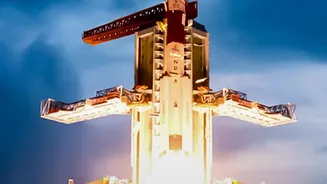
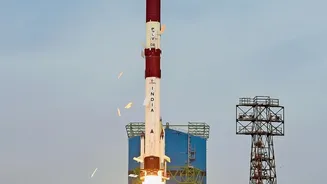
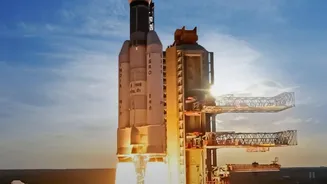
The faith of these investors was soon vindicated. Emerging from the pandemic's shadow, Skyroot achieved a series of historic milestones. In November 2022, the company successfully launched the Vikram-S, India's first-ever privately built rocket, on a suborbital flight. This 'Prarambh' (The Beginning) mission proved their capabilities and set the stage for something bigger. The real triumph came in July 2026, with the successful orbital launch of Vikram-1. This achievement made Skyroot the first private Indian company to reach orbit and placed India in an elite club with the US and China as nations with private orbital launch capabilities.
The Payoff: A Unicorn Takes Flight
That success has translated into significant financial validation. In May 2026, Skyroot raised $60 million in a funding round co-led by Sherpalo Ventures and Singapore's sovereign wealth fund GIC, pushing its valuation to $1.1 billion and making it India's first space-tech unicorn. The journey from a precarious financial position during the pandemic to a billion-dollar valuation is a testament to both the team's resilience and the investors' foresight. Skyroot is now the country's most well-funded space-tech startup and is focused on scaling up its manufacturing and increasing its launch frequency to serve a global market.