




The Sourdough Advantage
Why reach for sourdough when brioche and challah have long been the darlings of the French toast world? The answer lies in structure and flavour. Sourdough bread has a naturally sturdy, chewy texture that allows it to soak up a generous amount of custard
without collapsing into a soggy mess. Unlike softer breads that can fall apart, sourdough holds its shape, ensuring a final product that’s creamy on the inside with a satisfyingly crisp exterior. Furthermore, the characteristic tang from the sourdough fermentation process provides a perfect counterpoint to the sweetness of maple syrup and other toppings. This creates a more complex and balanced flavour profile, preventing the one-note sweetness that can sometimes plague this breakfast classic.
Choosing the Perfect Loaf
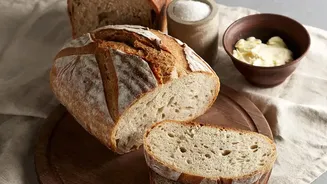
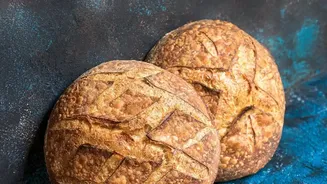
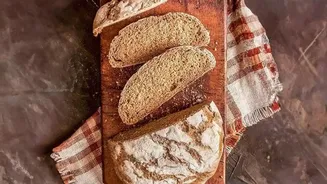
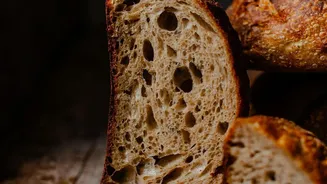
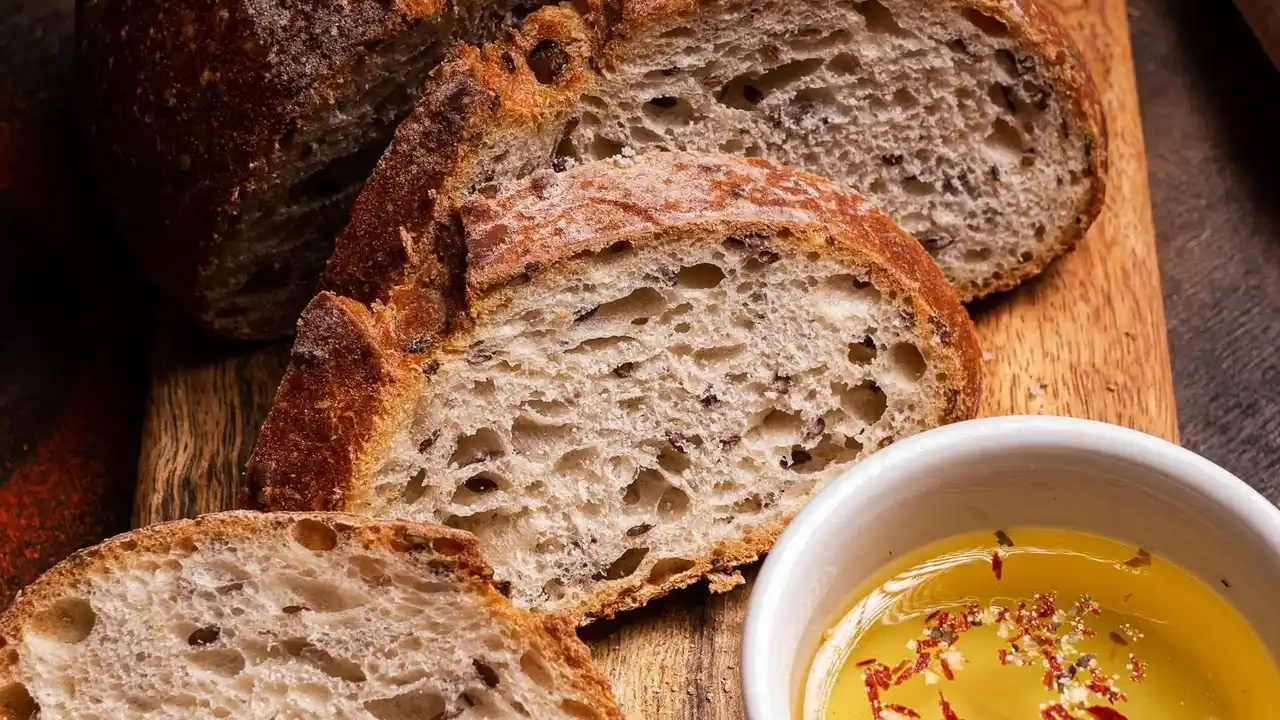
Not all sourdough is created equal when it comes to making the perfect French toast. Look for a traditional country loaf rather than one with an extremely open, holey crumb. While beautiful, those large holes can cause the custard to leak out. For best results, use bread that is a day or two old. Stale bread is slightly drier, which allows it to absorb the egg mixture more effectively without becoming overly saturated. When slicing, aim for a thickness of about three-quarters of an inch to one inch. This thickness is the sweet spot; it's substantial enough to hold the custard but thin enough to cook through evenly, resulting in a creamy center and a perfectly golden-brown crust.
Mastering the Custard
The custard is the soul of French toast, and a good one is simple to master. The foundation is a well-whisked mixture of eggs and dairy. While milk is a standard choice, using half-and-half, heavy cream, or a combination of milk and cream creates a much richer, more luxurious result. For every two to three large eggs, about a cup of dairy is a good ratio to follow. Don't forget the flavourings. A teaspoon of vanilla extract and a half-teaspoon of ground cinnamon are classic additions that provide warmth and depth. A pinch of salt is also essential to balance the sweetness. Some recipes call for a tablespoon or two of sugar or maple syrup directly in the custard, but you can also leave it out and let the toppings provide all the sweetness.
Technique Is Everything
Once you have your bread and custard, the technique ensures success. Don't rush the soaking process. Allow each slice to sit in the custard for at least 30-45 seconds per side, long enough for the mixture to penetrate the center but not so long that the bread begins to disintegrate. Heat a large, non-stick or cast-iron skillet over medium heat and melt a generous amount of butter. When the butter is sizzling, place the soaked slices in the pan, ensuring you don't overcrowd it. Cook for about three to four minutes per side, until each surface is a deep golden brown and crisp. To keep batches warm as you cook, you can place the finished slices on a wire rack set on a baking sheet in an oven preheated to a low temperature.
Perfect Pairings and Toppings
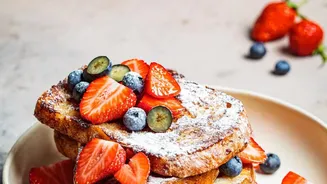
The tangy canvas of sourdough French toast welcomes a wide variety of toppings. Classic butter and pure maple syrup are always a winning combination. For a fresh contrast, top your toast with fresh berries, sliced bananas, or sautéed apples. A dollop of Greek yogurt or a dusting of powdered sugar can add another layer of flavour and visual appeal. For a textural crunch, consider a sprinkle of toasted pecans or almonds. You can even experiment with the custard itself by adding a pinch of nutmeg or the zest of an orange for a bright, citrusy twist. The versatility of sourdough allows it to pair well with both sweet and even savory additions like crispy bacon.