





Beyond a Historic Touchdown
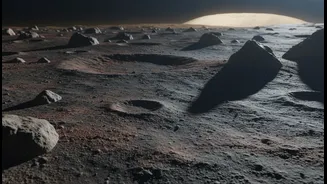
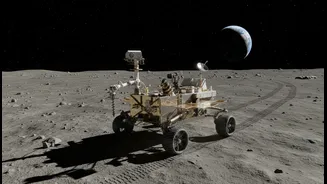
The successful landing of Chandrayaan-3 near the Moon's south pole on August 23, 2023, was a moment of immense national pride and a landmark achievement in space exploration. But the mission's true purpose was just beginning. For the next lunar day, the Vikram
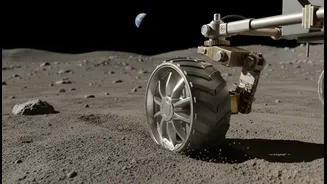
lander and Pragyan rover conducted a suite of experiments, sending back a wealth of information from this previously unexplored region. Now, months later, scientists at the Physical Research Laboratory (PRL) in Ahmedabad, along with other ISRO institutions, are publishing detailed analyses of this data, transforming our understanding of the Moon and cementing the mission's scientific legacy. These studies dive deep into the very soil and thermal environment of our celestial neighbour, showing that the mission's value extends far beyond the landing itself.
Decoding the Moon's Temperature Secrets
One of the mission's most surprising findings came from the Chandra’s Surface Thermophysical Experiment (ChaSTE) payload. Developed by teams at PRL and the Vikram Sarabhai Space Centre, ChaSTE was a probe designed to measure the temperature of the lunar topsoil. It penetrated about 10 centimeters into the surface, making it the first-ever in-situ thermal profiling of the Moon's near-polar subsurface. The results were startling. While the surface temperature was around 50-60 degrees Celsius, just 8 centimeters below, it plummeted to a frigid minus 10 degrees Celsius. This massive temperature gradient indicates that the Moon's topsoil is an incredibly effective thermal insulator, a crucial piece of information for any future missions planning to build habitats or operate equipment on the lunar surface. It suggests the regolith could offer natural protection from extreme temperature swings.
An Unambiguous Elemental Map
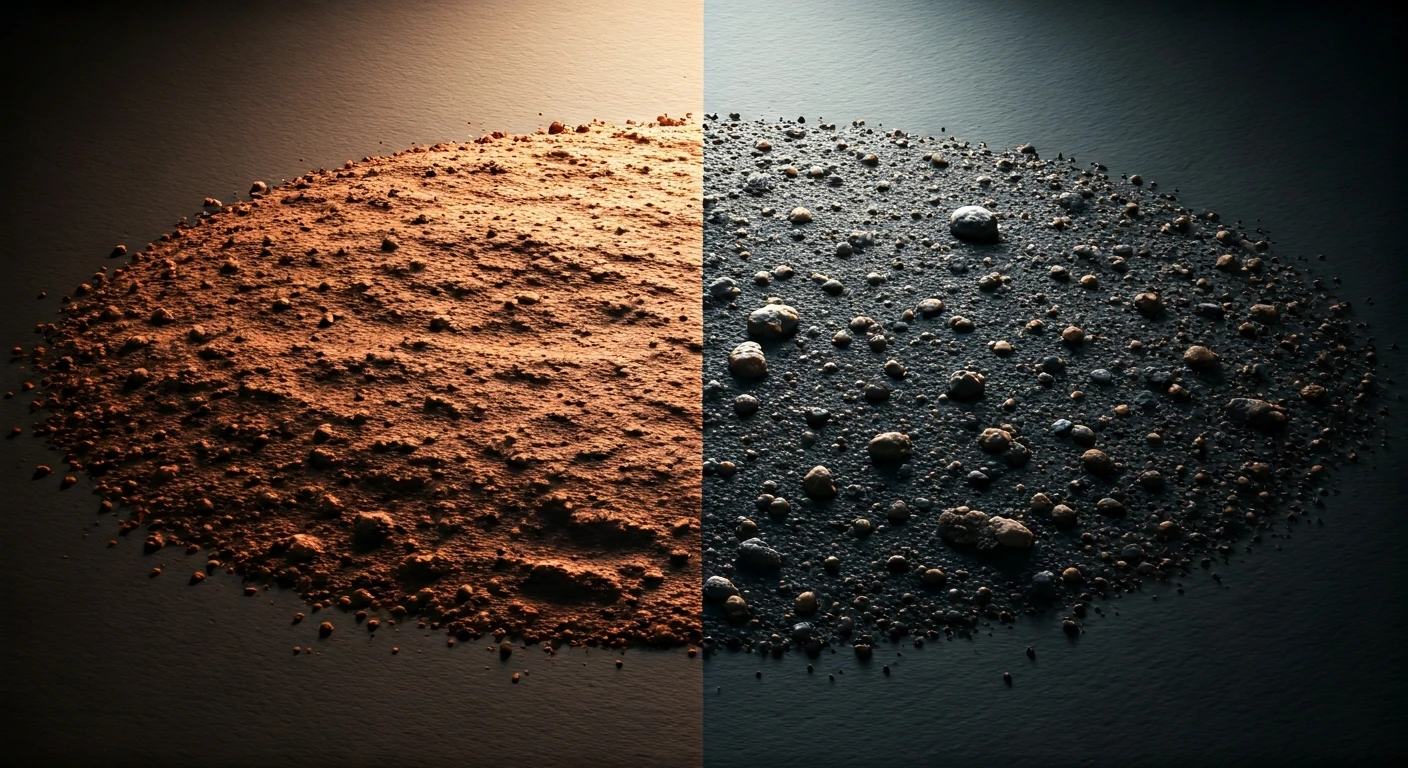
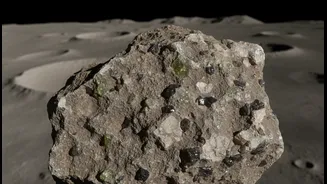
The Pragyan rover was a mobile laboratory, and its Laser-Induced Breakdown Spectroscope (LIBS) instrument performed the first-ever on-the-spot analysis of the lunar south pole's elemental composition. By firing a laser at the soil and analyzing the resulting plasma, LIBS confirmed the presence of sulphur in the region unambiguously. While orbiters had hinted at it, ground-based confirmation was a major breakthrough. The instrument also detected aluminium, calcium, iron, chromium, titanium, manganese, silicon, and oxygen. Separately, the Alpha Particle X-ray Spectrometer (APXS), also built by PRL, conducted its own analysis. A recent PRL study of APXS data found an enrichment of sulfur but a depletion of other volatile elements like sodium and potassium compared to other lunar sites.
Clues to the Moon's Ancient Past
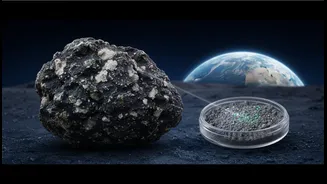
These elemental findings are more than just a chemical inventory; they are clues to the Moon's violent and ancient history. The unique sulfur enrichment and potassium depletion have led PRL scientists to a fascinating hypothesis. They believe the material at the landing site could be primitive mantle matter, excavated from deep within the Moon during the colossal impact that formed the South Pole-Aitken basin over 4.3 billion years ago. This ancient material was then spread across the surface by later, smaller impacts. This makes the Shiv Shakti Point a scientifically precious location, potentially offering access to the Moon's primordial building blocks, a feat that would otherwise require deep drilling. It essentially provides a window into the Moon's very formation.
Paving the Way for Future Exploration
The scientific value of Chandrayaan-3's data is intensely practical. Understanding the soil's thermal properties is critical for designing future rovers and habitats. Knowing its elemental composition is key for in-situ resource utilization (ISRU) — the idea of 'living off the land' by using lunar resources for water, oxygen, and construction materials. For example, the presence of sulphur can provide clues about the potential for trapped water ice, a resource vital for sustaining a human presence. Moreover, the data serves as a crucial 'ground truth' for calibrating orbital instruments, making global lunar maps more accurate. The detailed studies from PRL and ISRO are not just academic; they are foundational knowledge that India is contributing to the global effort to return humans to the Moon, this time to stay.