


The Challenge: Powering Our Future in Space
For decades, solar panels have been the go-to power source for spacecraft. They are reliable and effective, but they have a fundamental limitation: they depend on sunlight. This becomes a major problem for missions on the Moon, which experiences two-week-long
nights, or in deep space where the sun is a distant star. To establish a permanent human presence on the Moon or send astronauts on a round trip to Mars, a more powerful and constant energy source is needed. Conventional chemical rockets are also inefficient for long journeys, making trips to Mars a multi-year endeavor that exposes astronauts to prolonged cosmic radiation.
Solution Part 1: A Power Plant for the Moon
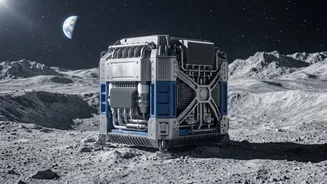
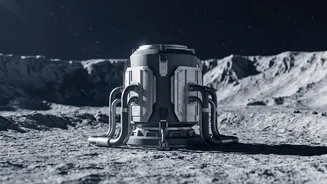
Enter Fission Surface Power (FSP). In a landmark collaboration, NASA and the Department of Energy (DOE) are developing small-scale nuclear reactors designed to operate on the lunar surface. The goal is to have a launch-ready lunar reactor by the early 2030s. This system, known as Lunar Reactor-1 (LR-1), would provide a steady 40-kilowatt output—enough to power about 30 households for a decade. This reliable energy source would be the backbone of a future lunar base, powering habitats, rovers, and scientific equipment through the long, dark lunar nights, something solar power cannot do. This makes ambitions for a sustained human presence on the Moon an engineering challenge rather than science fiction.
Solution Part 2: The Nuclear Highway to Mars
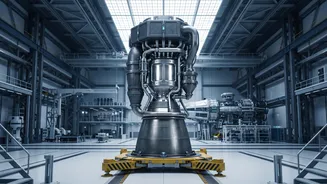
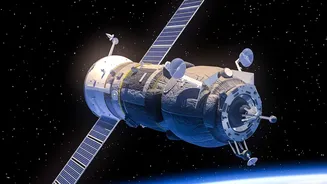
Getting to Mars is just as challenging as staying there. This is where nuclear propulsion comes in. NASA is pursuing two main types: Nuclear Thermal Propulsion (NTP) and Nuclear Electric Propulsion (NEP). NTP systems use a reactor to heat a propellant like hydrogen, creating a high-thrust exhaust that is about twice as efficient as the best chemical rockets. This could cut the transit time to Mars by up to 25%, significantly reducing crew exposure to deep-space radiation. NEP systems use the reactor to generate electricity, which then powers highly efficient electric thrusters. While low on thrust, they are incredibly fuel-efficient and can accelerate a spacecraft continuously, potentially reducing Mars transit times even further. NASA's planned Space Reactor-1 Freedom (SR-1) mission, set to launch in 2028, will demonstrate NEP technology on a trip to Mars.
A Partnership for a New Nuclear Era
This ambitious vision is powered by a formal partnership between NASA and the DOE, solidified by a new Memorandum of Understanding signed in October 2026. This agreement streamlines collaboration across the entire lifecycle of space nuclear technology—from advanced research and fuel production at the DOE to testing, launch integration, and mission operations managed by NASA. This partnership leverages the DOE's decades of expertise in nuclear science and reactor development with NASA's experience in space exploration. The collaboration is not entirely new—the agencies have worked together on radioisotope power systems (RTGs) that have powered iconic missions like the Voyager probes and the Mars rovers for decades. However, this new agreement signals a major strategic shift, elevating fission-based power and propulsion to a central role in America's space ambitions.
Safety, Strategy, and the Future
The idea of launching nuclear reactors into space naturally raises safety questions. NASA and the DOE emphasize that safety is a central pillar of the entire program. The reactors are designed to remain inert during launch and only be activated once the spacecraft is in a safe, deep-space trajectory. For surface power, the systems are small, self-contained, and built on decades of terrestrial and military reactor experience. Strategically, this technological push is seen as essential for maintaining U.S. leadership in space exploration against geopolitical rivals. By investing in these 'tall pole' technologies now, NASA is laying the groundwork for an entirely new generation of missions that can go farther, last longer, and make more profound discoveries across the solar system.