





The Ocean’s Great Conveyor Belt
The secret to Iceland's greenery lies in a massive river of warm water flowing within the Atlantic Ocean. Known as the Gulf Stream system, this oceanic ‘conveyor belt’ originates in the tropics, picking up heat before travelling north. A major branch
of this system, called the North Atlantic Current, flows directly towards Iceland and Western Europe. This current acts like a giant hot water pipe, transporting enormous quantities of heat from the equator towards the pole, fundamentally shaping the climate of the regions it passes. It’s one of the most important circulation systems on the planet, a key driver of weather patterns across continents.
A Giant Heat Pump for the North
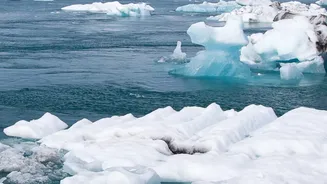
As the warm water of the North Atlantic Current reaches Iceland, it releases its heat into the atmosphere. This process works like a massive natural radiator, significantly warming the air and moderating the island’s climate. The effect is dramatic. Despite its location just south of the Arctic Circle, Iceland's capital, Reykjavik, has an average winter temperature comparable to cities much further south, like New York. Without this oceanic heat delivery, Iceland’s climate would be far more severe, similar to the deeply frozen conditions found in Greenland or northern Canada at the same latitude. This warming influence keeps Iceland's coastal areas largely free of ice throughout the winter.
From Ice-Land to Green Land
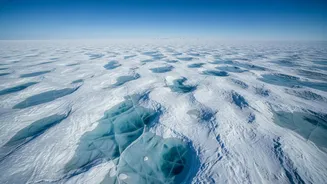
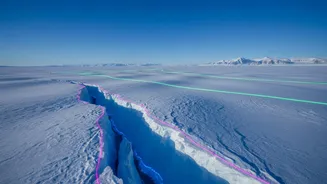
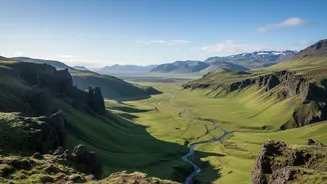
The milder temperatures and consistent rainfall gifted by the ocean current create the perfect conditions for life to flourish. While about 11% of Iceland is covered by permanent glaciers, its coastal lowlands and valleys burst into vibrant green during the summer months. Hardy grasses, mosses, and wildflowers carpet the landscape, supporting agriculture and creating the stunning scenery for which the country is famous. This starkly contrasts with its neighbour, Greenland, which is roughly 80% covered by a vast ice sheet. The name ‘Iceland’ is believed to have come from a Viking explorer who had a particularly harsh first winter, but the enduring reality of the landscape is far greener than the name suggests.
A System Under Threat
The engine driving this entire heat-transfer system is known as the Atlantic Meridional Overturning Circulation (AMOC). It relies on a delicate balance: as warm water flows north, it cools, becomes saltier and denser, and sinks to the deep ocean before travelling south again. However, scientists are increasingly concerned that climate change is threatening this process. As global temperatures rise, meltwater from Greenland’s ice cap is pouring vast amounts of cold, fresh water into the North Atlantic. This freshwater is less dense and does not sink as easily, which scientists fear could slow down or even shut down the entire AMOC conveyor belt.
The Future of Iceland's Green Valleys
A slowdown or collapse of the AMOC would have catastrophic consequences, particularly for Iceland. Without the constant supply of warmth from the south, temperatures could plummet drastically. Some models predict a scenario where Iceland could become encased in sea ice for parts of the year, turning its green valleys into frozen tundra and making the country almost uninhabitable. The threat is so significant that Iceland’s government has formally classified a potential AMOC collapse as a national security risk. This isn’t just a local issue; a shutdown would also disrupt weather patterns globally, affecting monsoon rains in Asia and Africa and altering ecosystems far beyond the North Atlantic.