






The High Cost of Complexity
Imagine a restaurant with a 100-page menu. While it offers immense choice, it is a nightmare for the kitchen to manage, leading to slower service and inconsistent quality. For years, global automotive conglomerates operated on a similar principle. The
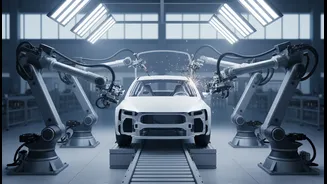
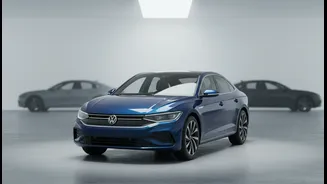
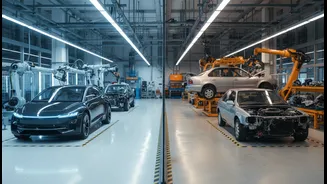
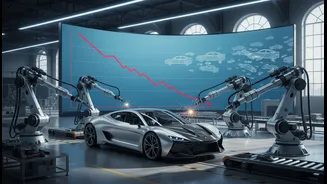
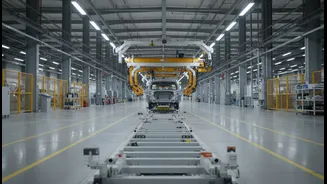
Volkswagen Group, which includes everything from Skoda and SEAT to Audi, Porsche, and Lamborghini, offered one of the widest portfolios in the industry. But this massive scale has a hidden cost.. Each distinct model, and its countless variations in engines, trims, and options, adds enormous complexity.. This complexity inflates costs at every step: from individual design and engineering to separate manufacturing processes, procurement, and supply chain logistics.. Faced with slowing demand, rising costs, and intense competition from nimble EV startups, these legacy giants are realizing that their greatest strength—variety—has become a significant vulnerability..
Sharpening the Marketing Message
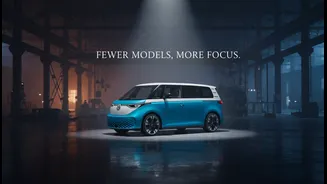
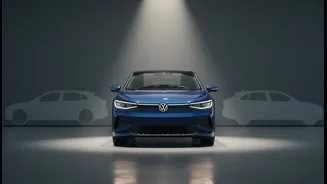
A sprawling portfolio doesn't just strain factories; it dilutes marketing efforts. When a single company has multiple models competing in the same segment, even under different brand names, the marketing message becomes muddled.. It can lead to internal competition, where one of the group’s own cars steals sales from another. A focused portfolio allows an automaker to pour its marketing budget into creating a distinct, powerful identity for each remaining model.. The brand promise becomes clearer to the customer, whether it is rugged capability, affordable efficiency, or premium luxury.. By eliminating overlapping products, a company can ensure that every car has a unique and compelling reason to exist, making it easier for customers to understand what they are buying and why it is the right choice for them.
Unlocking Engineering Efficiency
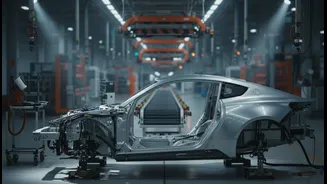
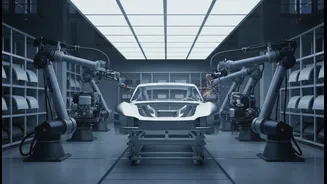
The benefits of simplification are perhaps most profound in engineering and development. Volkswagen's recent strategy announcement was not just about cutting models, but also about reducing the number of variants and configurations by as much as 75 percent.. This move is designed to attack the root of inefficiency. When engineers can focus on a smaller number of core vehicle platforms, they can develop and refine them faster. It encourages the use of shared components across different models, which dramatically lowers development costs and speeds up production. Instead of reinventing the wheel for every new car, resources can be redirected toward the technologies that will define the future of mobility: battery tech, autonomous driving, and in-car software. This focus is critical in an era where the transition to electric vehicles demands unprecedented levels of investment..
Empowering Dealers and Customers
The complexity of a massive product portfolio ultimately trickles down to the showroom floor and the service bay, affecting the customer experience. For dealerships, managing inventory for dozens of models with hundreds of possible configurations is a logistical and financial burden. Sales staff must be trained on an overwhelming number of products, making it difficult to achieve deep expertise. The same challenge applies to the service department, where technicians need specific training and a vast inventory of parts to handle every variant. By simplifying the lineup, automotive groups empower their dealer networks. Salespeople can become true experts on the products they sell. Service becomes faster and more reliable with fewer unique parts to stock. For the customer, this translates into a more confident purchase decision and a better ownership experience..
An Industry-Wide Pivot to Simplicity
Volkswagen is not alone in this strategic shift. Other industry titans, like Stellantis—the parent company of brands including Jeep, Ram, Peugeot, and Fiat—are on a similar path. Its 'Dare Forward 2030' strategy is built on maximizing value and efficiency, focusing on core brand strengths and a decisive shift to electrification.. While the specifics differ, the underlying principle is the same: in the face of profound industry disruption, focus is the new superpower. These legacy automakers are moving away from being the biggest and are now striving to be the best and most efficient at what they choose to do. The era of growth through acquisition and endless model proliferation appears to be giving way to a new age of strategic subtraction.