




A Giant Scar on a Red World
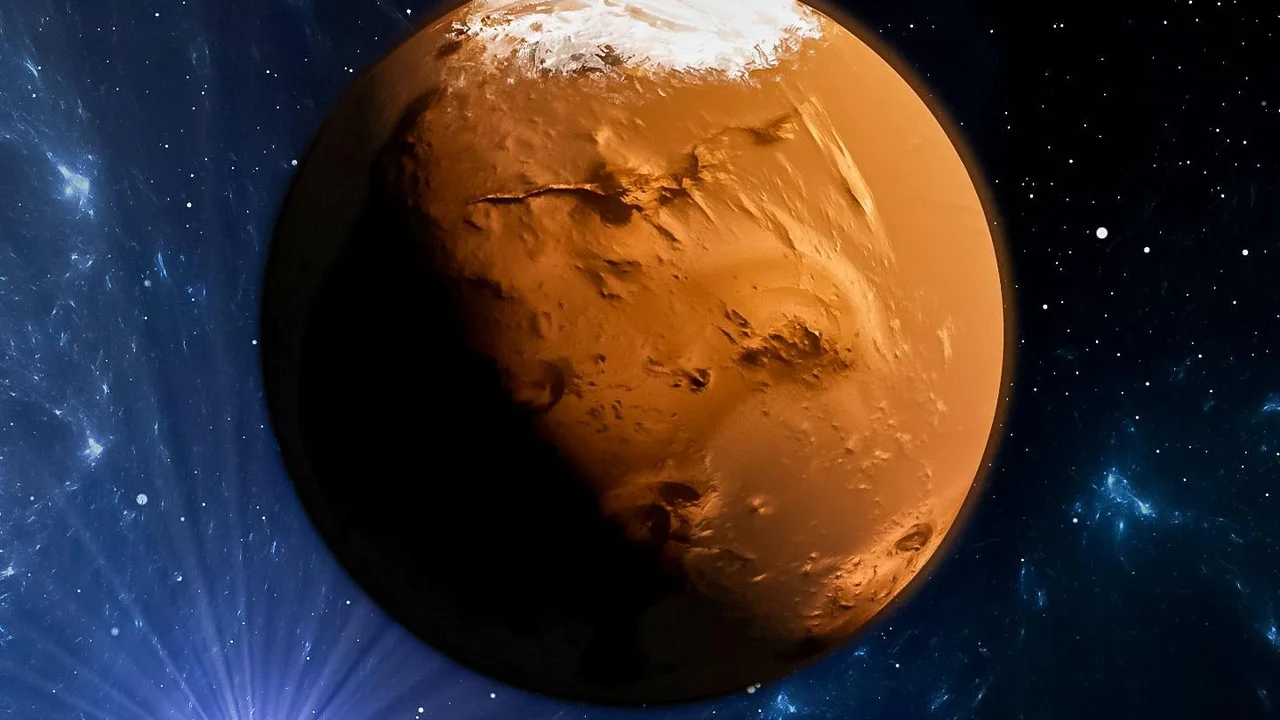
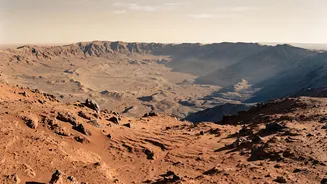
In the southern highlands of Mars lies a colossal feature known as the Argyre Basin. It is the second-largest impact basin on the entire planet, stretching approximately 1,800 kilometres across and plunging more than five kilometres deep. This massive
crater was blasted into existence by an asteroid impact nearly four billion years ago. Its name, meaning 'Silver Island' in Greek, was given to it by 19th-century astronomers for its bright appearance. For scientists today, Argyre is more than just a big hole; it’s a natural laboratory. Its immense depth, the rugged mountains forming its rim, and its location make it a prime spot for studying the Red Planet’s ancient past and present-day weather.
The Standard Martian Weather Report
Before diving into what makes Argyre so special, it’s helpful to understand what a ‘normal’ day on Mars is like. The planet has a very thin atmosphere, composed mostly of carbon dioxide, which is terrible at holding onto heat. This leads to dramatic temperature swings. Surface temperatures can plummet to below -120 degrees Celsius at night and, in some sunny spots, climb toward 20 degrees Celsius during the day. These fluctuations are also shaped by Mars's elliptical orbit, which creates harsher, warmer summers in the southern hemisphere. For a long time, scientists had a broad picture of these seasonal and daily patterns, but new data is showing that local geography can create significant variations.
Argyre’s Unique Atmospheric Waves
Recent research, using data from spacecraft like the Emirates Mars Mission, has uncovered a distinct atmospheric behaviour in the Argyre Basin. Scientists mapping temperature variations found that while Mars experiences large-scale temperature patterns that move like waves across the surface, Argyre’s pattern is surprisingly simple. It is dominated by a “wave-1” pattern, a relatively straightforward and large-scale thermal wave. This stands in stark contrast to other major basins like Hellas, which exhibit more complex and chaotic “wave-2” and “wave-3” patterns depending on the season. This discovery suggests that the sheer depth and specific topography of Argyre heavily influence the atmospheric circulation within and above it, creating its own localised weather system.
Why Is the Basin So Different?
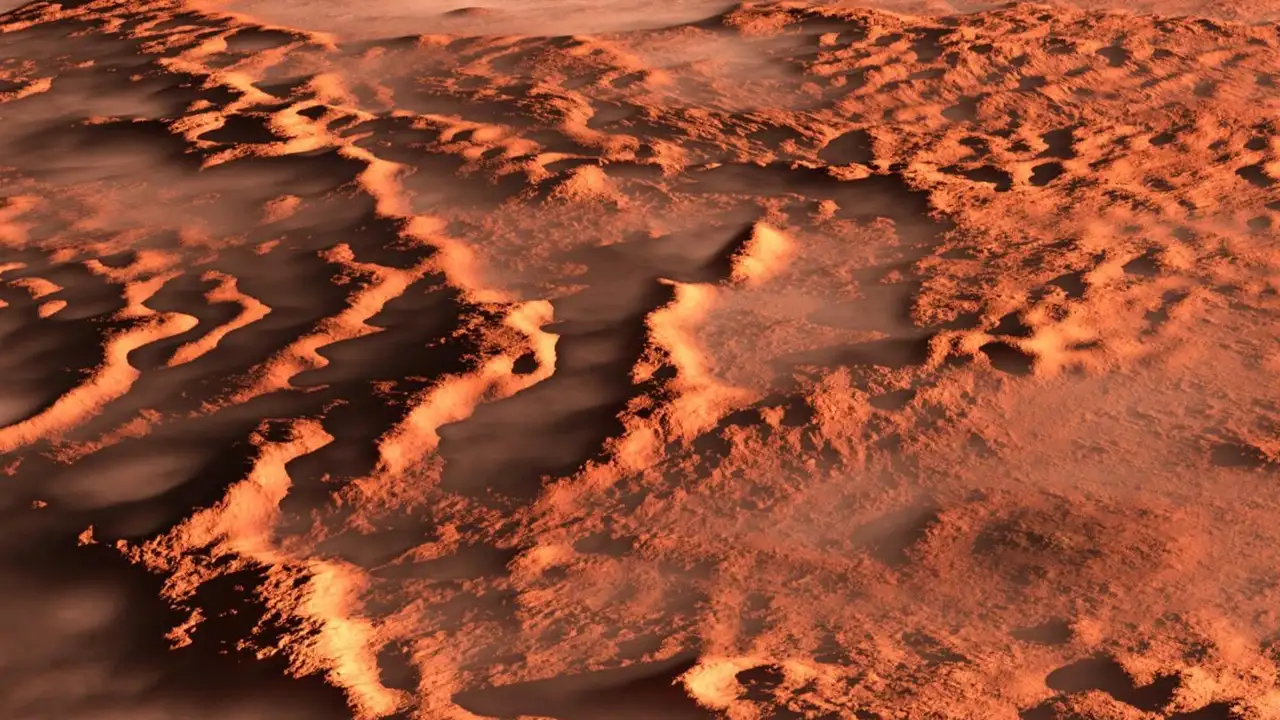
The leading theory is that Argyre's unique shape and size are the primary drivers of its distinct climate. The immense depth of the basin means the atmosphere inside it is denser than on the surrounding plains, which can affect how heat is trapped and how winds circulate. The towering mountains around the rim can also block or channel atmospheric flow. Often, atmospheric haze can be seen filling the basin. Furthermore, the basin floor and walls are made of diverse materials, some of which may have been shaped by ancient water and ice. Features that suggest past glaciers, lakes, and even sub-surface water flows have all been identified in the region. These different surface materials can absorb and release heat at different rates, further contributing to a unique thermal signature that sets Argyre apart.
A Window into a Warmer, Wetter Mars
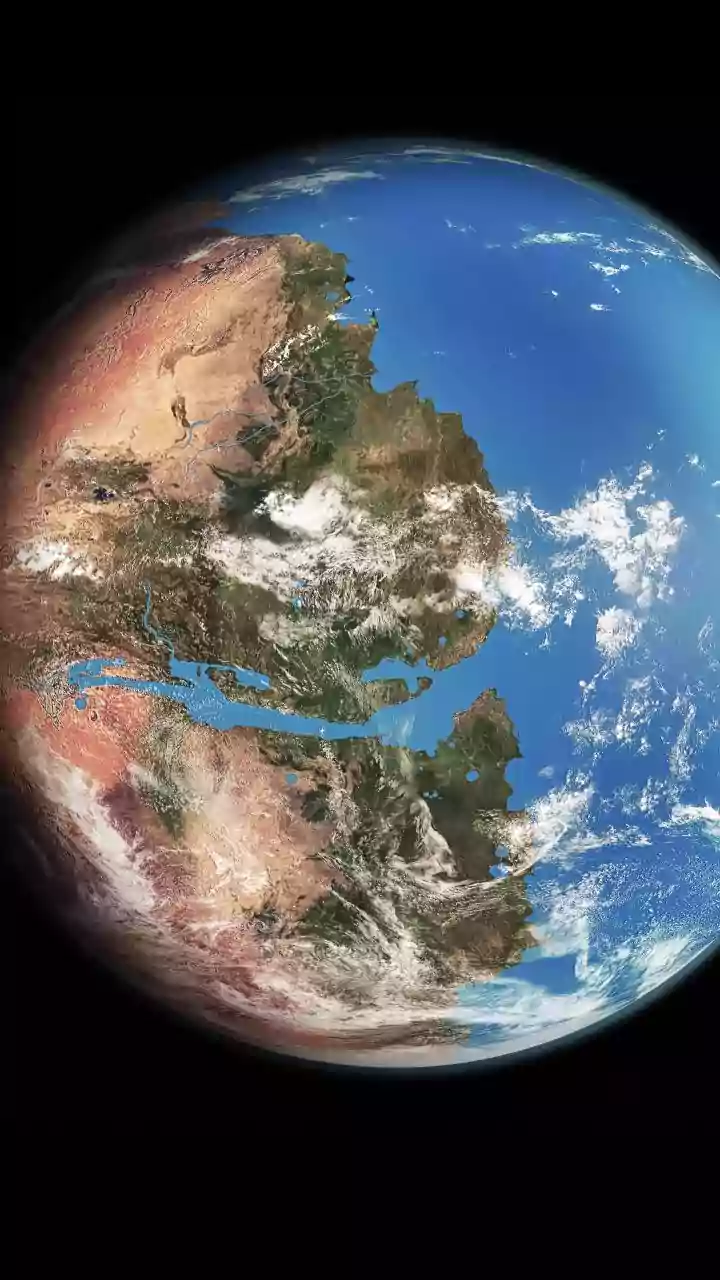
This discovery is about more than just Martian weather. Understanding these microclimates is crucial for piecing together the planet’s history. If regions like Argyre could maintain their own distinct, and perhaps more stable, climates, it could have major implications for the search for past life. After the initial impact that formed it, the basin may have held a vast lake for millions of years, sustained by heat from the impact and subsequent volcanic activity. Evidence of past glaciers and fluvial channels strongly suggests that water was a key player in shaping this landscape. By studying how Argyre’s unique topography affects its modern climate, scientists can build better models of its ancient environment, helping to pinpoint the most promising locations to search for signs of a once-habitable Mars.