


The Universe's Unsung Hero
When we think of space, we often imagine stars, planets, and galaxies. But the unsung hero of cosmic evolution is interstellar dust. These aren't the dust bunnies under your bed; they are microscopic grains of silicates and carbon, often no bigger than
particles of smoke. Despite their small size, they are immensely important. This dust is a fundamental building block of the universe, providing the raw material that eventually clumps together to form planets, asteroids, and even stars themselves. It also acts as a chemical factory, with its surfaces providing a place for molecules to meet and react, forming more complex compounds, including organic molecules that could be seeds for life.
A Cosmic Conundrum
Scientists know dust is crucial, but its exact properties remain shrouded in mystery. A key puzzle is how these tiny grains interact with the harsh ultraviolet (UV) radiation that floods the galaxy. Different types of dust grains—like those made of carbon versus those made of silicate—are expected to behave differently. Previous observations have yielded conflicting data about how UV light is scattered and polarized (a property of light waves that describes their orientation) as it passes through this dust. Getting this right is critical because our models of how stars and galaxies form and evolve depend on an accurate understanding of dust's behaviour. Without it, our cosmic picture remains incomplete.
Enter the PUFFINS Mission
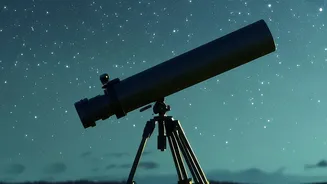
To solve this puzzle, NASA is launching the PUFFINS mission. The quirky name is an acronym for 'Polarimetry in the Ultraviolet to Find Features in INterStellar dust'. Led by Principal Investigator Dr. Ramya Anche of the University of Arizona, this mission is part of NASA's Astrophysics Pioneers program, which focuses on small-scale, high-impact science. At its heart is a specialized 10-inch telescope that will operate from low-Earth orbit. Its job is not to take pretty pictures, but to perform a very specific task: measuring the polarization of UV light from distant stars.
How It Will Uncover Dust's Secrets
The PUFFINS satellite will observe at least 70 different stars across various regions of our galaxy. As starlight travels towards us, it passes through clouds of interstellar dust. Some of these dust grains are elongated and align themselves with the galaxy's magnetic fields, acting like microscopic polaroid filters. By measuring how the starlight's polarization changes, especially in the UV spectrum, scientists can deduce the size, shape, and even composition of the smallest dust particles—those less than 50 nanometres in size, which are nearly invisible to other types of telescopes. This technique, called ultraviolet spectropolarimetry, hasn't been used in space for nearly three decades, making PUFFINS a pioneering effort.
From Tiny Grains to the Big Picture
The data from PUFFINS, which has a target launch date of 2030, will have far-reaching implications. By providing a clearer picture of the smallest dust grains, the mission will help refine our understanding of the entire lifecycle of cosmic material. This includes how stars regulate their own formation, how heavy elements are distributed throughout a galaxy, and how planetary systems—and perhaps life itself—come into being. Dr. Anche notes that since dust is such a critical component, understanding it is essential. Furthermore, the technological and scientific groundwork laid by this small but mighty mission will serve as a vital precursor for future flagship projects like NASA's Habitable Worlds Observatory, planned for the 2040s.