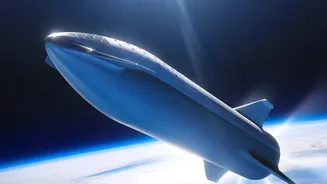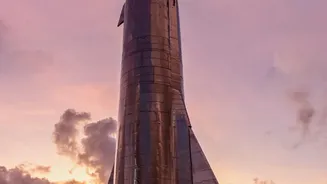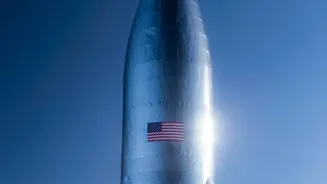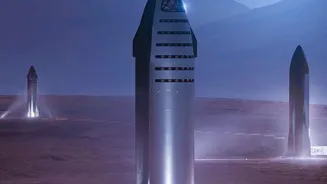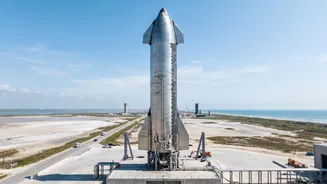


SpaceX's fifteenth Starship test flight on November 13-14 was a spectacle of immense achievement and dramatic failure. For the first time, the company caught the orbital spacecraft with its tower, a historic milestone. But it wasn't a clean sweep.
A Mission of Daring Firsts
The
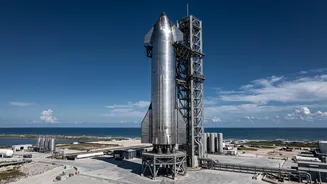
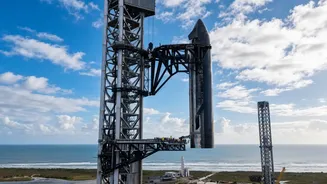
goals for Starship's fifteenth flight test were the most ambitious yet. After four previous integrated flights that tested ascent, stage separation, and controlled splashdowns, SpaceX aimed for the holy grail of its reusability plan: catching both the Super Heavy booster and the Starship upper stage with the launch tower's giant mechanical arms, nicknamed 'Mechazilla'. This 'double catch' would be a monumental step toward the company's goal of creating a fully and rapidly reusable launch system, which is essential for its plans to deploy thousands of Starlink satellites, land NASA astronauts on the Moon, and eventually build a city on Mars. The mission began on Friday, November 13, with a thunderous liftoff from Starbase in Texas. The giant rocket, the most powerful ever built, successfully ascended and performed its 'hot-staging' separation maneuver, where the upper stage's engines ignite before it fully separates from the booster.
An Agonizing Miss for Super Heavy
The first part of the ambitious recovery plan went awry just minutes into the flight. The Super Heavy booster, after separating from the Starship spacecraft, began its boostback burn to return to the launch site. However, the burn ended early due to what SpaceX called a 'low fuel mass alarm'. With the booster off-course and low on fuel, its guidance system automatically triggered an abort, diverting it for a splashdown in the Gulf of Mexico instead of returning to the tower. The booster successfully executed a landing burn and hovered over the water before its flight termination system was activated, resulting in its destruction. This marked a significant setback, as SpaceX has successfully caught Super Heavy boosters on previous flights and was aiming to repeat the feat with this upgraded version. The root cause for the fuel issue is still under investigation.
Starship's Historic Return and Catch
While the booster's journey ended in failure, the Starship upper stage, known as Ship 42, continued flawlessly. It achieved orbit, deployed 26 next-generation Starlink satellites, and began a long coast phase, circling the Earth 14 times over nearly 22.5 hours. This long duration in space allowed the team to monitor the vehicle's health, particularly its critical heat shield, before attempting the historic return. On Saturday, November 14, Ship 42 performed a deorbit burn, blazed through the atmosphere, and navigated its way back to the Texas launch site. In a breathtaking sequence, the spacecraft performed a final flip maneuver, ignited three Raptor engines to slow its descent, and nestled perfectly into the waiting 'chopstick' arms of the launch tower. It was the first time an orbital-class spacecraft had ever been caught and recovered this way, a moment SpaceX commentators hailed as the 'holy grail of spaceflight'.
Progress Measured in Milestones
Despite the dramatic loss of the Super Heavy booster, the overall mission is being viewed as a massive success for SpaceX. The successful catch of the Starship upper stage is arguably the more difficult and more important half of the reusability equation. Proving this recovery method works is a critical validation of the entire Starship architecture. While losing a booster is a costly failure, the data gathered from the aborted landing will be invaluable for future attempts. More importantly, the successful orbital flight, satellite deployment, and landmark recovery of the upper stage demonstrate incredible progress. Elon Musk stated that the booster loss does not change the timeline for achieving high-volume, fully reusable flights, suggesting the issues are well understood and solvable. This mixed result—one giant leap forward paired with one stumble—is characteristic of SpaceX's iterative design philosophy, where rapid testing and learning from both successes and failures pave the path to innovation.