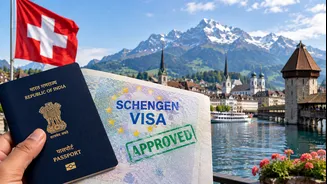







The dream of a European holiday is a big one for many Indians. But before you can pose by the Eiffel Tower or cruise the canals of Venice, there’s the crucial hurdle of the Schengen visa. And as new data shows, your chances of success are not the same
everywhere.
India's Growing Appetite for Europe
Indian travellers have firmly established themselves as a major force in European tourism. In 2025, India became the third-largest source market for Schengen visas worldwide, just behind China and Turkey. More than 1.15 million applications were filed from India, a clear signal of the rising demand for European destinations for tourism, business, and family visits. The overall approval rate for these applications was about 84.2%, with nearly 967,000 visas issued. However, this also means that over 181,000 applications were rejected, translating to an overall non-issuance rate of 15.8% for Indian applicants. This rate is slightly higher than the global average, indicating that Indian applicants face a bit more scrutiny than their worldwide counterparts.
The Toughest Doors to Knock On
Not all Schengen consulates are created equal when it comes to visa approvals. The data from 2025 reveals a stark difference in rejection rates among member states. Slovenia recorded the highest non-issuance rate for Indian applicants, turning away a staggering 46.1% of applications. This means nearly one in every two applicants was denied a visa. Other countries with significantly high rejection rates for Indians included Bulgaria (37%), Greece (33%), Malta (31.7%), and Estonia (30.1%). Even popular destinations like the Netherlands (20.6%) and Austria (21.6%) had refusal rates well above the 15.8% average for Indian applicants. By sheer volume, France rejected the most applications from India in 2024 (over 31,000), but this is largely due to the massive number of applications it receives.
Where Are Approval Chances Higher?
On the other end of the spectrum, some countries have proven to be more welcoming. Germany, for instance, reported a non-issuance rate of just 10.5% in 2025, significantly lower than the average. Notably, the German Consulate in Mumbai had a rejection rate of 10.8% while processing over 130,000 applications. Switzerland, which emerged as the most popular destination for Indian applicants in 2025, had a rejection rate of 13.6%. Other countries like Italy (12.7%), Belgium, and Denmark also maintained comparatively lower rejection rates, making them statistically safer bets for a successful application. It's crucial to remember, however, that you must apply to the country that serves as your main destination—the one where you'll spend the most time.
Why the Wide Disparity in Rejection Rates?
Several factors contribute to why one country might reject more visas than another. Countries that process a lower volume of applications, like Slovenia or Malta, can sometimes apply stricter scrutiny to each file. For others, like Estonia, officials have cited issues with the reliability of documents submitted and doubts about whether the applicant's true destination is Estonia or another Schengen state. Another key reason is assessing the applicant's 'intention to return'. Consular officers look for strong ties to India, such as stable employment, property ownership, family commitments, and financial stability. Younger, unmarried applicants with short work histories are often perceived as higher risk and may face more rejections on these grounds.
Avoiding Common Application Pitfalls
Most rejections are preventable and often stem from similar mistakes. The most common reason for refusal is an unclear or unjustified travel purpose. This happens when an itinerary is vague, hotel bookings don't match the travel dates, or the cover letter fails to tell a coherent story. Another major red flag is related to finances. It's not just about having enough money, but about the story your bank statements tell. Sudden, large deposits just before applying are often viewed with suspicion by visa officers. Other frequent issues include inadequate travel insurance that doesn't meet the minimum €30,000 coverage, applying to the wrong country's embassy, and simple document errors like an unsigned form or a passport with insufficient validity.