






The Golden Rule You Can't Break
If you remember only one thing from your scuba certification course, make it this: Never, ever hold your breath. This is the most important rule in diving for a critical reason related to physics. As you ascend toward the surface, the water pressure around
you decreases. If you hold your breath, the air trapped in your lungs will expand, which can cause a serious, life-threatening injury called a lung over-expansion. By breathing continuously—a constant cycle of inhaling and exhaling—you allow this expanding air to escape naturally, keeping your lungs at a safe, equalized pressure. Instructors drill this into students from the very first moment because it is non-negotiable for diver safety.
Slow, Deep, and Rhythmic is Key
On land, we rarely think about our breathing. Underwater, it demands your full attention, at least at first. The ideal pattern is slow, deep, and continuous. A common mistake for beginners, driven by nerves or excitement, is taking fast, shallow breaths. This not only burns through your air supply much faster, shortening your dive, but it can also trigger a feeling of anxiety or panic. Instead, focus on diaphragmatic or 'belly' breathing. Inhale slowly and deeply enough to feel your abdomen expand, then exhale fully and gently. Aim for a relaxed rhythm, where the sound of your bubbles becomes a comforting, meditative backdrop to your dive. A good pace to aim for is an inhale of five to seven seconds, followed by an exhale that is just as long, or even slightly longer.
Fighting Your Natural Instincts
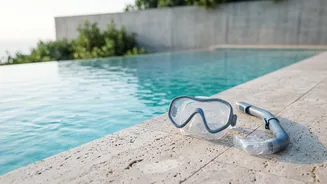
Breathing exclusively through your mouth can feel strange. Your nose is covered by the mask, and having a regulator mouthpiece in can be an odd sensation. Some people experience a brief gag reflex or the urge to exhale through their nose, which can cause your mask to leak or fog up. The key is to relax. Trust your equipment; regulators are designed to deliver more air than you could possibly need. Let your jaw go slack around the mouthpiece and concentrate on the slow, deliberate rhythm. Many instructors suggest practicing on land or in a pool with a snorkel to get used to the feeling of mouth-only breathing without the added complexity of a full dive.
Your Lungs Are a Buoyancy Tool
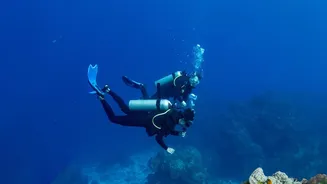
Once you're comfortable with the basics, you'll learn that your breath is your most subtle and effective tool for controlling your position in the water. This is called buoyancy control. When you inhale deeply, your lungs fill with more air, increasing your volume and causing you to slowly rise. When you exhale fully, you become less buoyant and gently sink. This is a fundamental skill for becoming a great diver. Instead of constantly adjusting the air in your buoyancy control device (BCD), you can make fine-tuned adjustments to your depth simply by moderating your breathing. Mastering this allows you to hover effortlessly over a coral reef, conserving energy and air while enjoying the view without kicking or sculling.