



What is an Evening Elongation?
In simple terms, an elongation is the moment when a planet appears farthest from the Sun in our sky. Because Venus orbits closer to the Sun than Earth does, it is tethered to it from our perspective, never straying too far. It's either visible for a few
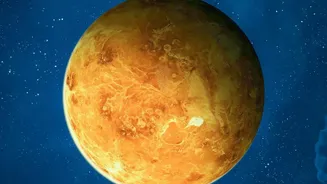
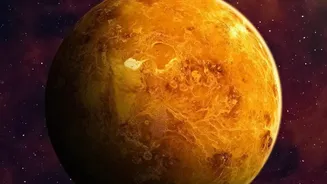
hours after sunset (as an "Evening Star") or before sunrise (as a "Morning Star"). On August 15, 2026, Venus reaches its "greatest eastern elongation." This means it will be at its maximum angular distance—about 46 degrees—from the Sun in the evening sky. Think of it like a ball on a string being swung around a pole; this is the point where the ball is farthest out to the side before it starts swinging back.
Why This Is a Major Skywatching Event
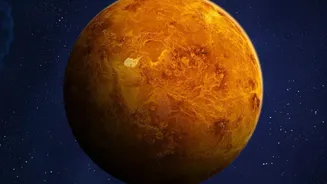
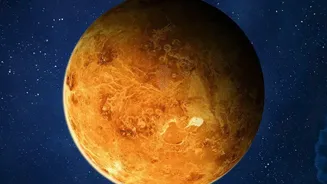
This event marks the peak of Venus's evening performance. The planet will be shining at a brilliant magnitude of -4.4, making it the brightest object in the night sky after the Moon. Its brightness is due to its thick, reflective cloud cover and its relative closeness to Earth. At its greatest elongation, Venus will appear higher in the twilight sky and remain visible for longer after the Sun goes down, making it exceptionally easy to spot. While not a once-in-a-lifetime occurrence like a total eclipse, it's the single best opportunity this year to appreciate the dazzling beauty of our neighbouring planet without any special equipment. In the days leading up to August 15, you can watch Venus climb higher each evening.
How to See It From India
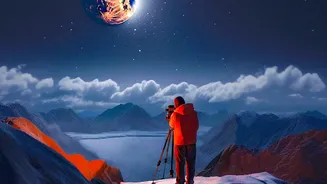
Viewing this celestial show is simple. On the evening of August 15, 2026, and the evenings surrounding it, simply look to the west in the hour or so after sunset. Venus will be the unmistakably bright, silvery point of light piercing through the twilight. You won’t need a telescope or binoculars to see it; its brilliance is easily visible to the naked eye. For the best view, find a location with an unobstructed view of the western horizon, away from tall buildings and bright city lights. Give your eyes a few minutes to adjust to the fading light, and the planet will pop into view. For those in India, Venus will set around 9:20 PM IST, giving you plenty of time to enjoy the sight after the sun disappears.
What to Look For With Binoculars
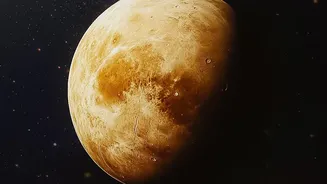
While you don't need them, a simple pair of binoculars or a small telescope will enhance the experience. When you look at Venus through optics, you'll discover it has phases, just like our Moon. Around its greatest elongation on August 15, Venus will appear as a tiny, half-lit disc, similar to a first-quarter moon. As August progresses, you will be able to observe this phase change; the illuminated portion will shrink into a crescent while the overall size of the disc appears to grow as Venus gets closer to Earth in its orbit. On the evenings of August 14 and 15, you may also spot a thin crescent Moon near the dazzling planet, creating a beautiful pairing in the western sky.
A Month of Celestial Events
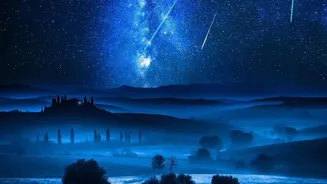
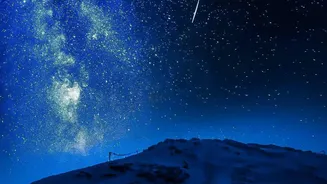
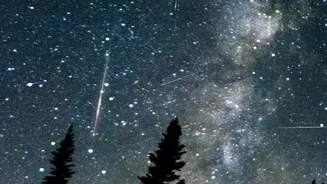
August 2026 is a particularly exciting month for skywatchers. Venus's elongation is just one of several noteworthy events. The famed Perseid meteor shower, known for its bright and frequent meteors, is active from mid-July to late August, peaking on the night of August 12-13. This year, the peak occurs near the new moon, meaning darker skies will make for an excellent meteor-watching session. For early risers, a close conjunction of Jupiter and Mercury will be visible low on the eastern horizon before sunrise around August 15. While Venus takes centre stage in the evening, the entire month offers rewarding sights for anyone who takes a moment to look up.