







For years, a major trade deal between India and the United States has felt just around the corner. Recent optimistic remarks by US Secretary of State Marco Rubio and Commerce Minister Piyush Goyal have once again raised hopes. So why hasn't it been signed?
A Cycle of Hope and Delay
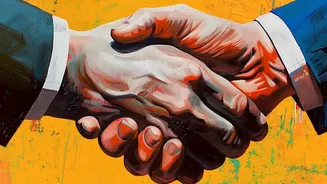
The narrative around the India-US trade deal is a familiar one: high-level talks, positive statements, and then a prolonged silence. The latest chapter began with US Secretary of State Marco Rubio’s visit to India in October 2026. He declared the deal was “incredibly close” and just “weeks, not months” away from completion, suggesting 99% of the work was done. Echoing this sentiment, Indian Commerce and Industry Minister Piyush Goyal stated that most discussions were concluded and both sides were now just “fine-tuning the agreement”. These comments point towards a Bilateral Trade Agreement (BTA) that has been in negotiation for over a year, aiming to boost trade flows and resolve long-standing economic friction. The goal is ambitious, with some officials targeting a doubling of bilateral trade to over $500 billion. Yet, despite the recurring optimism, the deal remains on paper, caught between political goodwill and the hard realities of trade negotiations.
The Persistent Sticking Points
The gap between 'almost done' and 'signed' is filled with complex and politically sensitive issues. A primary obstacle is tariffs. A framework announced in February 2026, which proposed lowering US tariffs on some Indian goods, was complicated by subsequent changes in US tariff policies, necessitating further talks. For India, a key demand is that any final tariff rate must be competitive with what regional rivals like Vietnam and Bangladesh receive, ensuring its exporters are not at a disadvantage. Agriculture is another major hurdle. India has historically been protective of its large agricultural sector and remains reluctant to grant the extensive market access that the US is seeking for its farm products. Furthermore, issues like data localization policies, intellectual property rights, and market access for American medical devices and industrial goods remain contentious, each representing a significant domestic constituency in both nations.
More Than Just a Trade Deal
The negotiations are not happening in a vacuum. They are deeply intertwined with broader geopolitical currents. The strategic alignment between India and the US, particularly as a counterbalance to China in the Indo-Pacific, provides a powerful incentive to resolve economic disagreements. Rubio himself noted that while the two nations won't agree on everything, their alignment on core national interest issues is “extraordinary”. This strategic partnership encompasses defence cooperation, energy security, and collaboration on emerging technologies like semiconductors. For instance, India's continued purchases of Russian oil have been a point of friction, but Rubio has acknowledged that factors like geography and energy security must be considered, suggesting a degree of flexibility from Washington. This indicates that the trade deal is just one component of a much larger and more critical strategic relationship.
What Happens Next?
While both Rubio and Goyal project confidence, the path to a signed deal is still uncertain. Analysts suggest that an initial “narrow” or interim agreement is more likely than a comprehensive one. This would allow both sides to lock in progress on less contentious areas while deferring major sticking points like agriculture for later. Piyush Goyal has been clear that any deal would only be operational once India secures a competitive edge for its exporters. Meanwhile, the US administration faces its own domestic pressures. The G20 summit in Miami in December could serve as a potential deadline, but many experts believe even that is unlikely. As one trade analyst noted, an agreement that is merely being 'fine-tuned' is not yet in force, and exporters should not adjust their pricing until a deal is officially signed and implemented.