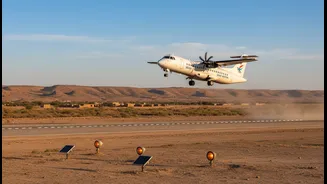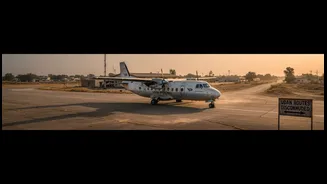









The Dream of 'Ude Desh ka Aam Nagrik'
Launched in 2016, the Ude Desh ka Aam Nagrik (UDAN) scheme was a game-changer on paper. The goal was twofold: connect India’s underserved and unserved towns to the national aviation map and make flying affordable for the common person. The model incentivised
airlines through Viability Gap Funding (VGF), a subsidy to cover potential losses on new, commercially risky routes. In return, airlines had to cap fares on a percentage of seats, famously aiming for around ₹2,500 for a one-hour flight. This policy spurred the development of dozens of new airports and airstrips, bringing air travel to places that had never had it.
An Alarming Rate of Discontinuation
Despite the initial fanfare, the scheme has hit significant headwinds. As of early July 2026, reports indicate that of the 669 routes made operational since 2017, only 336 remain active. That means nearly half of the flight paths pioneered under the scheme have been grounded. The reasons are numerous and complex. Many smaller carriers that took on these routes have since gone bankrupt or scaled back operations. For others, the routes simply became commercially unviable once the initial three-year subsidy period ended. Routes to airports like Bidar and Kalaburagi in Karnataka, for instance, were dropped by an operator once the VGF support was exhausted.
Why A Simple 'Failure' Narrative Is Flawed
The high number of discontinued routes paints a grim picture, but it doesn’t tell the whole story. The UDAN scheme was always an experiment in market creation. Building demand for air travel in areas with no prior history of it is a long-term project. Experts argue that expecting every route to become profitable within a three-year subsidy window was perhaps too optimistic. Issues like poor airport readiness at some locations, a lack of slots at major metro hubs like Delhi and Mumbai for regional carriers, and the financial distress of airlines themselves have also played a major role. These are not failures of the core idea of affordable fares, but rather challenges in execution and the harsh realities of the aviation business.
The Economics of an Empty Seat
The fundamental challenge for any regional route is balancing high operational costs with low initial demand. Thin and volatile passenger loads, where a route may only attract 30-50 travellers a day, make it difficult for airlines to cover their costs, let alone turn a profit. Compounding this, many regional airlines struggle with fleet shortages and the unreliability of schedules, which erodes passenger trust. When a flight is frequently cancelled, people revert to more dependable modes of transport, like trains, even if they are slower. These economic and operational hurdles are the primary drivers of route closures, more so than the public’s desire for affordable travel.
Recalibrating for a Sustainable Future
The government appears to be learning from these early challenges. In response to the high discontinuation rates, a revamped 'Viksit UDAN' phase has been launched. Recognizing that the three-year support window was often too short, this new phase extends the subsidy period to five years. It also comes with a massively increased financial outlay of ₹28,840 crore, with ₹10,000 crore specifically earmarked for airline subsidies. This recalibration acknowledges that creating a sustainable regional aviation network is a marathon, not a sprint. The goal is to give airlines a longer, more stable runway to develop routes until they can sustain themselves on passenger demand alone.