



A New Frontier for Medicine
When we think of space exploration, we often imagine rockets and robots. But as humanity sets its sights on long-duration missions to the Moon and Mars, one of the biggest hurdles is human health. Astronauts will be isolated for years, facing medical
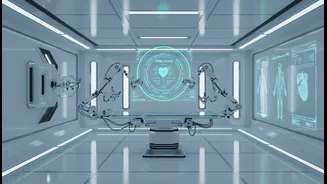
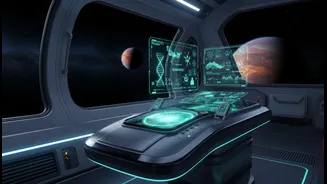
issues without a direct line to an Earth-based hospital. To solve this, NASA is running ground-based simulations to understand how to keep crews healthy in deep space. One key program is CHAPEA (Crew Health and Performance Exploration Analog), where volunteers live for a year in a habitat simulating Martian conditions, including resource limitations, communication delays, and equipment failures. This research is not just about a future trip to Mars; it is about developing autonomous healthcare solutions that could one day be critical for survival.
Meet the Crew Medical Officer
At the centre of this effort is Dr. Anil Menon, a NASA astronaut with an extraordinary resume. Born to Indian and Ukrainian immigrants, with family roots in Kerala, Menon is a U.S. Space Force Colonel and an emergency medicine physician. His experience is uniquely suited for this challenge. He has worked as a first responder in disaster zones like the earthquakes in Haiti and Nepal, provided medical care to climbers on Mount Everest, and served as a flight surgeon in the U.S. Air Force. Before being selected as an astronaut in 2021, Menon was a flight surgeon for NASA and later became the first flight surgeon at SpaceX, where he helped build the company’s medical program for its first human flights. His entire career has been a blend of medicine, engineering, and service in extreme environments.
The Challenges of Deep Space Healthcare
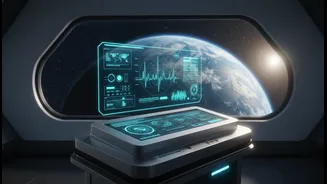
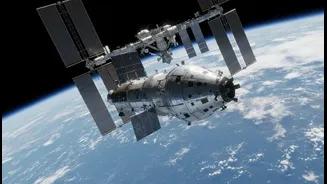
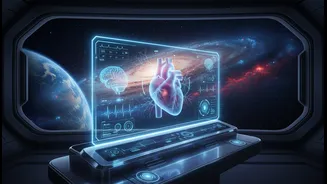
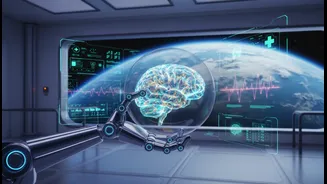
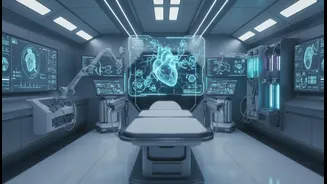
On his upcoming eight-month mission to the International Space Station (ISS), Dr. Menon will conduct a series of experiments directly aimed at solving the healthcare puzzle. One major area of study is understanding how microgravity affects the human body, particularly blood flow and the cardiovascular system. He will also test technologies that could make space crews medically self-sufficient. This includes testing a system to produce IV fluids from the station's drinking water, a crucial capability when you can't just order more supplies. Another futuristic experiment involves using augmented reality and AI to guide astronauts in performing their own ultrasound scans, potentially eliminating the need for constant medical support from Earth on future deep-space missions.
More Than Just a Space Problem
The incredible part of this research is that its benefits extend far beyond space. The solutions being developed for astronauts in isolation have direct applications for improving healthcare in remote and underserved communities on Earth. Think of rural villages in India, offshore oil rigs, or scientific outposts in Antarctica—places where immediate access to a doctor is impossible. Technologies like telemedicine, portable diagnostic tools, and AI-assisted medical procedures, all being perfected for space, can revolutionise how we deliver care in these challenging environments. Studying how the human body adapts to microgravity also gives us new insights into aging-related illnesses like osteoporosis and muscle atrophy, which affect millions worldwide.
A Mission with Indian Roots
Dr. Menon's journey to the stars is a moment of pride, particularly for India. His father hails from Palakkad district in Kerala, and Menon himself has maintained a strong connection to the country. Before his career in space, he spent a year in India as a Rotary Ambassadorial Scholar, where he helped support polio vaccination efforts. His great-grandfather was Sir Chettur Sankaran Nair, a prominent lawyer and freedom fighter. Menon's mission is part of a global scientific collaboration, but his personal story, linking a small town in Kerala to the vast expanse of space, highlights the universal human drive for exploration and knowledge.