




The Junkyard Above Our Heads
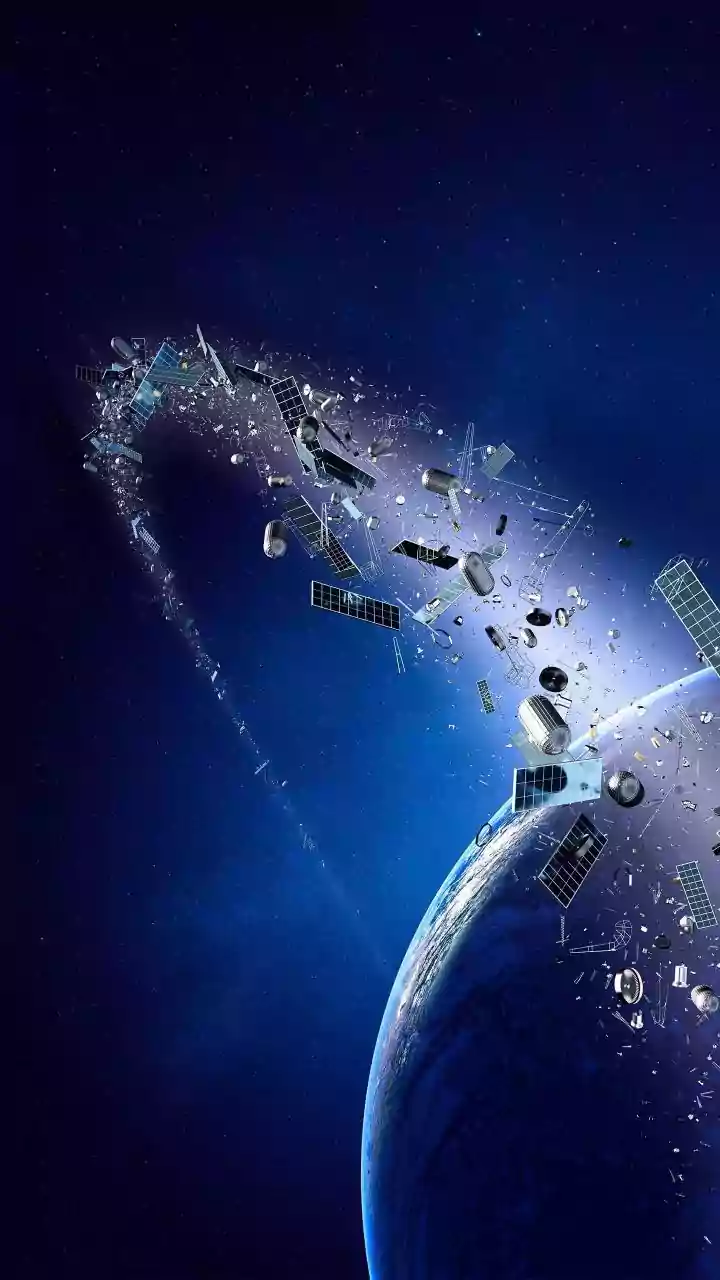
Low Earth Orbit (LEO) is turning into a high-speed junkyard. It is cluttered with over 23,000 tracked objects larger than a softball, including defunct satellites, spent rocket stages, and fragments from past collisions. These pieces of 'space junk' travel
at speeds of up to 28,000 kilometres per hour. At that velocity, even a small paint chip can cause catastrophic damage to an operational satellite, the International Space Station, or future crewed missions. The biggest fear is a cascading chain reaction of collisions known as the 'Kessler Syndrome', where each crash creates more debris, leading to more crashes until entire orbital paths become unusable. This would threaten the space-based infrastructure we rely on for everything from weather forecasting and GPS navigation to global communications.
Seeing the Invisible Threat
The first step in cleaning up is knowing what is there. This is where advanced tracking technology comes in. The market includes sophisticated ground-based radars and optical telescopes that can spot, track, and predict the trajectory of debris. For a long time, many countries, including India, relied on data from North American Aerospace Defence Command (NORAD). However, nations are now developing their own independent capabilities. India's Project NETRA (Network for Space Object Tracking and Analysis) is a prime example, an early warning system designed to detect hazards to the nation's space assets. This initiative enhances India's Space Situational Awareness (SSA), allowing it to independently monitor its satellites and contribute to global safety.
The Cosmic Cleanup Crew
Once a piece of debris is tracked, the next challenge is to capture and remove it. A host of innovative 'Active Debris Removal' (ADR) technologies are being developed, sounding like something out of a science fiction movie. Companies like Japan's Astroscale and Switzerland's ClearSpace are pioneering missions to test these methods. The toolkit includes robotic arms to grapple defunct satellites, large nets to ensnare tumbling objects, and harpoons to spear and secure larger pieces of junk. Other concepts include powerful ground-based lasers to nudge debris into a lower orbit where it can burn up in the atmosphere, or attaching 'drag sails' to increase atmospheric drag and accelerate orbital decay.
A Multi-Billion Dollar Problem
The growing risk of collisions and new regulations are transforming debris removal from a theoretical problem into a commercial necessity. A recent market report projects the industry will soar from USD 143.0 million in 2025 to about USD 9.57 billion by 2035, growing at a staggering compound annual growth rate (CAGR) of 41.6%. The customers for these services are commercial satellite operators, who need to protect their multi-million dollar assets, governments safeguarding national security and scientific satellites, and insurance companies looking to mitigate risk. As mega-constellations like SpaceX's Starlink launch thousands of new satellites, the demand for end-of-life disposal and active removal services is set to explode, making space sustainability a mandatory cost of doing business.
The Next Frontier for Business
While the first successful capture and removal of an uncooperative piece of debris is yet to happen, multiple missions are in advanced stages. Europe's ClearSpace-1 mission, for instance, aims to remove a piece of a Vega rocket. Astroscale has already completed a mission demonstrating the ability to rendezvous with and inspect a debris object. This progress signals a major shift. The focus is no longer just on experimental technology but on creating operational, repeatable services. Companies are moving toward a 'Debris Removal as a Service' model, with Asia-Pacific expected to be the fastest-growing market due to expanding launch activities in the region. It's a clear sign that the business of keeping space clean is ready for take-off.