






More Than Just a Cardio Burn
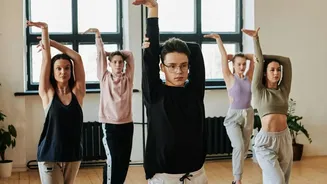
At its core, dance aerobics is a fantastic cardiovascular workout. Like jogging or cycling, it elevates your heart rate, improves endurance, and helps with weight management. A high-intensity session can burn a significant number of calories, comparable
to more traditional vigorous exercises. But what sets it apart is the sheer fun factor. For many, the energetic music and engaging choreography make it feel less like a workout and more like a party, which is a powerful motivator to stay consistent. The combination of music and movement stimulates the brain's reward centers, releasing feel-good endorphins that can boost your mood and reduce stress.
Finding Your Footing: A Boost for Balance
One of the most significant advantages of dance aerobics is its ability to enhance balance. Unlike linear exercises like running, dance forces your body to move in multiple planes of motion—forward, backward, side-to-side, and rotationally. This multidirectional movement constantly challenges your stability. Routines often involve quick weight shifts, single-leg steps, turns, and other complex footwork that require your core and stabilizing muscles to engage deeply to prevent you from toppling over. Strengthening these core muscles is fundamental to good posture and overall stability, reducing the risk of falls and injuries in daily life.
The Brain-Body Connection: Enhancing Coordination
Dance is a full-body conversation, and coordination is the language it speaks. Following choreography requires your brain to tell different parts of your body to move at the same time, in rhythm with the music. This process is a powerful cognitive workout. Learning and memorizing step sequences enhances both short-term and long-term memory, while the need to adjust your movements in time with the beat sharpens your focus and reaction time. This dual-tasking—thinking and moving simultaneously—builds new neural pathways, a process known as neuroplasticity. It actively trains your brain's motor cortex, basal ganglia, and cerebellum, which are all responsible for planning and coordinating movement.
A Workout for Your Mind
The cognitive benefits extend far beyond just coordination. The mental engagement required for dance has been linked to a lower risk of dementia. A landmark study found that frequent dancing was one of the most effective leisure activities for staving off cognitive decline. The activity requires spatial awareness as you navigate your surroundings and problem-solving as you learn new patterns. This mental stimulation, combined with the social interaction often found in group classes, creates a holistic experience that supports long-term brain health. It’s an exercise that keeps both your body and your mind agile.
How to Get Started with Dance Aerobics
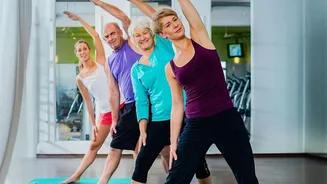
The beauty of dance aerobics is its accessibility. You don't need to be a 'dancer' to start. Many gyms and community centers offer classes like Zumba, which are designed for all fitness levels. If you prefer to start at home, there are countless free and subscription-based videos online catering to beginners. The key is to find an instructor and style you enjoy. Don't worry about getting every step perfect initially. The goal is to keep moving and have fun. Most classes offer low-impact modifications, such as replacing jumps with marches, making it adaptable for various needs. Just wear comfortable clothes, supportive shoes, and be ready to move.