






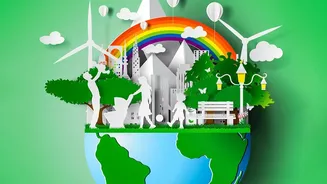

The Promise of a Greener World
Over the past two decades, a powerful global consensus has emerged around the need to heal our planet's forests. Initiatives like the UN Decade on Ecosystem Restoration (2021-2030) and various national pledges have committed to restoring over one billion
hectares of degraded land—an area larger than China. The goals were clear: bring back lost forests to fight climate change, protect biodiversity, and secure livelihoods for millions. Forests are not just trees; they are Earth's lungs, storing massive amounts of carbon, regulating rainfall, and providing food and income for nearly a third of the global population. These commitments represented a promise to invest in the planet's long-term health.
A Sobering Reality Check
The latest 'State of the World's Forests' report from the UN's Food and Agriculture Organization (FAO) serves as a harsh reality check. Despite the grand pledges, progress on the ground is alarmingly slow. The report reveals a massive gap between promises and action: of the more than one billion hectares pledged for restoration, barely a fifth are actually on a path to recovery. This isn't just a shortfall; it's a widening chasm. While commitments have grown, the pace of implementation has stagnated, creating what the report calls a “structural imbalance” between what we need from our ecosystems and what we are doing to sustain them. More than 460 million hectares of forest land remain degraded, and the pressures are only intensifying.
Why We Are Falling Behind
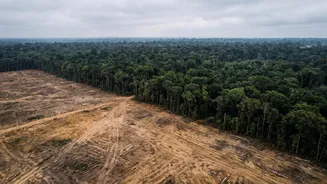
Several critical factors are driving this growing restoration gap. A major hurdle is the immense shortfall in funding. Billions are required to restore hundreds of millions of hectares, but current financial commitments are a drop in the bucket. Compounding this is the relentless pressure from other economic activities. The expansion of industrial agriculture, resource extraction, and infrastructure development often works directly against restoration goals. Furthermore, threats like wildfires, which affect around 127 million hectares of forest annually, along with pests and extreme weather events, are making forests more vulnerable than ever. The report suggests that without sustained political will and coherent policies that integrate restoration into economic planning, even the best-laid plans are destined to fail.
The Staggering Cost of Inaction
Failing to close this gap carries a heavy price. Ecologically, it means accelerated biodiversity loss, as forests are home to 80% of the world's land-based species. Climatically, it cripples one of our most effective natural tools for capturing carbon. Economically, the cost is staggering. The UN estimates that failing to restore degraded ecosystems costs the global economy trillions of dollars every year. Conversely, the benefits of acting are enormous. The report estimates that successfully restoring one billion hectares could generate an estimated $1.8 trillion in economic benefits annually through improved food security, cleaner water, and more resilient rural economies. As the FAO Director-General noted, forest restoration is not just an environmental issue but a strategic investment in our collective future.
A Path Forward, If We Choose It
Despite the grim assessment, the report emphasizes that the window for action, though narrowing, has not closed completely. It outlines several key pathways to accelerate progress. First, finance must be mobilized at a much larger scale. Second, governance must be made more inclusive, empowering the local communities and Indigenous peoples who are often the most effective stewards of forest landscapes. Finally, policies must become more coherent, ending the practice of subsidizing industries that drive deforestation while simultaneously funding restoration. Case studies from around the world, like the Great Green Wall in Africa and landscape-level projects in China, show that restoration can work when ambition is matched with action and resources. The challenge is no longer about recognizing the value of forests, but about implementing solutions at the speed and scale required.