






A Lonely Voyager Wakes Up
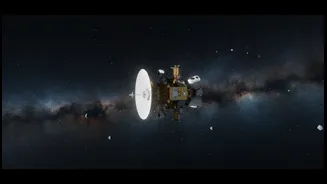
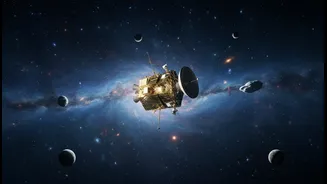
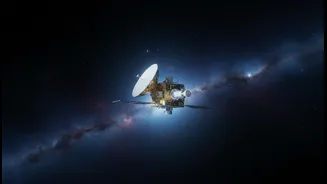
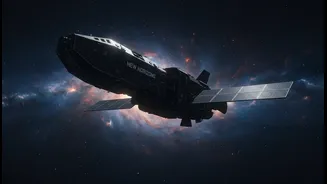
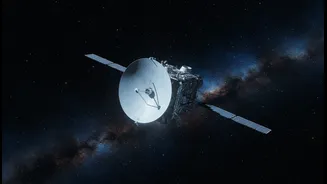
In early July 2026, after a 321-day hibernation to conserve energy, NASA confirmed that New Horizons had once again awakened and was in good health. This was the longest nap in its 20-year mission. Now approximately 9.5 billion kilometres from Earth,
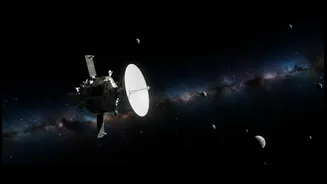
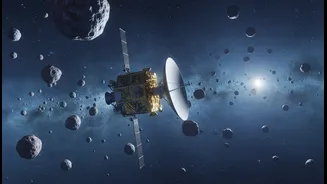
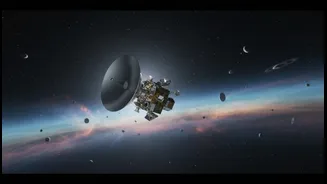
the probe is so distant that its signals, travelling at the speed of light, take nearly nine hours to reach mission control. While it was 'asleep', its instruments continued to gather data on the charged particles and dust in the Kuiper Belt, the vast doughnut-shaped ring of icy bodies beyond Neptune. With the spacecraft now active again, scientists are eagerly downloading this precious data, which offers a unique glimpse into a region no other active mission is currently exploring.
A Time Capsule from 2006
Launched in January 2006, New Horizons represents a specific moment in technological history. Its main processor is a radiation-hardened chip called Mongoose-V, based on the original Sony PlayStation's MIPS R3000 CPU, running at a modest 12 MHz. Its solid-state memory can hold about 8 gigabytes of data—a fraction of what a modern smartphone contains. Yet, this durable, power-efficient technology, designed to withstand the harsh environment of deep space, has performed flawlessly. It guided the probe on the fastest-ever launch from Earth, through a gravity-assist manoeuvre at Jupiter, and across billions of miles of empty space. The probe serves as a reminder of how robust, well-designed technology can far outlast expectations, carrying the ingenuity of a past era into the cosmos.
From Pluto to the Farthest Frontier
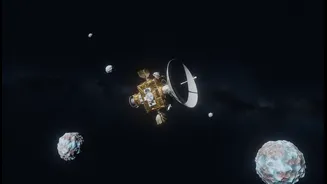
The world was captivated in July 2015 when New Horizons provided our first-ever close-up views of Pluto, transforming it from a fuzzy point of light into a complex world with a giant heart-shaped glacier. But its mission didn't end there. On January 1, 2019, it flew past Arrokoth, a snowman-shaped object a billion miles beyond Pluto, making it the most distant and primitive object ever explored by a spacecraft. Arrokoth is a relic from the formation of the solar system, and studying it provided an unprecedented look at the building blocks of planets. Since then, New Horizons has become a deep-space observatory, its mission extended to explore the Kuiper Belt and the outer heliosphere—the vast bubble of influence created by the Sun.
The Long Goodbye
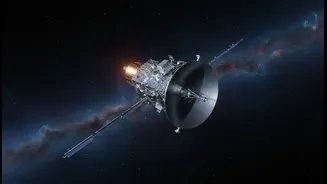
Powered by a single Radioisotope Thermoelectric Generator (RTG), which converts heat from decaying plutonium into electricity, New Horizons has enough power and fuel to continue operating into the 2040s. Its current extended mission is funded until it exits the Kuiper Belt, expected around 2028 or 2029. While there's no specific new flyby target yet, scientists are using powerful telescopes to search for one. In the meantime, the probe continues its crucial work of studying the solar wind and the boundary where the Sun's influence ends and interstellar space begins. It is on a path to become only the third functioning spacecraft, after Voyagers 1 and 2, to enter that uncharted territory. This final phase of its journey could provide invaluable data for planning future interstellar travel.