



A Song is Born
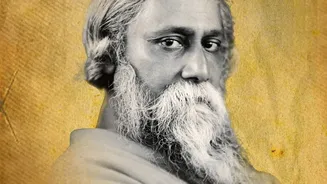
The story begins on December 11, 1911, when Rabindranath Tagore composed 'Bharoto Bhagyo Bidhata' in a highly Sanskritised form of Bengali. This five-stanza hymn was first performed publicly not by Tagore himself, but by his niece, Sarala Devi Chowdhurani,
and a group of students on December 27, 1911, at the Calcutta session of the Indian National Congress. It was published in January 1912 in the 'Tattwabodhini Patrika', the official journal of the Brahmo Samaj, with Tagore as the editor. Little did the audience know that the first of these five verses would one day become the anthem for over a billion people.
The Persistent Royal Myth
Almost immediately, a controversy was born that has shadowed the anthem for over a century. The 1911 Congress session coincided with King George V's visit for the Delhi Durbar, leading some British-run newspapers to incorrectly report that Tagore's song was a hymn of praise for the monarch. In reality, a different song, 'Badshah Hamara' by Rambhaja Dutta Chowdhuri, was sung in the king's honour. Tagore himself repeatedly and emphatically refuted the claim. In a 1937 letter, he explained that the 'Bhagyavidhata' (Dispenser of India's Destiny) in his song was the eternal guide of India's history, not any earthly king like George V.
A Tale of Two Songs
The path to becoming the national anthem was not a solo race. 'Vande Mataram', a poem from Bankim Chandra Chattopadhyay's novel 'Anandamath', was a powerful slogan during the freedom movement. It had a long history of inspiring revolutionaries. However, its origins in a novel with passages some found divisive, and its invocation of religious imagery, led to objections, particularly from the Muslim League in the 1930s. 'Jana Gana Mana', with its more inclusive and pan-Indian geographical references, was seen as a more unifying choice. Subhas Chandra Bose was a key proponent, adopting a Hindustani translation of the song, 'Subh Sukh Chain', as the anthem for the Indian National Army (INA) in 1942.
The Road to Official Adoption
Long before its formal adoption, 'Jana Gana Mana' was gaining de facto status. It was sung to close the historic Constituent Assembly session on the midnight of August 14-15, 1947, heralding independence. In 1947, an Indian delegation presented a recording of it at the United Nations General Assembly as the country's anthem. Finally, on January 24, 1950, two days before India became a republic, the President of the Constituent Assembly, Dr. Rajendra Prasad, made the official declaration. He announced that 'Jana Gana Mana' would be the National Anthem, while also stating that 'Vande Mataram', for its historic role, would be honoured equally and given the status of National Song.
A Republic's Symbolic Timeline
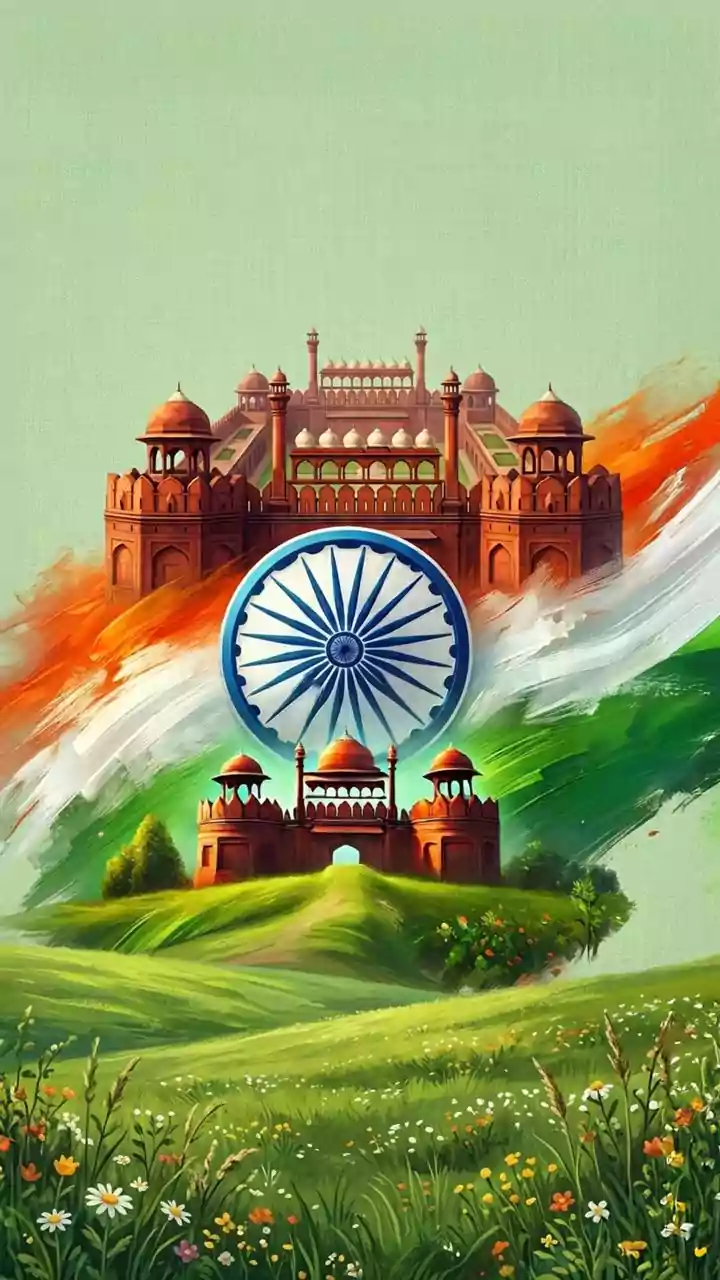
The adoption of the anthem was the final piece in a puzzle of national symbols chosen to define the new republic. This addresses the 'National-Symbol Timeline Question': why were these symbols adopted at different times? The Tricolour flag was adopted first, on July 22, 1947, ensuring independent India had its own flag from day one. The State Emblem, an adaptation of the Lion Capital of Ashoka from Sarnath, was adopted on January 26, 1950, the very day India's constitution came into effect and it became a republic. The anthem's adoption on January 24, 1950, was timed to be part of this foundational process, establishing the core identity of the sovereign nation just as it was formally constituted.