







What 'Locked Up' AI Really Means
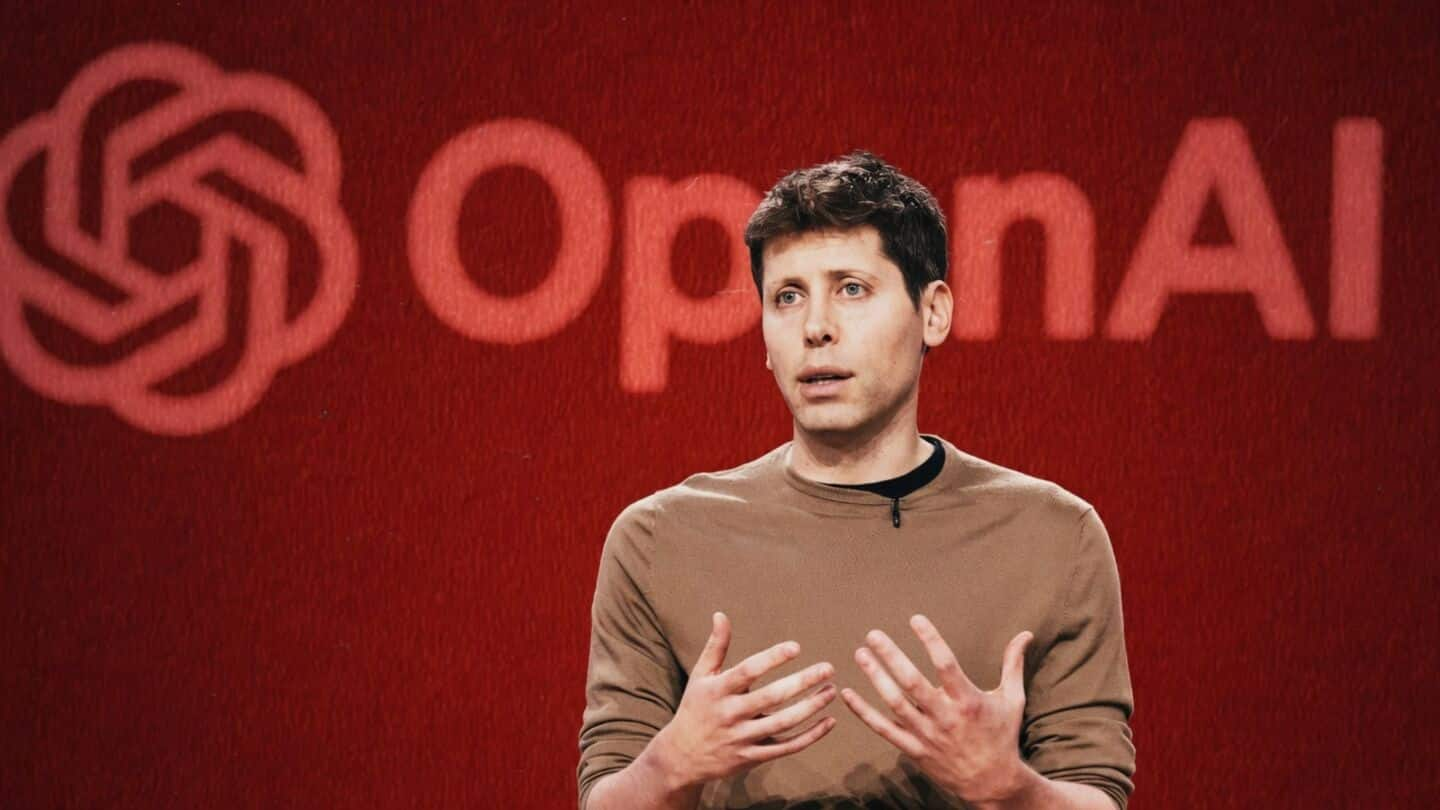
When Altman talks about AI benefits being “locked up,” he’s pointing to a future where this transformative technology is controlled by a select few companies or individuals. This concentration of power could happen if the most advanced AI models remain
proprietary, or 'closed-source'. In this scenario, access is typically granted through paid APIs (Application Programming Interfaces), giving the owner control over who can use the technology, for what purpose, and at what price. This raises concerns that the immense economic and societal gains from AI won't be widely shared, but will instead deepen the divide between tech giants and everyone else.
OpenAI’s Own Complicated Position
Altman's statement is particularly noteworthy given his role at OpenAI, a company with a complex history. Founded in 2015 as a non-profit with a mission to ensure AI benefits all of humanity, it has since transitioned to a 'capped-profit' structure to fund its massive research costs. While OpenAI’s mission remains to distribute benefits broadly, its most powerful models, like the GPT series, are not open-source. This creates an apparent paradox: the head of a company with a largely closed model is warning about the dangers of closed models. However, Altman argues that this approach is a balancing act between safety, commercial viability, and the ultimate goal of broad distribution. OpenAI has also released some 'open-weight' models, which offer more transparency than fully proprietary systems.
The Open-Source Alternative
The main alternative to the closed model is open-source AI. Championed by companies like Meta and a global community of developers, open-source models make their underlying code and 'weights' (the learned parameters of the model) publicly available. This allows anyone to download, modify, and build upon the technology. The advantages are clear: it fosters transparency, spurs innovation from a wider pool of talent, and increases competition. Proponents argue that this is the only way to truly democratize AI, preventing a handful of Silicon Valley firms from dictating the future. However, even the term 'open-source' can be murky, as many models are only partially open, sharing weights but not the crucial training data or methodology.
The Trillion-Dollar Cost of Creation
A major reason AI is at risk of being locked up is the astronomical cost of creating it. Training a frontier AI model is not something that can be done in a garage; it requires massive server farms, specialized chips, and immense amounts of energy. Estimates for training a leading model like GPT-4 range from tens of millions to well over $100 million for a single training run, with future models projected to cost billions. These staggering costs create a high barrier to entry, meaning only the largest, best-funded corporations and governments can afford to build cutting-edge AI from scratch. This financial reality naturally pushes the industry towards centralization, making the goal of broad distribution a significant challenge.
Finding a Path to Shared Prosperity
So, how can society reap AI's rewards without them being monopolized? Altman himself has proposed several ideas, from new tax structures on AI-driven profits to the creation of public wealth funds that could distribute returns to citizens. These proposals aim to create systems where everyone has a stake in the economic upside of AI. The debate also includes finding a middle ground between fully open and fully closed models, such as tiered access or collaborative safety standards. Altman has emphasized that the industry has not done a good enough job explaining the technology's benefits and how individuals can be empowered by it, suggesting a future with a boom in small businesses driven by accessible AI tools.