
What is a 'Black Hole Star'?
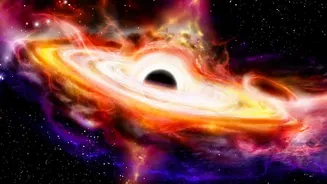
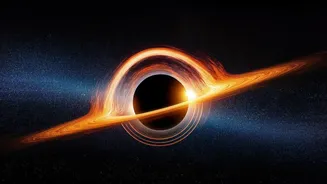
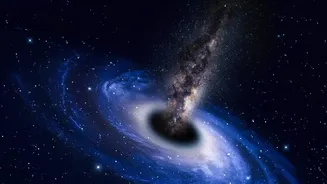
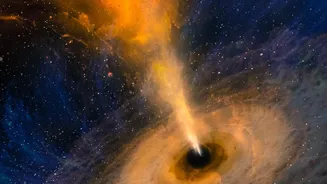
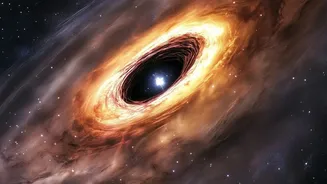
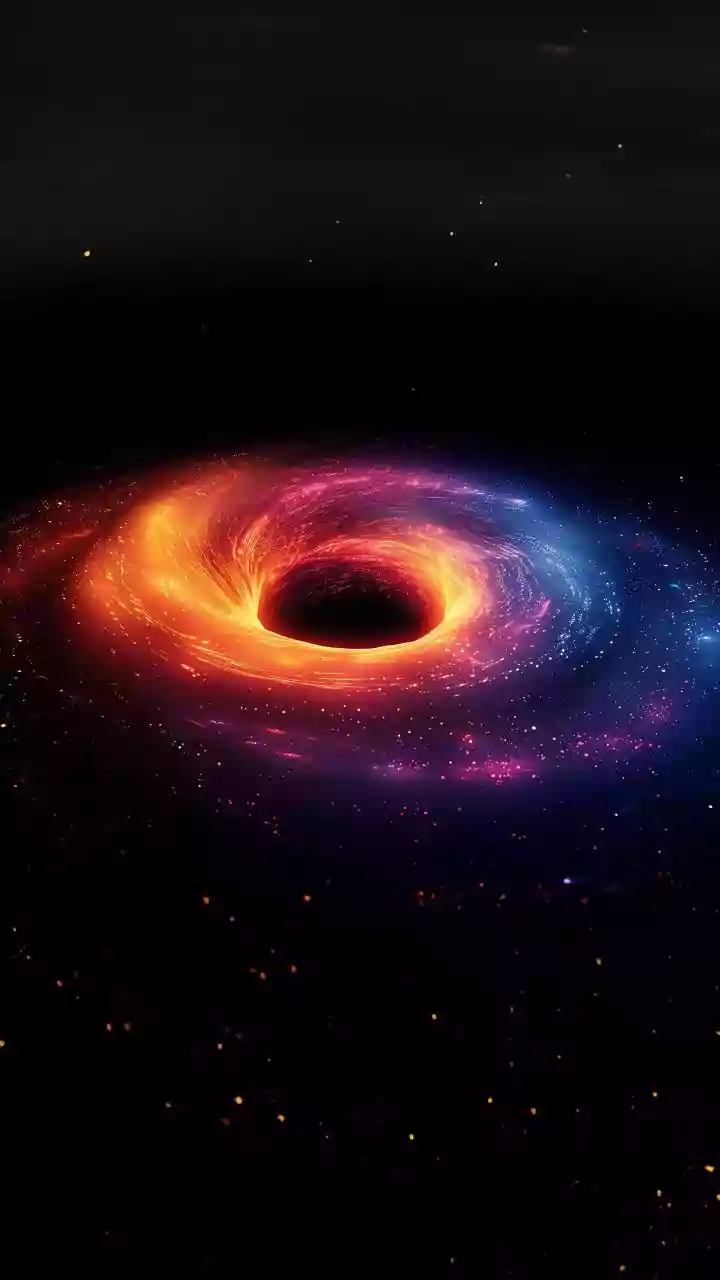
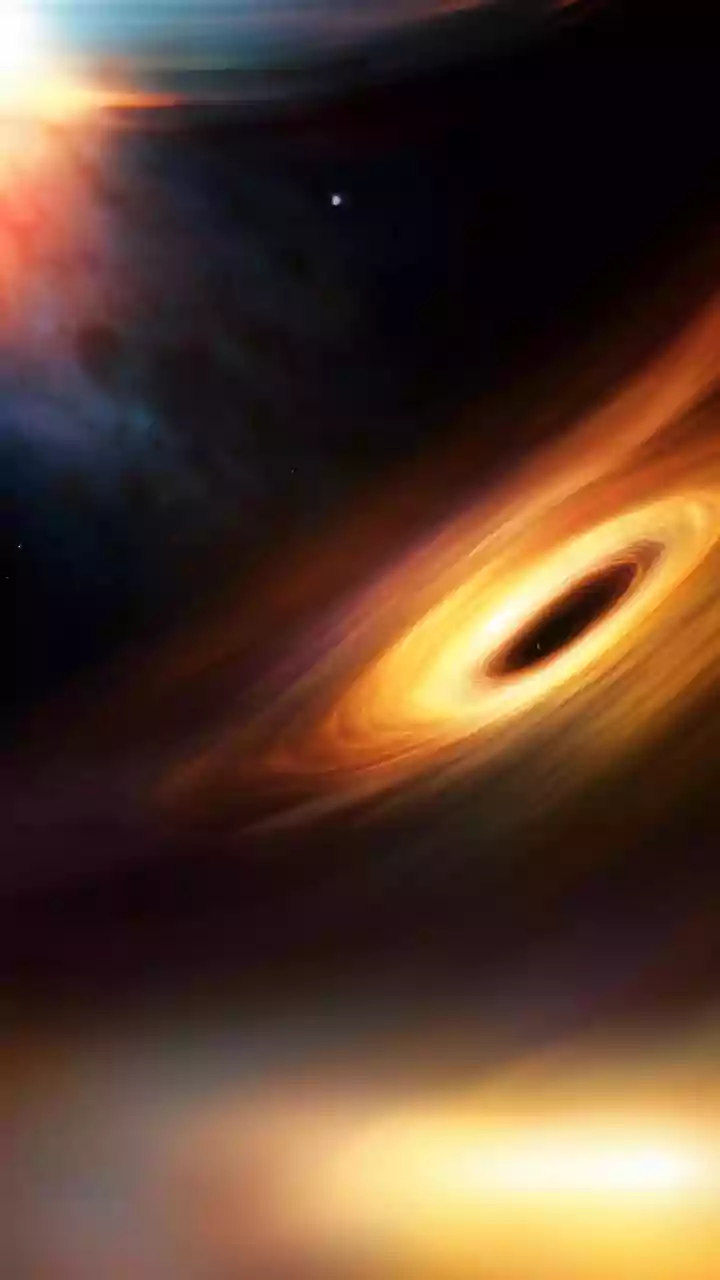
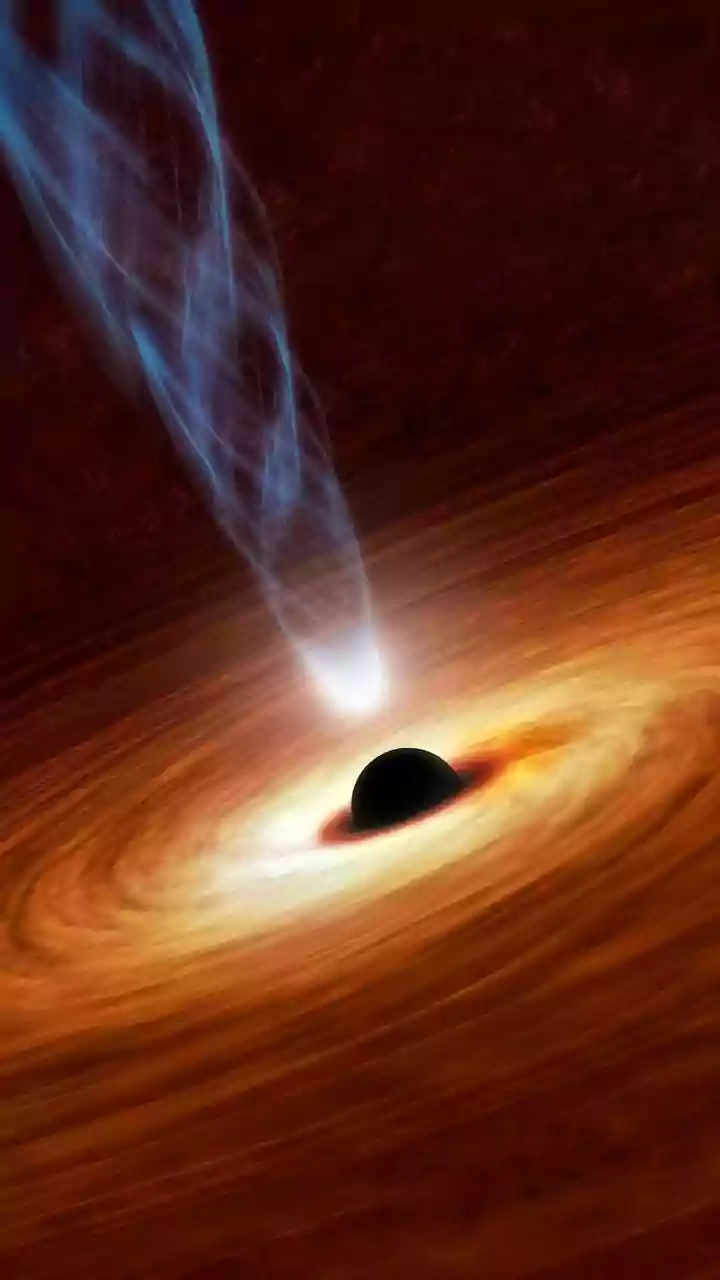
Scientists are calling this new candidate object a 'black hole star,' but a more technical name for this theoretical object is a 'quasi-star'. Unlike the stars we know, which are powered by nuclear fusion in their cores, a quasi-star gets its energy from
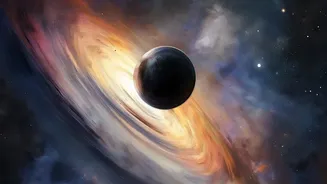
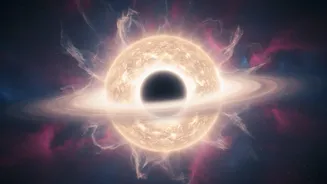
a black hole at its centre. The theory, first proposed in 2006, suggests that in the very early universe, truly enormous clouds of primordial gas—thousands of times the mass of our sun—could collapse. Instead of forming a regular star, the core of this massive protostar would collapse directly into a black hole. The outer layers, however, would be so massive that they wouldn't be blown away. Instead, they would form a gigantic, star-like envelope of gas, powered by the intense energy of matter falling into the central black hole. The result would be a colossal object, possibly as large as our entire solar system, glowing incredibly brightly.
A Discovery at the Edge of Time
This potential quasi-star, labeled MoM-BH-1, was spotted by astronomers using the James Webb Space Telescope (JWST). It was found in one of the deepest images of the cosmos ever taken, appearing as it was just 660 million years after the Big Bang. What made MoM-BH-1 stand out was its extreme colour; it was almost invisible in bluer filters but blazed brightly in redder light. Subsequent analysis of its light signature revealed features that normal stars simply cannot produce. The data suggested the presence of incredibly dense hydrogen gas and very few heavier elements, which is consistent with the conditions of the early universe. The object is putting out about 100 billion times more energy than any known star, an output more typical of an actively feeding black hole.
Solving a Cosmic Chicken-and-Egg Problem
The potential discovery of a quasi-star is so exciting because it could solve one of the biggest puzzles in cosmology: how did supermassive black holes get so big, so fast? Observations show that black holes millions or even billions of times the mass of our sun existed when the universe was less than a billion years old. Standard models of star collapse and mergers struggle to explain how they could have grown to such immense sizes in such a short amount of time. Quasi-stars provide a potential shortcut. These objects would act as seeds, starting life with a relatively large black hole of perhaps 10,000 to 100,000 solar masses at their core, which could then grow much more rapidly than a smaller, stellar-mass black hole. Finding a quasi-star would be like finding the missing link between the first stars and the monstrous black holes at the centres of nearly every large galaxy today, including our own Milky Way.
A New Explanation for 'Little Red Dots'
Since it began operations, the JWST has been spotting numerous mysterious objects that astronomers have nicknamed 'little red dots' in the early universe. The exact nature of these objects has been a subject of intense debate. This discovery provides a compelling new hypothesis: that some of these red dots could be quasi-stars. The unique light signature of MoM-BH*-1, with its red colour explained by a massive, dense gas envelope rather than dust, could serve as a template for understanding these other enigmatic objects. While this one candidate seems to be a 'pure' quasi-star, outshining its host galaxy, other red dots could be similar objects embedded within early, star-forming galaxies.