




Meet PRIMA, NASA’s New Cosmic Explorer
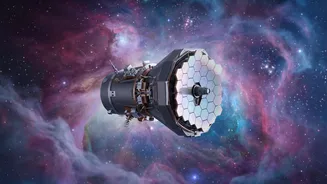
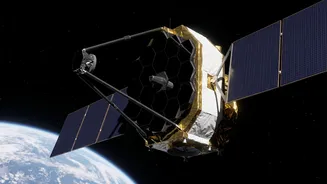
NASA recently announced it is moving forward with the Probe far-Infrared Mission for Astrophysics, or PRIMA. Targeted for a 2033 launch, this space telescope is designed to explore the history and evolution of the universe. PRIMA is the first mission
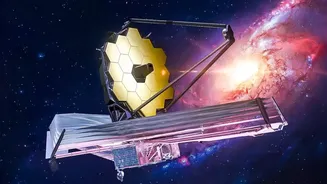
in a new category called Probe Explorers, which fills a crucial gap between smaller, focused missions and giant, multi-billion-dollar flagships like the James Webb Space Telescope (JWST). With a project cost capped around $1.2 billion, PRIMA represents a new, sustainable approach to tackling high-priority science without the decade-spanning development and massive budget of a flagship observatory. Managed by NASA's Jet Propulsion Laboratory, the project now enters a new phase of development to finalize its design and technology ahead of a final confirmation for construction.
The Power of Far-Infrared Light
PRIMA’s superpower is its ability to see the universe in far-infrared light, a range of the electromagnetic spectrum that is largely invisible to other telescopes. While observatories like Hubble see visible light and JWST specializes in near- and mid-infrared, PRIMA will bridge the gap between JWST and radio telescopes like ALMA. This is crucial because many of the universe’s most important processes happen in cold, dusty environments. Visible and even near-infrared light is blocked by these dense clouds of gas and dust, but far-infrared light can pass right through them. By detecting this light, PRIMA will essentially give astronomers a new set of eyes to witness the earliest stages of planet, star, and galaxy formation, which have long been hidden from view.
Unlocking the Secrets of Formation
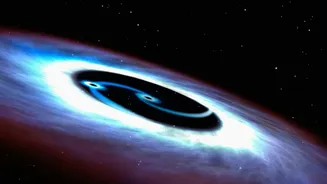
The mission has three primary scientific goals. First, it will study the birth of planets by examining protoplanetary disks—the swirling collections of gas and dust around young stars. PRIMA will be able to measure the amount of water and other key molecules in these disks, revealing the raw materials available for forming new worlds. Second, it will trace the evolution of galaxies and their supermassive black holes. By surveying interstellar dust, PRIMA can map how cosmic magnetic fields influence star birth and how galaxies build up over time. Finally, the telescope will investigate how heavy elements and cosmic dust were created and dispersed throughout the universe's history. These observations will help explain how our universe got to be the way it is today.
Building on a Legacy, Answering New Questions
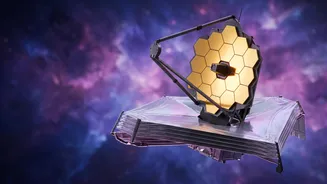
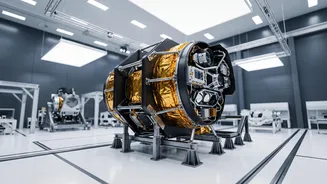
PRIMA is not just a successor to past infrared missions like the Spitzer and Herschel space telescopes; it’s a direct complement to the ongoing work of JWST. In fact, some of the key questions about planet formation cannot be answered by JWST because the necessary spectral lines are only visible in the far-infrared wavelengths where PRIMA will operate. To achieve its goals, PRIMA will use a 1.8-meter telescope cryogenically cooled to just a few degrees above absolute zero. This extreme cold is necessary to suppress the telescope's own heat, which would otherwise blind its incredibly sensitive detectors to the faint far-infrared light from distant cosmic objects. This technological leap will make PRIMA orders of magnitude more sensitive than any previous far-infrared mission.