

A Rainbow of Elements
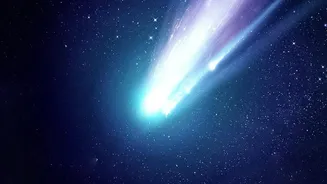
At its core, the colour of a meteor tells us what it's made of. Just like a chemist can identify an element by the colour of flame it produces, we can read the composition of a space rock as it burns up in our atmosphere. This process is driven by the intense
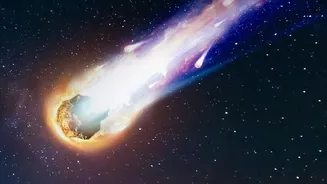
heat generated by friction, which causes different minerals and metals to glow. A yellow streak, for instance, often points to the presence of iron, while an orange-yellow hue suggests sodium. If you spot a violet or purple flash, you're likely seeing calcium. This is the meteoroid's chemical fingerprint, revealed for a fleeting moment.
The Role of Speed and Air
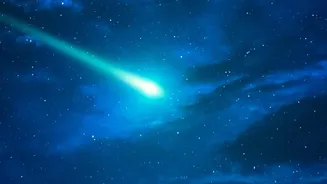
It's not just about the rock itself. The colour we see is a dynamic interplay between the meteoroid's composition, its speed, and the Earth's atmosphere. The air around the meteor becomes superheated, creating a plasma where atmospheric gases, primarily nitrogen and oxygen, can glow, often producing a red hue. In slower meteors, this atmospheric red can be more prominent. Faster meteors, however, generate more energy, causing the elements within the meteoroid to ionize and dominate the display. A fast-moving meteor rich in magnesium might produce a brilliant blue-green, while a slower one with sodium could appear orange. Some showers, like the fast Leonids, are known for their blue-green meteors due to high magnesium content.
Reading the Story in the Streak
This is where observing colour changes becomes crucial for deeper interpretation. A meteor is not uniform; it's often composed of layered minerals. As it plummets through the atmosphere, these layers abrade and vaporize at different points, causing the colour of the light to shift along its path. A meteor might start off with a yellow glow from its iron-rich outer layer, then transition to a violet hue as a pocket of calcium begins to burn. Watching for these changes can provide a much more detailed picture of the meteoroid's structure than just a single, static colour. Extremely fast meteors can even show multiple colours at once as different metals ignite at various temperatures.
Becoming a Better Sky-Watcher
Armed with this knowledge, you can transform your next meteor-watching experience. Instead of just counting shooting stars, try to actively identify their colours. Notice if a meteor is a single, consistent shade or if it shifts. Does a bright green fireball leave a different kind of trail than a fainter yellow one? Green is one of the most commonly reported colours, often linked to magnesium or nickel interacting with oxygen. Some bright meteors, known as fireballs, leave a glowing trail, or train, which can also have its own colour story, initially appearing green from ionized oxygen in the air. By paying attention to these details, you move from being a passive observer to an active interpreter of this cosmic light show.