


The Classic Claw Clip: Your Everyday Hero
The claw clip is arguably the most versatile tool in your hair accessory arsenal. Its spring-loaded design and interlocking teeth are perfect for gathering a section of hair quickly and securely. For a half-up style, medium-sized claw clips are often
the sweet spot; they're large enough to grip a good portion of hair without feeling bulky. If you have fine or thin hair, a smaller claw clip will prevent the style from being overwhelmed. For those with thick or long hair, a larger, sturdier claw clip provides the necessary hold to prevent slipping throughout the day. The key to a secure half-up style with a claw clip is to first twist the section of hair you're pulling back. This creates a condensed, stable base for the clip’s teeth to grip onto, ensuring it stays put from morning coffee to your evening commute.
The French Barrette: For a Polished Finish
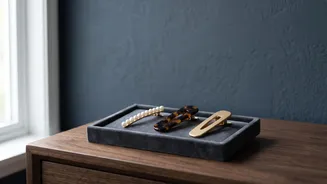
When you want a sleeker, more polished look, the French barrette is your go-to. Unlike claw clips that create volume, barrettes press hair flat, offering a refined and elegant finish. They are perfect for securing smaller, neater sections of hair, making them ideal for a precise half-up style. When choosing a barrette, pay attention to the clasp. A high-quality, sturdy clasp will provide a stronger, more reliable hold, especially for medium to thick hair. For those with very fine hair that tends to slip, look for barrettes with a rubberized or textured lining inside the clasp for extra grip. Barrettes come in a vast array of designs, from simple and metallic to ornate and jeweled, allowing you to treat the clip not just as a tool, but as a decorative part of your final look.
Mini Claw Clips: For Details and Fine Hair
Don't underestimate the power of the mini claw clip. While a large clip might feel too cumbersome for just pulling back the top section of your hair, a mini clip is perfect for the job, especially for those with short or fine hair. These smaller clips are lightweight and won't weigh your hair down, reducing the risk of the style falling flat or the clip sliding out. They are also excellent for more intricate half-up styles, like pulling back just your bangs or creating two small twists on either side of your head and securing them at the back. Using a mini clip provides a secure hold without adding bulk, keeping the focus on the style itself. For extra security, you can use a small, clear elastic to tie the section of hair first, then place the mini claw clip over it for a decorative touch and added stability.
Snap Clips: Simple and Surprisingly Secure
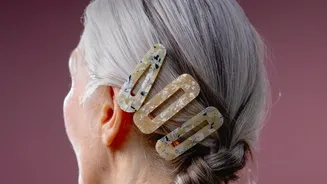
Snap clips, often associated with childhood hairstyles, are making a major comeback for their simplicity and effectiveness. These flat clips snap shut, providing a firm hold that works exceptionally well for fine to medium hair types. Because they lie flat against the head, they are incredibly comfortable and offer a minimalist aesthetic. For a half-up style, you can use one larger snap clip to hold a twisted section of hair or use two smaller ones in a crisscross pattern for a more decorative and secure hold. Look for snap clips with a smooth coating, like resin or cellulose acetate, to prevent any snagging or hair damage. They are particularly useful for taming flyaways and securing smaller pieces of hair that a larger clip might miss.
Alligator Clips: A Stylist's Secret Weapon
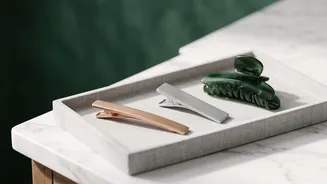
Often seen in the hands of professional hairstylists, alligator clips (also known as duckbill clips) are not just for sectioning hair during styling. Their long, tapered shape and spring-loaded design make them excellent for creating a secure half-updo. Because of their elongated shape, they can hold a wider section of hair neatly against the head. To use one for a half-up style, gather the top section of your hair, give it a slight twist to create a base, and then slide the alligator clip in horizontally to hold it in place. This creates a clean, low-profile look that is both modern and chic. They provide a strong grip, making them a reliable choice for keeping hair out of your face all day long without constant readjustment.