


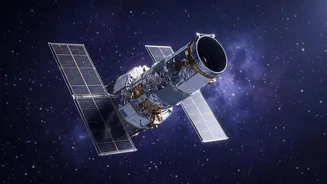


A Watcher of the Violent Universe
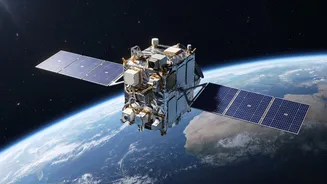
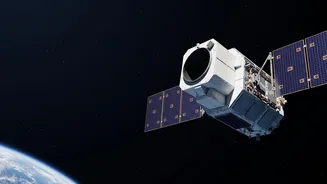
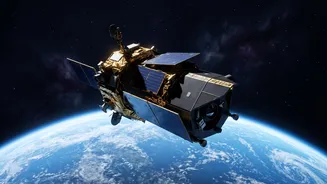
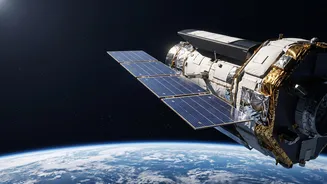
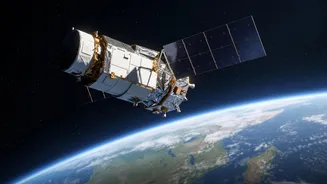
For over two decades, NASA's Neil Gehrels Swift Observatory has been humanity's rapid-response unit for the most powerful explosions in the cosmos. Launched in 2004 with an expected two-year lifespan, Swift has far outlived its warranty, becoming an indispensable
tool for astronomers worldwide. Its specialty is detecting gamma-ray bursts—fleeting, cataclysmic events that mark the death of massive stars or the collision of cosmic titans like neutron stars. Swift’s unique ability is its speed; it can autonomously detect a burst and pivot its X-ray, ultraviolet, and optical instruments to the source in under a minute, capturing precious data that would otherwise be lost forever. But this prolific observatory has been running out of altitude. With no onboard propulsion, atmospheric drag, intensified by recent solar activity, has been steadily pulling it closer to Earth. Its orbit decayed from around 600 kilometers to below 350, putting it on a collision course with the atmosphere by late 2026.
The Private Sector's Daring Rescue Plan
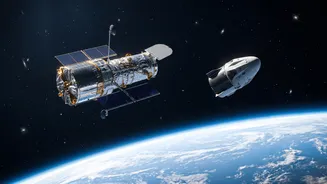
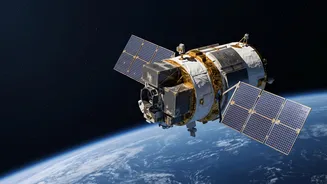
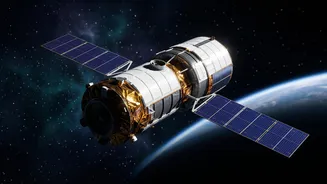
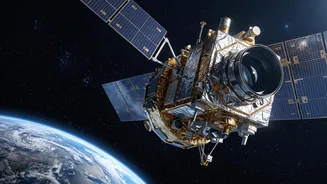
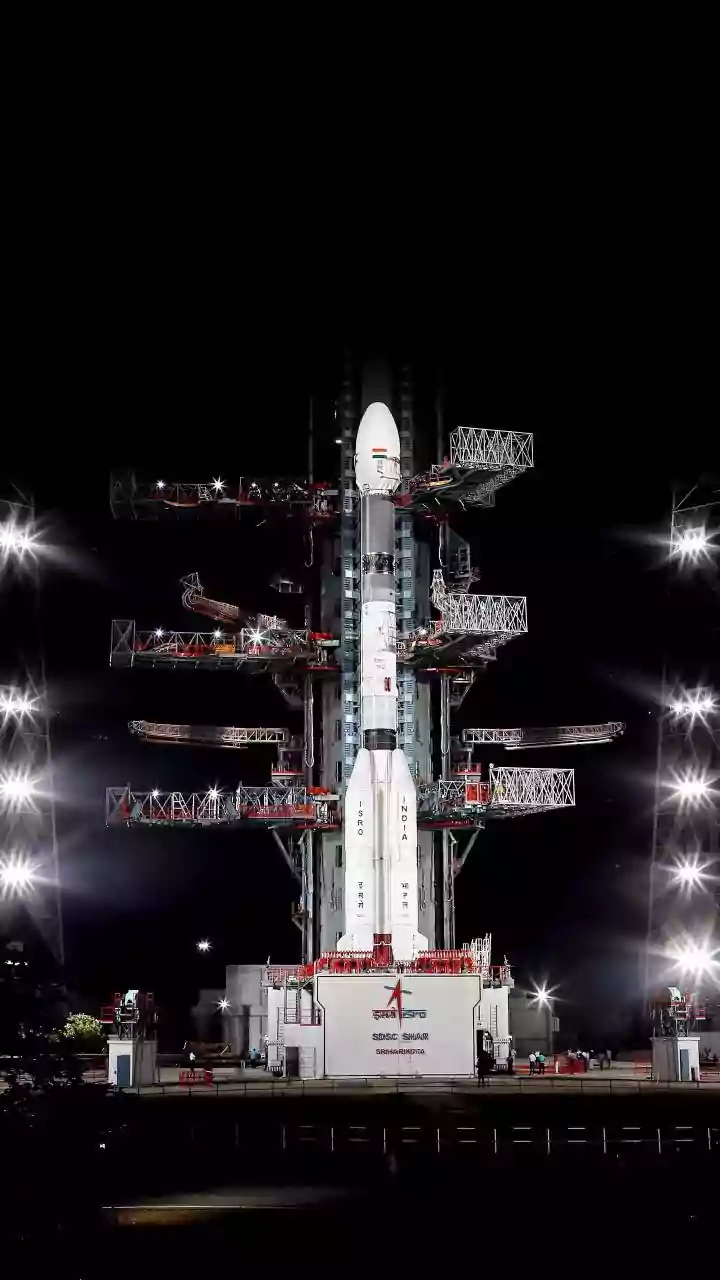
With Swift’s demise imminent, NASA took a calculated risk on an innovative solution. In 2025, the agency awarded a $30 million contract to Katalyst Space, an Arizona-based startup, for a first-of-its-kind rescue mission. The plan was ambitious: Katalyst would design, build, and launch a robotic servicing spacecraft called LINK in under a year. This three-armed craft would launch on a Pegasus XL rocket, chase down Swift, grapple it, and then use its own thrusters to boost the observatory into a higher, more stable orbit, potentially extending its scientific mission for several more years. It was a landmark public-private partnership, a test case for the burgeoning industry of in-orbit servicing, where commercial companies could refuel, repair, or reposition aging but still functional satellites.
What Went Wrong in Orbit
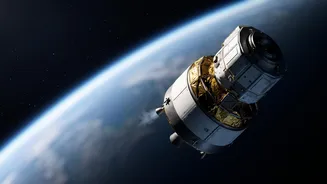
The LINK spacecraft successfully launched on July 3, 2026, and initial checks were positive. However, during the commissioning phase just weeks after launch, disaster struck. Electrical power issues caused two of the spacecraft’s three reaction wheels—devices essential for controlling its orientation—to fail. This triggered a cascade of problems, including a partial failure of its thruster system, causing the LINK spacecraft to begin spinning uncontrollably in orbit. Engineers from Katalyst and NASA worked for weeks to salvage the mission, managing to slow the tumble using an electric propulsion system. They even uploaded new control software, but the damage was done. Without precise attitude control, a safe rendezvous and capture of the delicate Swift observatory became impossible. On August 19, NASA and Katalyst officially announced that the boost attempt was off.
The Final Days of a Storied Telescope
With the rescue mission abandoned, the Neil Gehrels Swift Observatory is now doomed to a fiery end. NASA estimates the spacecraft will burn up upon re-entering Earth’s atmosphere later this year, likely after October 2026. The failure is a blow to the scientific community, which relies on Swift's rapid-response capabilities. The telescope will continue its scientific operations for as long as its decaying orbit allows, but its final chapter is now written. While the primary goal failed, the mission is not a total loss. NASA stated that the LINK spacecraft will still attempt to approach Swift to conduct rendezvous and proximity operations. This will allow engineers to gather invaluable data to inform future satellite servicing missions, turning a failed rescue into a crucial learning experience.
A Reality Check for In-Space Servicing
The failure of the Swift boost mission serves as a sobering reminder of the immense challenges in the commercial space sector, particularly for complex operations like in-orbit servicing. While the mission was hailed as a high-risk, high-reward endeavor from the start, its failure underscores the technical hurdles that still exist. Both NASA and Katalyst acknowledged the risks, driven by an unprecedented timeline to save the observatory. NASA Administrator Jared Isaacman noted that the attempt was still worthwhile, advancing capabilities America will need for the future. For Katalyst and the wider industry, the lessons learned from LINK's attitude control failure will be critical. The event highlights that even with innovative technology and ambitious goals, the unforgiving environment of space remains the ultimate arbiter of success and failure.