







A Historic First, A Bolder Future
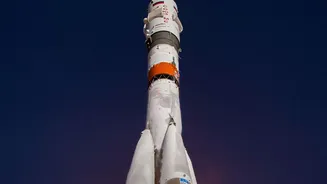
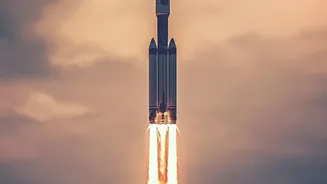
On July 18, 2026, Skyroot Aerospace made history by successfully launching its Vikram-1 rocket into orbit from the Satish Dhawan Space Centre, Sriharikota. This maiden mission, dubbed 'Aagaman' (Sanskrit for 'Arrival'), was not just a technical triumph
but a landmark moment, making India only the third country after the US and China with a private company capable of orbital launches. Building on this success, the company is not resting on its laurels. Co-founder and CEO Pawan Kumar Chandana has outlined a bold strategy: to transition from this single successful flight to a regular, high-frequency launch schedule. The goal is to achieve a cadence of one launch per month by some time in 2027, a target that would transform Skyroot from a promising startup into a key player in the global commercial launch market.
The Vikram-1: India's Private Workhorse
At the heart of this ambition is the Vikram-1 rocket, named after Dr. Vikram Sarabhai, the father of India's space program. It is a four-stage vehicle designed specifically to cater to the booming small satellite market. Built with a lightweight all-carbon-composite structure and featuring 3D-printed engine components, the rocket is engineered for rapid, modular assembly and cost-efficiency. It is capable of carrying payloads of up to 350-480 kg to Low Earth Orbit (LEO), the most common destination for small satellite constellations used for communications, Earth observation, and data services. Unlike large rockets that often force small satellite operators to 'rideshare' and conform to a primary mission's schedule, Vikram-1 is designed to offer dedicated 'cab-to-space' services, providing customers with flexibility and precise orbital placement.
From Ambitious Startup to Space Unicorn
Skyroot's journey began in 2018, founded by former ISRO scientists Pawan Kumar Chandana and Naga Bharath Daka. The company first proved its technical capabilities in November 2022 with the launch of Vikram-S, a suborbital rocket that marked India's first-ever private rocket launch. This paved the way for the far more complex orbital mission. The successful Vikram-1 launch was the culmination of years of development, supported by a favorable policy environment. India's decision in 2020 to open the space sector to private enterprise and the establishment of the regulatory body IN-SPACe created the framework necessary for companies like Skyroot to thrive. This has attracted significant investment, with the company raising over $60 million and achieving a valuation of over $1.1 billion, making it India's first space-tech unicorn.
Navigating a Competitive Global Market
Skyroot is entering a competitive but supply-constrained market. Globally, the demand for small satellite launches is surging, but reliable and dedicated launch providers are few. Outside of China, the market has been dominated by players like SpaceX and Rocket Lab. Skyroot's strategy hinges on providing a reliable, on-demand, and cost-effective alternative. The company has already built a factory in Hyderabad with the capacity to produce one rocket per month. By scaling up its launch frequency, Skyroot aims to execute its backlog of customer payloads and prove that its first success was not a one-off but the start of a dependable commercial service. The transition from a single historic flight to a routine launch business is the company's next great challenge.
The Bigger Picture for 'New Space' India
Skyroot's ambitious launch cadence is more than just one company's business plan; it's a vital part of India's larger goal to significantly increase its share of the global space economy, which is projected to grow substantially. The success of private players is seen as crucial for creating a vibrant ecosystem that complements the work of the national agency, ISRO. The Indian government has actively supported this shift, with IN-SPACe facilitating access to ISRO's facilities and technical expertise for over 450 space startups. As Skyroot gears up for more frequent launches and develops its next-generation Vikram-2 rocket, its progress will be a barometer for the entire Indian private space sector's potential on the world stage.