




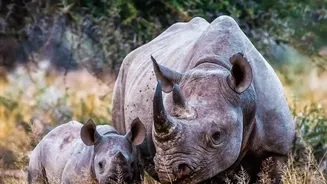
A Return to a Lost Home
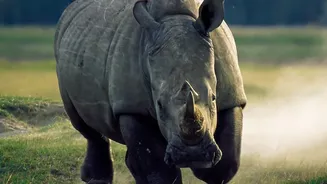
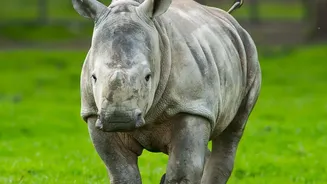
There was a time when the rhinos of the Terai grasslands were just a memory, wiped out from the region by the early 20th century due to habitat loss and hunting. But in 1984, a bold conservation experiment began. In a landmark effort to re-establish the species
in its historical range, a small founder group of rhinos was translocated to Dudhwa National Park. The initial phase was fraught with challenges, but after bringing in individuals from both Assam and Nepal, a seed population of seven rhinos—two males and five females—was finally established, marking the start of a four-decade journey.
From a Few to Over Fifty
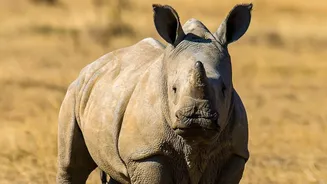
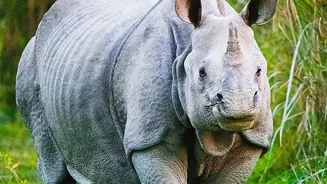
From that small group of founders, the rhino population in Dudhwa has shown remarkable resilience and growth. For years, the animals were raised in a large, specially-fenced Rhino Rehabilitation Area (RRA) to protect them from poaching and to prevent human-wildlife conflict. This protected environment allowed the population to breed and flourish safely. The strategy has paid off handsomely. According to the latest census conducted in June 2026, the park's rhino population has swelled to 53 individuals. This represents more than a seven-fold increase from the original group, a testament to the success of the long-term conservation and management efforts by the Uttar Pradesh Forest Department and its partners like WWF-India.
Why a Second Stronghold Matters
The success in Dudhwa is critically important because it helps mitigate a major risk in wildlife conservation: over-concentration. For decades, the vast majority of India's rhinos—at one point nearly 90%—were concentrated in Assam's Kaziranga National Park. While Kaziranga is a world-renowned success, relying on a single location leaves the entire species vulnerable to catastrophic events like disease outbreaks, extreme floods, or a spike in poaching. Establishing a viable, breeding population in a geographically separate area like Dudhwa acts as a vital insurance policy. This aligns with the national strategy, outlined in initiatives like Indian Rhino Vision 2020, which aimed to create multiple rhino populations to ensure the species' long-term survival.
The Next Chapter: Roaming Free
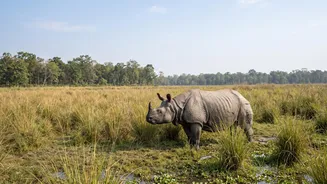
After nearly four decades of careful nurturing within enclosures, the Dudhwa rhino story has entered its most exciting phase: rewilding. Starting in late 2024 and continuing into 2026, conservation teams began releasing selected rhinos from the fenced areas into the park's unfenced core habitat. As of March 2026, a total of eight rhinos are now roaming free, tracked by radio collars that provide valuable data on their movement and adaptation. This is a monumental step, transitioning the project from a contained breeding program to the establishment of a truly wild, free-ranging population. It signals immense confidence in the habitat's suitability and the park's protection mechanisms.
Challenges and the Path Ahead
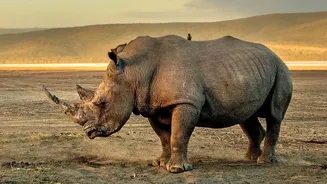
The journey is not without its hurdles. Managing a small, isolated population always brings concerns of potential inbreeding and the need to maintain genetic diversity. Furthermore, as more rhinos are released into the open, the potential for human-wildlife conflict and the ever-present threat of poaching across the nearby international border require constant vigilance. However, the plan is already looking ahead. New Rhino Rehabilitation Centres are being developed within Dudhwa to give the growing population more space, and the data from the free-ranging animals will inform future management. Scientific assessments suggest the park could potentially support a population of 80 to 100 rhinos, indicating there is still room to grow.