






A Presidential Rebranding
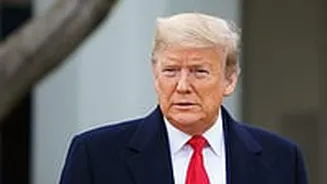
Following a high-profile meeting with leaders from major technology companies, President Donald Trump has issued an executive order mandating that all federal agencies adopt the term 'Super Intelligence' (SI) in place of 'Artificial Intelligence' (AI).
The order, signed on Tuesday, applies to all official communications, policy documents, and other materials across the executive branch. According to the President, the term 'artificial' sounds “fake” and no longer captures the transformative power of the technology. This rebranding effort was cemented after a White House Accord on Super Intelligence was voluntarily signed by the attending tech leaders, a document the President described as “morally binding.”
The Politics of a Word
The administration's push to relabel AI as 'Super Intelligence' is seen by many as a strategic branding exercise. The stated reason for the change is to better reflect the advanced capabilities of modern systems. The executive order argues that today's technology is far beyond what the original pioneers of AI envisioned 70 years ago. However, the move also comes as public concern over AI's risks is growing. Polling data from 2026 shows a significant majority of Americans prioritize AI safety over unchecked innovation and are wary of new data centers in their communities. By framing the technology as 'Super Intelligence,' the administration aims to project an image of American strength and leadership, shifting the narrative from risk to opportunity and limitless potential. President Trump has been clear about his goal for the U.S. to win the global race in this field, particularly against China.
‘Super Intelligence’ vs. Superintelligence
The White House's new terminology creates a notable confusion with the established scientific definition of the term. In the field of computer science, 'Artificial Superintelligence' (ASI) is a well-defined, albeit hypothetical, concept. It refers to a future form of AI that would dramatically surpass human intellect across virtually every domain, from scientific creativity to social skills. Currently, no such system exists; all of today's AI, no matter how powerful, is considered 'narrow AI' because it is designed for specific tasks. Experts believe the development of 'Artificial General Intelligence' (AGI), an AI with human-level cognitive abilities, would be a necessary precursor to ASI. The administration's use of 'Super Intelligence' as a blanket replacement for AI conflates a political brand with a specific, futuristic technical milestone that has not been reached.
Industry Reaction and a New Task Force
The tech industry's reaction has been mixed. Leaders from OpenAI, Anthropic, Google, Meta, and Nvidia were present at the White House meeting. Following the directive, some have begun to adopt the new term, with Elon Musk reportedly planning to rename his company from SpaceXAI to SpaceXSI. The rebranding has also led to a surge in demand for the '.si' internet domain, which belongs to the country of Slovenia. Alongside the terminology change, President Trump announced the formation of a 'Super Intelligence Force' (SIF). This task force, led by Director of National Intelligence Jay Clayton, is charged with coordinating the government's approach to the technology and engaging with industry and the public. It has been given 120 days to assess risks and opportunities, though officials have stressed that the private sector will remain the primary driver of risk management.