
Mount Nyiragongo, 2002: A City Engulfed in Lava
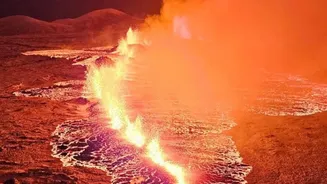
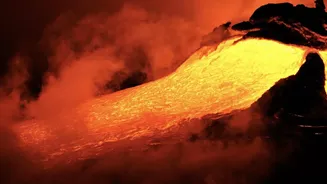
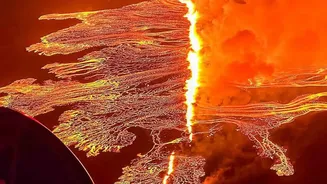
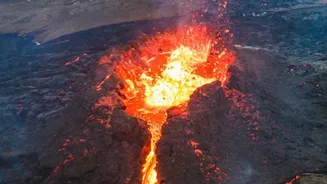
When Mount Nyiragongo in the Democratic Republic of Congo erupted in January 2002, it unleashed some of the fastest-moving lava in the world. Three streams of molten rock poured down its flanks, one heading directly for the city of Goma. The eruption
destroyed roughly 13% of the city, including homes, businesses, and a significant part of the international airport's runway. While the official death toll was around 245, many caused by asphyxiation from carbon dioxide and a petrol station explosion, the humanitarian disaster was immense. Approximately 120,000 people were left homeless, and hundreds of thousands fled, creating a massive refugee crisis that required a swift international response to prevent further catastrophe. The event highlighted how a single eruption could devastate a region's entire infrastructure and economy, leaving a deep and lasting scar.
Mount Merapi, 2010: The Wrath of a Fire Mountain
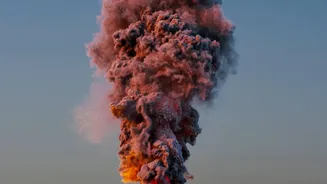
Indonesia’s Mount Merapi, one of the most active volcanoes in the world, unleashed its largest eruption in over a century in late 2010. For weeks, it violently spewed searing gas clouds, ash, and pyroclastic flows—superheated avalanches of rock and gas—down its densely populated slopes. The disaster claimed over 350 lives and forced the evacuation of around 350,000 people. The impact rippled outwards. Thick ash plumes caused major disruptions to aviation across Java, cancelling hundreds of international flights. The eruption also triggered lahars, which are destructive volcanic mudflows, that further damaged the landscape and infrastructure. With economic losses estimated at over US$600 million, the Merapi eruption was a brutal reminder of the multifaceted threat volcanoes pose, combining immediate danger with long-term economic and environmental fallout.
Eyjafjallajökull, 2010: The Ash Cloud That Halted the World
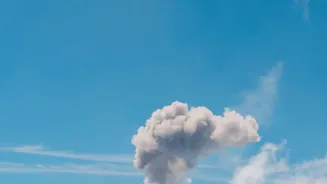
While not among the deadliest in terms of human lives, the 2010 eruption of Iceland's Eyjafjallajökull volcano caused a truly global disaster of a different kind. Its relatively small eruption occurred under a glacier, creating a plume of fine, abrasive volcanic ash that was carried by jet streams directly over Europe. Fearing the glass-like particles would damage jet engines, authorities implemented a near-total shutdown of European airspace for six days. It was the largest air traffic disruption since World War II. Over 100,000 flights were cancelled, stranding more than 10 million passengers and crippling global supply chains. The airline industry lost an estimated US$1.7 billion, and the total impact on the global economy was pegged at around US$5 billion. The event starkly revealed the fragility of our interconnected world, where a single volcano could ground an entire continent and disrupt economies worldwide.
Hunga Tonga-Hunga Haʻapai, 2022: The Unprecedented Oceanic Blast
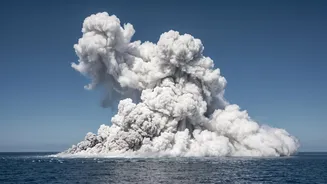
The eruption of the Hunga Tonga-Hunga Haʻapai underwater volcano in January 2022 was the largest atmospheric explosion recorded by modern instruments. The violent submarine event generated tsunamis that devastated parts of Tonga and were felt as far away as Peru, where two people died. Its most profound global impact, however, was atmospheric. The eruption blasted an enormous quantity of water vapour—a greenhouse gas—into the stratosphere, an amount not seen in the satellite era. This unprecedented injection of water is being studied for its potential to temporarily warm the Earth's surface. The blast also generated atmospheric shockwaves that circled the planet multiple times and triggered plasma bubbles in the ionosphere, which disrupted GPS and radio communications. The Hunga Tonga eruption redefined what a volcanic disaster could look like, demonstrating a direct and immediate impact on the global atmosphere and our technological systems.