






A Match Made Across Millennia
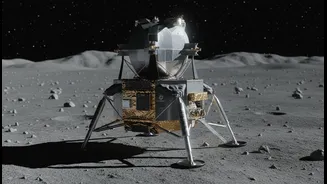
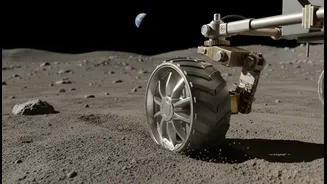
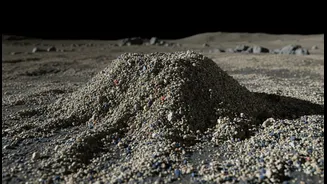
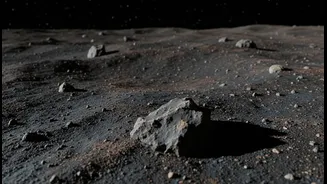
Scientists from the Physical Research Laboratory (PRL) in Ahmedabad have made a startling discovery: the soil analysed by the Pragyan rover at its landing site, Shiv Shakti Statio, has a chemical composition that closely matches a specific lunar meteorite
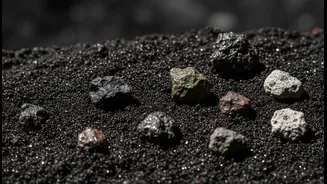
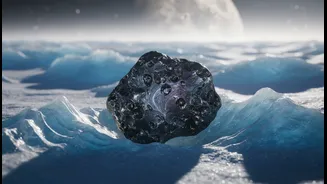
found in Antarctica. The meteorite, named ALHA 81005, was discovered during an expedition in 1981-82 and holds the distinction of being the very first rock on Earth confirmed to have come from the Moon. This new finding forges a direct link between a sample studied on the Moon by an Indian rover and a piece of the Moon that travelled through space to land on our planet. Researchers meticulously compared the data from Pragyan’s onboard Alpha Particle X-ray Spectrometer (APXS) with the known compositions of 66 different lunar meteorites found on Earth. Among all of them, ALHA 81005 was the standout match.
The Magnesium Connection
The key to this cosmic connection lies in the elements magnesium and iron. The APXS instrument found that the soil at the Chandrayaan-3 landing site had higher levels of iron and magnesium, and lower levels of aluminium, compared to typical lunar highland regions. Specifically, the combined iron and magnesium oxide content at Shiv Shakti Statio was about 14.4%, remarkably close to the 13.7% found in the ALHA 81005 meteorite. Both these values are nearly double the average found in the Moon's highlands. ISRO scientists have clarified that this doesn't mean the meteorite came from that exact spot. Rather, it indicates that both the soil at the south pole and the Antarctic meteorite represent the same rare type of magnesium-rich lunar crust, a special category of rock that exists between the more common aluminium-rich rocks and denser magnesium-suite rocks.
Rewriting the Moon’s Violent History
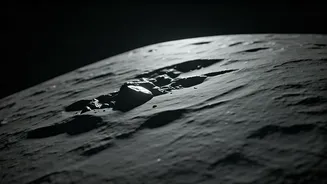
So, why is this magnesium-rich material there? The finding strongly supports the Lunar Magma Ocean hypothesis, a theory suggesting the early Moon was covered in a vast ocean of molten rock. As this ocean cooled over billions of years, lighter minerals like aluminium-rich feldspar floated to the top to form the crust, while denser, heavier minerals like magnesium and iron-rich olivine and pyroxene sank. The soil at Shiv Shakti Statio isn't just surface material; it appears to be a mixture containing fragments of these deeper, magnesium-rich layers. Scientists believe this material was excavated and thrown across the surface by a cataclysmic event: the formation of the massive South Pole-Aitken basin, one of the largest impact craters in the solar system, which is located about 350 km from the landing site. This colossal impact would have dredged up rock from deep within the Moon's mantle.
India’s Enduring Lunar Legacy
This discovery does more than just solve a geological puzzle; it cements Chandrayaan-3’s legacy as a pivotal mission in lunar science. By providing the first-ever in-situ measurements from the Moon's south polar region, the mission has given scientists a crucial ground truth to compare with samples on Earth. It validates the science being done on lunar meteorites and provides a concrete link between a specific region on the Moon and the materials that have been blasted off its surface to reach our planet. This pioneering study, connecting the Pragyan rover's data directly with meteorite records, has opened new avenues for understanding how the Moon's ancient crust was formed and evolved. It showcases the profound scientific value of exploring new and uncharted regions of the Moon, a challenge India successfully met, providing data that will be studied for decades to come.