







More Than Just Abs
First, let's redefine the core. It is not just the coveted six-pack, or the rectus abdominis. Your core is a complex system of deep muscles that wraps around your entire midsection like a natural corset. This includes your abdominal muscles, the obliques
along your sides, the muscles of your lower back, and even your glutes, pelvic floor, and hip complexes. Think of it as the foundational link between your upper and lower body, responsible for stabilizing your spine and pelvis during nearly every movement you make. A strong and stable core provides a solid base for the powerful movements your arms and legs perform while running.
The Core's Role in Every Stride
Running might seem like a lower-body activity, but it creates a significant amount of rotational force. As you drive one leg forward, the opposite arm swings to counterbalance, and your torso must resist twisting excessively. This is where your core springs into action. The muscles of your abdomen, back, and hips work in concert to stabilize your pelvis and trunk, preventing energy leaks. This stability ensures that the force generated by your legs is efficiently transferred into forward motion, rather than being wasted on wobbly, inefficient movements. Without a strong core, your body has to work much harder, leading to quicker fatigue.
The Foundation of Good Posture and Balance
A strong core is essential for maintaining an upright, effective running posture. As fatigue sets in during a long run, it is often a weak core that allows your form to break down, causing you to slouch or your hips to drop. This not only slows you down but places extra stress on other parts of your body, particularly your lower back, hips, and knees, increasing injury risk. Furthermore, your core is your primary stabilizer, crucial for balance. When you are running on uneven surfaces or navigating turns, your core muscles fire constantly to keep you upright and prevent falls, making adjustments that keep your stride smooth and controlled.
Efficiency Through Repetition
Running is the ultimate test of repeated movement, involving thousands of foot strikes over the course of a single session. Efficiency is key to performance and injury prevention. A stable core improves your running economy, which is the amount of oxygen your body needs to maintain a certain pace. By minimizing unnecessary side-to-side and rotational movements, a strong core ensures that more of your energy is channeled directly into propelling you forward. This means you can run faster or longer with the same amount of effort. Over time, this efficiency reduces the cumulative impact and strain on your joints.
Strengthening Your Running Powerhouse
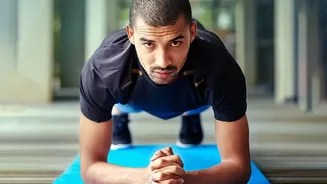
While running does engage the core, it does not always strengthen it sufficiently on its own, especially the deep stabilizing muscles. To truly reap the benefits, it is wise to add specific core exercises to your routine. Focus on movements that challenge stability and resist rotation. Exercises like planks, side planks, bird-dogs, and bridges are highly effective for runners. Unlike crunches, which primarily work the superficial abdominal muscles, these exercises train the entire core unit to work together, mimicking the stabilization demands of running and building the endurance needed to maintain form when you get tired.