




The Promise of a High-Speed Connection
For years, a faster, more efficient train journey between Karnataka's capital, Bengaluru, and its vital coastal hub, Mangaluru, has been a significant public demand. The current rail journey can be time-consuming, and a Vande Bharat Express service promises
to slash travel time while offering superior comfort. This modern link would not only benefit daily commuters and tourists but also provide a massive boost to trade and economic activity between the tech-focused metropolis and the coastal region. The excitement for this service is palpable, with railway officials, including the Railway Minister, having previously indicated that the route was a priority. However, one monumental obstacle has always stood in the way.
A formidable Natural Barrier
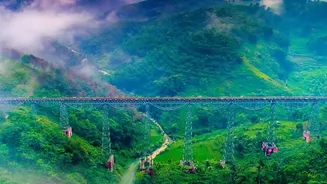
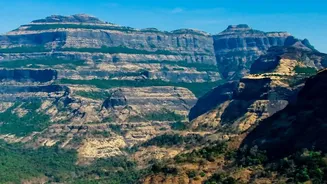
The primary challenge lies in the 55-kilometre stretch of railway track between Sakleshpur and Subrahmanya Road. This section cuts through the heart of the Western Ghats, a region known for its stunning beauty but also its formidable terrain. It is widely considered one of the most technically demanding railway sections in the entire country. The line features a steep gradient of 1-in-50, meaning the track rises one metre for every 50 metres travelled. It also navigates through 57 tunnels, over 226 bridges, and around 108 sharp curves. Compounding these engineering challenges is the area's vulnerability to heavy monsoon rains, which frequently cause landslides and rockfalls, sometimes disrupting services for days.
The Crucial Safety Trial
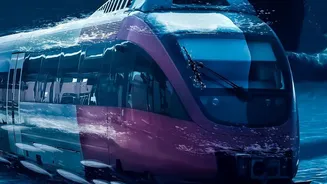
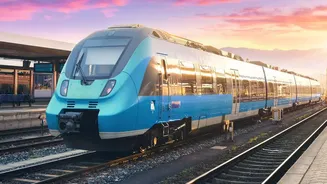
To address these safety concerns, the South Western Railway's Mysuru Division recently commenced crucial field trials. These tests, which began around August 11, 2026, are not for any ordinary train. A specially manufactured 20-car Vande Bharat rake, built by the Integral Coach Factory in Chennai, was brought in for the assessment. This specific train is equipped with an Automatic Emergency Braking (AEB) system, a mandatory safety feature for this route. The AEB system is designed to automatically apply the brakes if the train exceeds the permitted speed limit, which is capped at a cautious 30 km/h on downhill stretches in the ghat section. Personnel from the Research Designs and Standards Organisation (RDSO), the Indian Railways' R&D wing, were on board to monitor every aspect of the train's performance, including acceleration, stability, and braking under loaded conditions.
What the Trial Aims to Prove
The central question of the trial is whether a self-propelled trainset like the Vande Bharat can operate safely and efficiently without the need for 'banker' locomotives. Conventional trains traversing this steep section require extra engines attached at the rear to provide additional power for climbing and control during descent. This approach is impractical for the integrated design of a Vande Bharat train. The successful electrification of the entire Bengaluru-Mangaluru line, completed in late 2025, was the first major step, enabling electric trains to operate. This trial is the second and arguably more critical step. Its successful completion, particularly the performance of the AEB system, is essential for gaining the necessary safety clearances from the Railway Board and the Commissioner of Railway Safety for passenger services.
The Verdict and the Path Forward
Reports from the initial trial runs, which began on August 12, have been successful. The Vande Bharat rake managed to navigate the ghat section, a feat celebrated as a historic moment. However, officials are clear that this does not mean an immediate launch of commercial services. The trials will continue for several days to gather comprehensive data across various conditions. The RDSO will then compile a detailed report for review. While the successful trial is a massive leap forward and a strong positive indicator, the final green light depends on these official safety certifications. The dream of a Vande Bharat service whisking passengers between Bengaluru and Mangaluru is now closer than ever, but the final decision rests on the meticulous analysis of this critical ghat section trial.