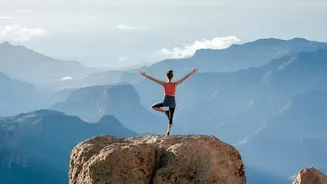








The Sanctuary of the Studio
A yoga studio is a controlled environment designed for introspection. The four walls quiet the external world, allowing you to turn your focus inward. The practice itself is a structured journey. It often begins with pranayama, or breathwork, which signals
to your nervous system that it's time to calm down. By consciously slowing your breathing, you activate the parasympathetic nervous system—the body's 'rest and digest' mode—which helps lower stress hormones like cortisol. This deliberate shift out of the 'fight-or-flight' response that defines much of modern life creates an immediate sense of peace and balance.
The Science of Mindful Movement
Yoga is more than just stretching; it's a powerful tool for rewiring the brain. The combination of physical postures (asanas) and mindful attention cultivates interoception, which is the awareness of your internal bodily sensations. This practice helps you identify feelings of stress or anxiety before they escalate. Furthermore, studies have shown that a consistent yoga practice can increase levels of GABA, a neurotransmitter that helps regulate anxiety. In fact, one study found that a 12-week yoga program improved mood and anxiety more significantly than a walking program of similar intensity, with these changes corresponding to increased GABA levels. By anchoring your mind to your breath and body, you interrupt the cycle of rumination and mental chatter.
The Freedom of the Trail
In contrast to the contained quiet of a studio, a mountain trail offers expansive, untamed energy. Hiking is a form of ecotherapy, a practice that leverages the healing power of nature. The benefits begin the moment you step outside. The fresh air, natural light, and the simple act of putting one foot in front of the other have a grounding effect. Nature engages our senses in a gentle, non-demanding way—a concept known as 'soft fascination.' The rustle of leaves, the sound of a distant bird, and the feeling of uneven ground underfoot capture your attention effortlessly, providing a welcome distraction from persistent worries and clearing the mind.
The Science of Awe and Motion
The physical act of hiking is a potent mood booster. The rhythmic, bilateral movement of walking stimulates the brain, while the physical exertion releases endorphins, the body's natural feel-good chemicals. Reaching a summit or viewpoint can also trigger a sense of awe, a powerful emotion that makes personal problems feel smaller and fosters a greater sense of connection to the world. Spending time in nature has been shown to reduce stress, anxiety, and symptoms of depression. Even the challenge itself is beneficial; overcoming physical obstacles on a trail builds self-efficacy and mental resilience that you carry back into your daily life.
Choosing Your Path to Renewal
So, which is better? The answer depends on what your exhausted mind needs. Yoga is an inward journey. It's ideal for when you feel scattered, overstimulated, or disconnected from your body. Its structured, calming nature helps regulate an overwhelmed nervous system and brings focus back to your centre. Hiking, on the other hand, is an outward journey. It’s the perfect antidote for when you feel stuck, confined, or uninspired. The expansive views, physical challenges, and sensory input from the natural world can break you out of a mental rut and restore a sense of perspective and possibility. One practice contains, the other expands; both heal.