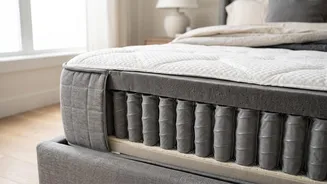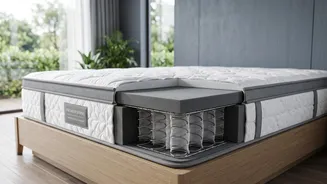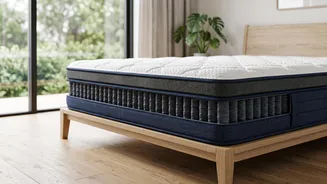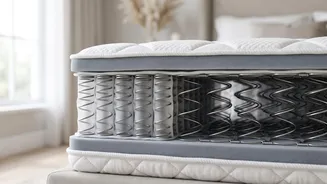




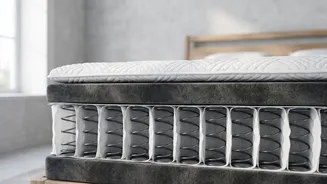
When you think of a spring mattress, you probably think of the coils. But the layers you don't see, sitting just below the surface, are what truly define your comfort. These top layers are where the magic of pressure relief and cushioning happens.
Beyond the Bouncy Coils
A traditional
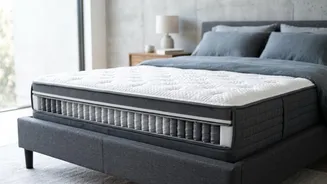
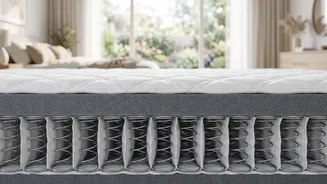
innerspring mattress is built in two main parts: the support core and the comfort system. The support core is the familiar network of steel coils that provides foundational support and durability. The comfort system, however, is made up of all the layers of material stacked on top of those springs. These top layers are specifically designed to provide cushioning, contour to your body, and relieve pressure. While the springs prevent you from sinking too far, the comfort layers determine the immediate feel when you lie down, making them just as crucial to a good night's sleep.
Memory Foam: The Body-Hugging Classic
One of the most popular materials found in comfort layers is memory foam. Developed from a material originally created by NASA, memory foam is known for its unique ability to soften in response to body heat and pressure. This allows it to contour closely to your body, offering excellent pressure relief, especially for side sleepers who need extra cushioning for their shoulders and hips. Its dense structure is also fantastic at absorbing movement, which means you're less likely to be disturbed by a restless partner. The main drawback has historically been heat retention, as the close contouring can limit airflow. To combat this, many modern mattresses use gel-infused or open-cell memory foams designed to pull heat away from the body.
Latex Foam: Responsive and Durable
For those who dislike the 'sinking' feeling of memory foam, latex is a popular alternative. Derived from the sap of rubber trees, natural latex is buoyant, responsive, and has a springy feel. Instead of sinking into it, you feel more like you're sleeping 'on' it. This responsiveness makes it easier to change positions during the night. Latex is also naturally more breathable than traditional memory foam, making it a cooler option for those who tend to sleep hot. Furthermore, high-quality latex is known for its exceptional durability, often outlasting other foam types.
Polyfoam: The Versatile Workhorse
Polyurethane foam, or 'polyfoam', is one of the most common foams used in mattresses, often found in the upper quilting layers or as a transition layer between the softer top foams and the firm springs below. It’s more budget-friendly than memory foam or latex. Polyfoam is highly versatile and can be engineered to have various densities and firmness levels. While it doesn't offer the deep contouring of memory foam or the bouncy durability of latex, it provides initial softness and cushioning. Lower-density polyfoams can be prone to breaking down more quickly, but higher-density versions are more durable and provide reliable support.
Finishing Touches: Pillow Tops and Euro Tops
The very top layer of a spring mattress is often constructed as either a 'pillow top' or a 'Euro top'. These are not materials, but rather styles of construction. A pillow top is an extra layer of padding sewn onto the mattress surface, with a visible gap giving it a distinct, pillowy look. It provides a very soft, cushioned initial feel. A Euro top, by contrast, is stitched to be flush with the edges of the mattress, creating a cleaner, more uniform appearance. Euro tops are filled with the same types of foam or fibre but are integrated into the mattress build, often providing a slightly firmer and more supportive edge than a traditional pillow top.