






Step 1: Ignore the Front, Read the Back
The front of the cereal box is marketing. It’s designed to catch your eye with appealing claims like “Made with Whole Grains,” “High in Iron,” or “Natural.” While these statements may be true, they don't tell the whole story. The real information lies
on the back, in the nutrition facts panel and the ingredients list. This is where manufacturers must disclose what's truly inside, as mandated by the Food Safety and Standards Authority of India (FSSAI). Learning to read these two panels is the single most important skill for making a healthy choice.
Step 2: The Sugar Investigation
Many breakfast cereals, even those marketed to adults, are packed with hidden sugars. These sugars can lead to energy crashes and contribute to long-term health issues. Check the 'Total Sugar' and 'Added Sugar' lines on the nutrition label. A good rule of thumb is to choose cereals with less than 5 grams of sugar per serving. Also, scan the ingredients list. Sugar wears many disguises; look out for terms like corn syrup, maltose, dextrose, fructose, and maltodextrin. If any of these are among the first three ingredients, the cereal is likely a high-sugar product.
Step 3: Make Fibre Your Priority
Fibre is a key component of a healthy breakfast. It aids digestion, keeps you feeling full for longer, and helps regulate blood sugar levels. This means you're less likely to reach for an unhealthy snack mid-morning. When you check the nutrition label, look for a cereal that provides at least 3 to 5 grams of dietary fibre per serving. Cereals made from whole grains like oats, whole wheat, or barley are excellent sources of fibre.
Step 4: Insist on Whole Grains
The term “multigrain” on a box sounds healthy, but it can be misleading. It simply means more than one type of grain was used; those grains could still be refined. Refined grains have been stripped of their bran and germ, removing much of the fibre and nutrients. Always look for the word “whole” before the name of the grain in the ingredients list, such as “whole wheat flour” or “whole oats.” Ingredients are listed by weight, so a whole grain should ideally be the very first ingredient mentioned.
Step 5: Watch the Serving Size
Manufacturers can make a cereal's sugar and calorie count appear lower by listing an unrealistically small serving size. A typical listed serving size is around 30 grams, but many people pour much more than that into their bowl. Before you buy, check the serving size on the nutrition label and be honest with yourself about how much you actually eat. If you typically eat double the serving size, you'll need to double all the numbers on the label, including the sugar and calories, to get an accurate picture of your intake.
Step 6: Apply the Rules to All Cereals
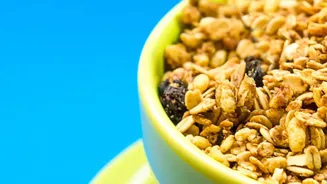
These checks are universal. They apply to children's colourful puffed cereals, which are often extremely high in sugar. They apply to cornflakes, which can cause blood sugar spikes. And they are crucial for seemingly healthy options like granola and muesli. Many granolas are baked with significant amounts of sugar and oil, making them very calorie-dense. Muesli can be a healthier choice, but you still need to check for added sugars. By consistently applying these ingredient and sugar checks, you can confidently navigate the entire cereal aisle.